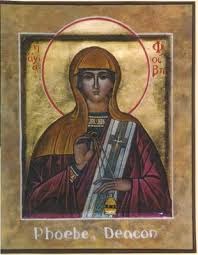
Deacons and Authority

One of the shifts made by those who are advocating including women among the deacons is to say that deacons do not exercise ruling authority. Therefore women can be deacons and not violate I Timothy 2:12. I will get to the exegetical arguments in the future. But here are some initial thoughts on that idea.

All church offices, by that I mean officially recognized positions in the body ordained or not, come with some level of authority.  When someone is ordained, appointed, instituted or whatever word is used into a position they are being given authority either by the bishop, presbytery, session, board, congregation or some other entity to do something.  Some offices have more and some have less authority. Some are pretty high up the authority ladder and some are on the lower rungs. Some offices have expansive authority, covering numerous areas in the church, while some have a very narrow authority. But all offices/positions exercise authority. All offices are also offices of service. They serve the church by exercising authority in the areas where authority has been given to them. Service and authority go hand in hand in the church. One cannot simply say women can be deacons because deacons do not exercise authority. One could argue that deacons do not exercise the type of authority Paul is forbidding to women in I Timothy 2:12 and therefore women can be deacons. But the issue is one of the nature of the authority in question, not the fact of authority. This also means that refusing to ordain deacons does not automatically bring a church’s diaconate in line with I Timothy 2:12. It is possible to not ordain deacons and still violate that verse.

My research on the diaconate is not extensive, so I am open to correction. But based on the research I have done I believe what I say below is accurate. Again I am focused on history here, not exegesis of relevant passages.

Deacons have not had equal authority to ministers/priests/elders throughout church history. They could at times perform the same functions, but that was usually when authority was delegated by the priests/elders to the deacons.

However, deacons have had ruling authority on some level. That is, throughout history putting women on par with men in the diaconate was seen as a violation of I Timothy 2:12, as well as the general tenor of Scripture. To decide that the diaconate has no ruling authority requires a reshaping of the office as it has been historically understood. This may be necessary, but it should not be undertaken without substantial exegetical and historical research. And it should be stated clearly that reshaping of the office is what is actually happening. Some women deacon advocates sound like they are making a modest proposal in line with how the church has always functioned. This is not the case.

Here is a list from this book on some of the things deacons did in the early church: assist in the Lord’s Supper, read the Scriptures in worship, read a sermon if the minister was absent, baptize on occasion, help the congregation follow the worship service, maintain order in worship, give a homily, and distribute gifts. From the same book in Calvin’s Geneva deacons received, sought out, and distributed money, goods, and skills among the needy sometimes seeking out those who were not giving regularly. They also were administrators of the hospital, which was a home for the sick, the elderly, homeless refugees fleeing persecution, and temporary homeless from Geneva. Some deacons functioned at these jobs full time. Deaconesses were an integral part of what the deacons did in Geneva. However, it does not appear from the books I have that they were equivalent to deacons in Geneva, though their jobs did overlap at points. Fast forward to the present, I recently read about some deacons who went into the home of a family requesting financial aid, evaluated whether or not the father was actually trying to work, determined how much aid the family was to receive and for how long, and finally determined where to send that aid.

Collecting, managing, and determining who receives the gifts given to the local body has traditionally been the duty of the deacons. There have been other duties, but this was at the core of what they did, especially if Acts 6:1-6 is taken as establishing deacons or being a prototype for deacons, as the passage has been historically understood. It is difficult to picture this task being accomplished without the deacons having some type of ruling authority. Also divesting the diaconate of ruling authority would seem to undermine one of their specific purposes: allowing the elders more freedom to administer the Word and Sacraments.

I understand that the early church’s view on church offices, ordination, and the sacraments are different from my views. I understand that in Geneva there was an intersection of church and charity that we do not have. That is, hospitals, homes for the elderly, orphanages, care for the poor, and homeless shelters are not normally under the direct oversight of a church today. But even with these differences noted, it is impossible to picture deacons doing the job they have done historically without ruling authority. We can debate whether or not they should have this level of authority.  However, this debate is not just about whether we should put women in the diaconate. It is about who deacons are and what they are supposed to be doing.  A shift to include women in the diaconate, if it is an honest shift, must redefine the office of deacon as it has been historically understood.

On Making Movies

Last week some friends of mine posted some links about Christian movies, such as God is Not Dead, Fireproof, etc. Their comments were good and I wanted to follow up with a few random comments of my own on movie making. These are in no particular order.

First, Christian movie making is in its infancy. Hopefully, in time, the industry will gain maturity and wisdom in how movies are made. We need to give these men time to grow up. We can’t expect a six year old to act 45. By the way, this also means we need older Christians involved in the movie making business.

Second, I am grateful for the men who are making these movies. I do not always agree with everything they do, but they are trying and paving the way for the next generation. Critics should be more humble. It is not easy to make a good movie, just take a peek at all the trash on Netflix that somehow still got made.

Third, but Christian movie makers need to be open to criticism. Many Christians insulate themselves from criticism. Just because you are doing it for Jesus doesn’t mean you get a pass. In fact, it should mean exactly the opposite.

Fourth, men who are rooted in good stories will make better movies. Part of the problem is that our educational system, public and Christian, has gotten rid of many great stories. If we want the next generation of movie makers to make better movies, we need to give them better stories. Here is where a classical education can be helpful. Shakespeare, Beowulf, Faulkner, Dickens, and of course, the Bible all fill our minds with great stories. If we absorb these stories we will make better movies. Here is also the reason Christians need to study great movie directors. They know how to tell a good story.

Fifth, having a good story on paper does not guarantee a good movie. We need Christians who understand what a visual medium is supposed to do. A movie is not a lecture or a novel or even a short story. It may be similar to those things, but it is also different in many ways. Christians need to examine how this particular medium can be used to get people to see the world as God made it. Again studying great movies can be a tremendous help here.

Sixth, movies are not preaching or evangelism. A Christian movie is not a substitute for Sunday morning worship, telling your neighbor about Jesus, or having an evangelist preach at the local college campus. A movie cannot do the work of a minister or an evangelist. I think this is the most helpful thing a Christian movie maker can understand. Your movie cannot do what the preaching of God’s Word does. So don’t shove it into that hole. Let movies do what they are supposed to: tell a story using words and pictures.

Seventh, Christians need to find ways to present sin on the screen in a way that does not cause a sailor to blush but is real. This is a difficult balance, but not impossible. Surprisingly, horror movies can give some guidance here. Often what is implied, but not shown, is most effective. The great directors, such as Alfred Hitchcock, were masters of the unseen. Even something as ugly as rape is fit for a Christian movie. But it must be done well, which means it can be neither pornographic, exploitative, nor simplistic. Here, in my opinion, is one of the greatest deficiencies in Christian movie making: sin is one dimensional. Christian movie directors need to watch great secular movies (and TV shows) to get a handle on how to present sin rightly. The Devil with horns or the wicked man who is always converted is not true to Scripture.

Eighth, but Christians should not be afraid of putting a hero on the screen either. In many ways, having a true hero, who is good, but also has faults is more difficult than putting a wicked man on screen. Often the good guy in a story comes across as fake. Antiheroes are all the rage these days. But we have a real hero in Jesus Christ. Somehow that idea needs to be translated to the screen without us having to actually make a movie about Jesus.

Ninth, we need rich Christians to finance the movie making endeavors of other Christians. A good product does not always require money, but it usually does.

Tenth, it is okay for Christians to make movies for a narrow audience. Secular people do that all the time. Many movies that play at places like Cannes are narrow in their audience appeal. So if Christians want to make movies that are primarily apologetic, just for church goers, or a documentary about the evils of public education that is fine. The problem is that we have not yet branched out into what I would call “mainstream” movie making.

Eleventh, we need people who see movie making as a vocation, not a fad.  Movies are all the rage today. Movie stars and directors are the gods of America. They are rich, pampered, and most of all cool. It is easy for a Christian to think he is getting into the movie making business for God when the reality is he is getting into it for his ego. Movie making is just like being an architect, auto mechanic, or business manager. It is a job that needs to be done well and to the glory of God. We don’t need more Christians who want to be hip and reach out to the hip people of the world through movies.

Twelfth, Christian movie makers need to tell Christian stories. The content and structure of a Christian movie should reflect God and the world he has made. However, this does not require every movie to be a visual depiction of evangelism or to wear God on its sleeve. Horror, action, animation, drama, sci-fi, rom-com, comedy, period epics, can all be permeated with a Biblical worldview/perspective without being overt. There is nothing wrong with being overt, by the way. But usually the most effective movies are the ones that are not overt. We don’t go usually go to the movies to be preached at.

Thirteenth, there is nothing wrong with Christians making movies just for fun and entertainment. It is odd that many Christian movie makers and those who love the secular, small budget, indie movies both believe movies must be profound to be worth making. They disdain movies that are just for entertainment. But there is nothing wrong with Guardians of the Galaxy or Jason Bourne. They are McDonalds, instead of the local steak house. They are the Saturday morning t-shirt instead of a three piece suit. They won’t change your life. But they are fun, exciting, and well-made. There is nothing wrong with Christians making these types of movies.

Book Review: The Puritan Family

The Puritan Family: Religion and Domestic Relations in Seventeenth-Century New EnglandThe Puritan Family: Religion and Domestic Relations in Seventeenth-Century New England by Edmund S. Morgan
My rating: 4 of 5 stars

I am hesitant to comment too much on this book because my knowledge of this period of history is weak. I still found it very fascinating. The most notable thing from the history section was that required obedience can lead to requited affection. The Puritans were strict and hard in many places. But their letters to each other demonstrate that this firm line did not generally cause disdain from their children, wives, or servants. Instead it often produced affection and warmth.

It is also interesting that all segments of society, business, church, family, and government held the same standards. This made discipline easier and clearer.

But the most intriguing part of the book is the last chapter. Morgan argues that later Puritans stopped doing evangelism. Instead they focused entirely on the children of believing parents. This led to what Morgan calls “Puritan Tribalism.” His final line in the book should make those of us who believe in covenant succession stop and think carefully about what we are doing. “When theology became the handmaid of genealogy, Puritanism no longer deserved the name.” Covenant succession is biblical. But if we only look to our children and fail to reach the lost we will ultimately find ourselves dying off like they did.

View all my reviews

Women Deacons: Defining the Terms

Several months back a good friend of mine and I got in a discussion about women deacons. This lead to research and study on my part. I am going to blog on this topic here and there over the next few weeks. 

One of my pet peeves is people who write on a subject, but never really define what they are talking about, especially if the subject is controversial. I am sure I have been guilty of this in my writing. Insisting on precise definitions can seem tedious, especially in an age dominated by short blog posts. However, it is kind to the readers for a writer to give a clear definition of what he is talking about. I am about to embark on a series of blog posts exploring the issue of women deacons/deaconesses. Before I start I wanted to note what someone can mean when they say women deacons/deaconesses.  Here are the options when it comes to women deacons and deaconesses. If you can think of other options put them in the comments. By the way, I use the term office throughout this post to refer to both ordained and unordained positions within the church.

Summary of the Options
1. Ordained deacons, some male and some female, but with all having equal status and function.
2. Non-ordained deacons, some male and some female, but with all having equal status and function.
3. Male and female deacons with equal status, but different functions.
4. Ordained deacons with an office of deaconess, ordained or not ordained, under the authority of the deacons.
5. Non-ordained deacons with a non-ordained office of deaconess under their authority.
6. There is no office of deaconess/woman deacon at all.

Explanation of the Options
Option 1: All deacons are ordained. Women deacons can do everything a male deacon can do. Both men and women deacons have the same status, role, and function. There are not male and female deacons. There are just deacons. If there was a head deacon a woman could fill that role.

Option 2: The exact same as #1, except the deacons are not ordained.

Option 3: There are male and female deacons with equal status, but distinct roles and functions within the church.  These could be ordained or not ordained. I have not heard anyone endorsing this particular position, though it is possible.

Option 4: There are ordained men deacons. There is a separate office of deaconess (or even women deacons). These women could be ordained or not ordained, but either way they serve under the authority of the deacons. Deaconess is not equivalent to deacon in either status, role, or function, though is some overlap between the two offices. There are several possible ways for widows and deaconesses to relate under this position: 1) Deaconess and widow could be the same office, 2) Widows could be part of the deaconesses, but other women are included as well, 3) Widows and deaconesses could be distinct offices in the church, 4) Widow is not an office, but deaconess is.

Option 5: This is the same as option 4, except neither group is ordained. I have not heard this particular position put forth by anyone though it is possible. Usually a two office view, deacons and deaconesses, has either both ordained or ordained deacons only.

Option 6: There is no office of deaconess in the church. There are a couple of options here. One could say that widows, not deaconesses, are the only proper biblical office for women. This would be basically option 4.1 above but instead of calling them deaconesses they would be called widows. Or it is possible to say there are no officially recognized offices for women in the church.

Thoughts on the Options
For all practical purposes #1 and #2 are the same: one office with both genders included. Most people I have read who are advocating “women deacons” are advocating one of these options. They just are not as clear about it as they should be.

Those who hold to #1 or #2 should jettison the phrase “women deacons” and “men deacons.” They should just have deacons. If the men and women have the same status, role, and function then they are equals. The whole point of 1 and 2 is that whether they are male or female is irrelevant to the tasks they can perform.

For all practical purposes #4 and #5 are the same: two distinct offices divided by gender. This group could have the office of “woman deacon” and not mean what #1 and #2 mean.

Option 3 is a bit of a wild card. I have not heard this exact position put forth.  It is an awkward position because it gives equal status, but not equal function. It would be like those who hold to a two office view (elders and deacons) saying that ruling elders could not preach while teaching elders can. I think some who are officially #1 or #2 function like #3. However, if a church has things women deacons cannot do, but men deacons can then they are not equal. For example, if a church has deacons that are men and women, but female deacons cannot visit a sick man in the hospital or cannot serve communion, but a male deacon can then they are not equal, at least not in function. My question would be, “Why give equal status, but not equal function?” That seems to be a contradiction. I am not saying deacons who are women must do everything men do in this type of a system. But if they are equal in status then they should be able to do everything men do. Otherwise you need two offices, not one.

Option 6 has the difficult task of explaining why throughout much of church history, including in Reformed churches, there have been offices for women.

Finally, it is odd to me that so much ink is spilled on I Timothy 3:11 and Romans 16:1, but so little ink is spilled on I Timothy 5:9-16.  Why is there not more discussion of whether or not the widow passage in I Timothy 5 should inform the office of deaconess/women deacons and if so how?

When discussing deacons, women deacons, and deaconesses, function (what they can do) and status (their office), both need to be considered, not just exegetical and historical data. A writer needs to be clear on what office is being given and what the functions of that office will be.

After posting this I thought of one more option: the reverse of #3, where there is not equal status, but there is equal function. Many of the same arguments brought to bear against #3 would be brought to bear against this position as well. Why allow women deacons/deaconesses to do everything men can do, but not give them equal status? Again this seems to be contradiction. 

Women Deacons and Equivocation

Equivocation is the misleading use of a term with more than one meaning or sense (by glossing over which meaning is intended at a particular time). (Wikipedia)

Recently J.A. Medders, a lead pastor at an Acts29 church, wrote a post on why his church has women deacons. There are exegetical and historical problems with his post. Here I am only going to address the way Pastor Medders uses church history. I will address the exegetical issues in later blog posts. By the way, I am not saying this equivocation by Pastor Medders was on purpose. I do not think he was trying to deceive people.

Pastor Medders says

When we are uncertain what the Bible teaches, not because of the Bible, but because of us—we should consider Church History. Historical theology shows us what the Body of Christ before us has done. This practice may not always lead us in the right direction, but it may help us see more clearly. We should always hold exegesis and texts in our hands, and Church History as a voice in the background. For me, the historical evidence here[in favor of women deacons] is overwhelming

There is wisdom in what Pastor Medders says. Church history can teach us a lot. However, it is easy to get sloppy with our history, especially when we are trying to summarize 2,000 years in less than a thousand words.

Does Deaconess Equal Woman Deacon?
The problem with his history lesson is that none of the quotes from church history use the phrase “woman deacon.” All of them say deaconess. This may seem like a petty argument. Don’t they mean the same thing?  Perhaps. But this must be proven not asserted. Even if all those quotes used “woman deacon” he must prove they mean the same thing he does.  To assume that similar words have the same meaning from Pliny to Calvin to Spurgeon to Pastor Medders is dangerous. To assert that every time someone used the word “deaconess” in the past they meant what Pastor Medders means in the present weakens significantly his historical argument. He does this while never really defining what he means by the phrase “woman deacon.” I am pretty sure I know what he means, but his failure to clarify his position makes it hard to compare his position with the ones from the past.

Brian Schwertly sums this up nicely. While he is only speaking of the patristic age, his point could be expanded to other periods of church history as well.

The study of deaconesses in the patristic age is liable to different interpretations. Some writers (who favor deaconesses in the same office as male deacons) base their argument on the word deaconess without a careful analysis of its meaning or intent. These writers argue that the early church had deaconesses, and so should we. But they are arguing by equivocation. What modern women-deacon advocates are advocating is not women deacons who serve in a separate office from men deacons, who have different qualifications that are based on 1 Timothy 5:9ff. They are advocating something totally foreign to the early church. They believe women deacons would have the same qualifications and serve in the same office as male deacons. They are comparing apples to oranges. They do not bother to carefully examine the character, qualifications and duties of the office of deaconess in the ante-Nicene age but simply rest their case on the name deaconess. They presuppose that their modern conception of a deaconess is the same as the church fathers and councils, despite evidence to the contrary. [Emphasis Mine]

Additional Historical Notes
Here are few more notes from this book that clarify the history of the office of deaconess/woman deacon. The office of deaconess was often built upon I Timothy 5:9 not 3:11. That is why the earliest deaconesses were widows over the age of 60. That age was eventually lowered to 50 and then finally to 40. Some saw I Timothy 3:11 as referring to the same group at I Timothy 5:9. Deaconesses were under the authority of the deacons. Deaconesses ministered primarily to women. They did not minister to men except perhaps in a hospital setting. Deaconesses did baptize women in the early church, but that was because female converts were baptized naked. At some point deaconesses did start getting ordained. But this practice was not part of the earliest records, did not make them equivalent to deacons, and was abandoned at various stages of church history. As one might expect with an office only vaguely described in Scripture, there is quite a bit of variation in both the existence, status, and function of deaconesses throughout church history. To say otherwise is equivocation.

Deacons were part of the ruling class of early church right underneath bishops and priests. Even with this office there was of course variation. They read Scripture, administered the Lord’s Supper, preached in some cases, determined who got financial aid, and were ordained clergy. The office of deacon in the early church was built on Acts 6:1-6.  Here is a quote from The Constitution of the Holy Apostles, which indicates some of the authority deacons had. “If any brother, man or woman, come in from another parish, bringing recommendatory letters, let the deacon be the judge of that affair, inquiring whether they be of the faithful, and of the Church? whether they be not defiled by heresy?” In this document, deacons determined whether or a not person could transfer to their parish. It appears from the last phrase that they examined the transfer’s orthodoxy. 

We can debate whether or not the deacons should have had this authority, but the point is that historically they did. Church history has examples of deaconesses who had specific tasks and roles in the life of the local body and in the Church at large. But no matter how many times the word deaconess is quoted, church history is not littered with women deacons who had the same status, role, and function as men deacons.  

Note: A few updates were made at 2:45 pm on August 15th.