Book Review: He Is There and He Is Not Silent

He Is There and He Is Not SilentHe Is There and He Is Not Silent by Francis A. Schaeffer
My rating: 4 of 5 stars

For a long time I have felt that presuppositional apologetics and classic apologetics, when done and held rightly, can be mutually supporting. Presuppositions feed facts. But facts, the way the world is, feed our presuppositions as well. While Schaeffer does not use this exact terminology that is part of the lesson I learned from this book.

I found this book more difficult than Escape from Reason and for some reason I skipped The God Who is There, which I will have to pick up. Schaeffer outlines how the failure to have an infinite personal God who speaks leads inevitably to meaninglessness. But more than that he shows how an infinite personal God who created this world and who speaks is the only option that matches the facts of how the world actually is. The key fits the lock and only this key fits the lock.

A couple of other thoughts. Schaeffer writes with a high level of empathy for the modern man in the book. Modern man is alienated, living in a meaningless world with no way of knowing what is true and what is false, what is good and what is evil, what is real and what is imaginary. Schaeffer had an answer for this lostness. But he does not just have an answer he truly loves those he speaks to.

Second, Schaeffer (along with Os Guinness) has made less afraid of questions. Schaeffer noted that at L’Abri no question was off limits. Anything could be asked and there was answer for it from the Bible and the Christian worldview. A lot of times men steeped in presuppositional apologetics, like myself, simply say to objections, “Well you just need to believe.” Yes they do, but they also need answers. And Christianity has those answers.

View all my reviews

Ten Quotes: Fool’s Talk by Os Guinness

Here are ten of my favorite quotes from Os Guinness’ excellent book on apologetics Fool’s Talk:

Almost all our witnessing and Christian communication assumes that people are open to what we have to say, or at least are interested, if not in need of what we are saying. Yet most people quite simply are not open, not interested and not needy, and in much of the advanced modern world fewer people are open today than even a generation ago. Indeed, many are more hostile, and their hostility is greater than the Western church has faced for centuries. 

As with almost everything worthwhile in life, there is rarely just one day to do it. The same is true of persuasion. There is no single right way it should be done. There is no one-size-fits-all approach that will work with everyone. To be sure, there are some ways that are not Christian and some that not effective, but there is no single way that alone is Christian. 

Sin must always end in justifying itself by framing God. God is in the dock [the one who stands accused]. To excuse ourselves, we have to accuse him. In short, sin frames God falsely.

In strong contrast to secularism, the Christian view is both this-worldly and other-worldly. It has a healthy appreciation of this world, but sees it always within an equally strong appreciation of another world that throws this present world into a different light, redeeming its worst features and confirming forever its highlights. And in strong contrast to the Eastern views, the Christian view has a solid appreciation of the created reality that we know and we may trust-even though there is another world that is needed to make this world what it should be.

Because of the cross and the resurrection there is always a way out.

Unbelief manufactures not only idols but illusions.

Only humans it seems, have the capacity to live as something other than what they are. [Guinness quoting N.T. Wright]

When it comes to belief and unbelief, we need to remember that, while no thoughts are unthinkable and no argument is unarguable, some thoughts can be thought but not lived…When we are talking of unbelief, there will always be unintended consequences. Unbelieving beliefs will be truly adequate because unbelieving knowledge is never fully adequate and not finally true. 

The gospel makes better sense of what simply is because the way God sees reality is the truth of what is. 

 Indeed, it is now difficult to think of what might actually constitute a crisis of faith for the Christians revisionists [liberal Christians]. Revisionist faith has so lost its authority that it has become compatible with anything and everything, and so means nothing.

And one:

Questions and needs do not create faith. No one believes because of questions and needs. Rather, the effect of questions and needs is to make people disbelieve. They no longer believe whatever it was that they believed before, because what they used to believe no longer answered their questions. 

Quotes From Other Books
The New Pastor’s Handbook by Jason Helopoulos
On Being a Pastor by Derek Prime and Alistair Begg
How to Exasperate Your Wife by Douglas Wilson
The Things of Earth by Joe Rigney
A Son for Glory by Toby Sumpter 
Escape from Reason by Francis Schaeffer
Crazy Busy by Kevin DeYoung
Making Gay Okay by Robert Reilly 
Christ Crucified by Donald Macleod
Concerning the Eternal Predestination of God by John Calvin

The Sinfulness of Sin is Fuel for Evangelism

There is a deep connection between our doctrine of sin and evangelism. The more serious sin is the more serious a church will take her call to evangelize. If sin is minimized then the importance of evangelism diminishes. If man is born good and social structures cause him to do evil then the good news of Christ’s death and resurrection is of little value. If man simply needs more knowledge, more education, then again Christ’s death will not help much. If man’s problem is lack of resources, such as money, food, opportunities, then again Christ cannot help him. But if man’s problem is that he is an enemy of God, separated from Him because his heart is overflowing with selfishness, pride, anger, lust, malice, and bitterness, and therefore God’s wrath rests upon him, then the Cross is the only answer. And evangelism becomes a priority.

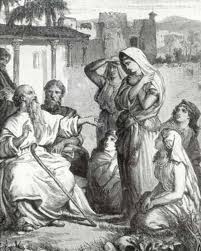
Paul Preaching to Lydia

What are the practical effects on evangelism of a low view of sin?

Hell is Ignored
Hell is real. Hell is where men who never turn to Christ spend eternity. Christ rescues men from an eternity where “the worm does not die and the fire is not quenched” (Isaiah 66:24, Mark 9:47-48). Sin against a holy, perfect, just God puts men there. God’s wrath sits upon them because of their wicked hearts and lives. When we believe this, we want to rescue men and women from this plight. We don’t want them in Hell. Despite some of our over-zealous brothers from the past, Hell is still a good motivation for preaching Jesus Christ.

But if sin is minimized then Hell is as well. Hell only makes sense when God’s holiness and his hatred of sin are fierce and real. If sin is not a big deal then Hell will either be ignored or denied and our zeal for evangelism will weaken.

Men are Left in Bondage to Sin
However, evangelism is not just about delivering men from the ”second death” (Rev. 2:11). When a man turns to Christ he is set free from the power of sin. Sin destroys a man’s life here on earth, not just after he dies. One of the great causes of pain in this life is guilt.  Guilt gnaws at us. We try and try to clean our hands, but we cannot. Christ can make us clean. Men and women are slaves to their lusts and greed. They are slaves to the fads of this world. They are not free to give. They are not free to have deep joy. They are not free to suffer on behalf of others. They are not free from the terrors of death and the pangs of their own conscience. When a man comes to Christ, his sins are forgiven and he is given the Spirit. He is now free from sin’s mastery (Romans 6:22). When sin is properly understood, evangelism becomes a way to tell men of the One who can break their chains and release them.

But if sin is minimized then we leave men as slaves. Their lust, anger, greed, malice, and hatred may be small inconveniences that occasionally cause trouble, but not chains that bind them. We look at them clapped in irons and held captive by sin and say to ourselves, “It is not a big deal. They will be just fine.”

Christ is not Glorified
But the biggest fallout from a failure to take sin seriously is that Christ’s glory is smeared. When sin is seen as a the great enemy of man’s soul then Christ’s atonement and resurrection become the greatest and most powerful event in history. Death, that dreaded enemy of man, has been destroyed. Sin, which ravages our souls and bodies and leads us to ravage others, is forgiven and defeated. Satan our great accuser has been silenced. God’s wrath has been turned away because “his own arm brought salvation” (Isaiah 59:15-17). Those who were exiled from the garden have been brought back in.We have great news for a world living in darkness and the shadow death (Isaiah 9:2). A Child was born who took our stripes and healed us (Isaiah 9:6, 53:4-6). Sin, properly understood, leads a church to evangelize and this in turn brings glory to Christ and His work.

But if sin is not a big deal, if sin is not the great enemy that we have been told it was, then Christ’s work is not that big a deal either. If sin is a slight wound, healed lightly with some ointment and a band-aid then the Cross is overkill and slightly embarrassing. It is like rushing a child to the ER for a splinter. Was that really necessary? After all, we are really good people.  If people aren’t really perishing then why rescue them? If folks are not dead in their trespasses and sins then why preach life to them? And when Christ is not preached and His death and resurrection not proclaimed then he is not glorified.

Understanding the depth, power, and ugliness of sin leads a church to love evangelism. We will delight to tell our communities the good news that there is deliverance from Hell, bondage to sin, death, and Satan. We will love to glorify our great King and Savior by telling others of His work. But if our doctrine of sin is weak then our evangelism will be as well. The deeper our understanding of sin the deeper our love for Jesus and those he came to save.

They Will Not Prevail

The enemies of God are planners and schemers. In Psalm 2:1-3 the nations and rulers plot and take counsel on how they can break God’s chains. What can we do to escape God? How can we run from Him? How can we evade his rules? What can we do to destroy his Word and make him disappear? Imagine a bunch of corporate lawyers sitting in a back room late at night plotting the overthrow of another company.
In our culture this plotting takes place through things like feminism, sexual freedom, the acceptance of evolution, the careful parsing of God’s word by weak-willed men (and women) so that it becomes impotent, college classes on gender studies, failure to call public leaders to repentance, and a denial of sin as the problem in our lives.
For Christians who love God’s Word and its Author, this scheming can be discouraging. Our resources are paltry. Leaders are dropping like zombies in The Walking Dead. Doctrinal compromise is normal. Every day more laws get passed that destroy the remnants of Christianity that were once in our culture. And what of the Church? She is harassed and persecuted around the world. Where she is not persecuted by the enemies of God she is threatened by wolves who have found their way into the sheepfold. All in all, there are times we wonder if Jesus missed something when He said, “The gates of hell will not prevail against his church” (Matthew 16:18).
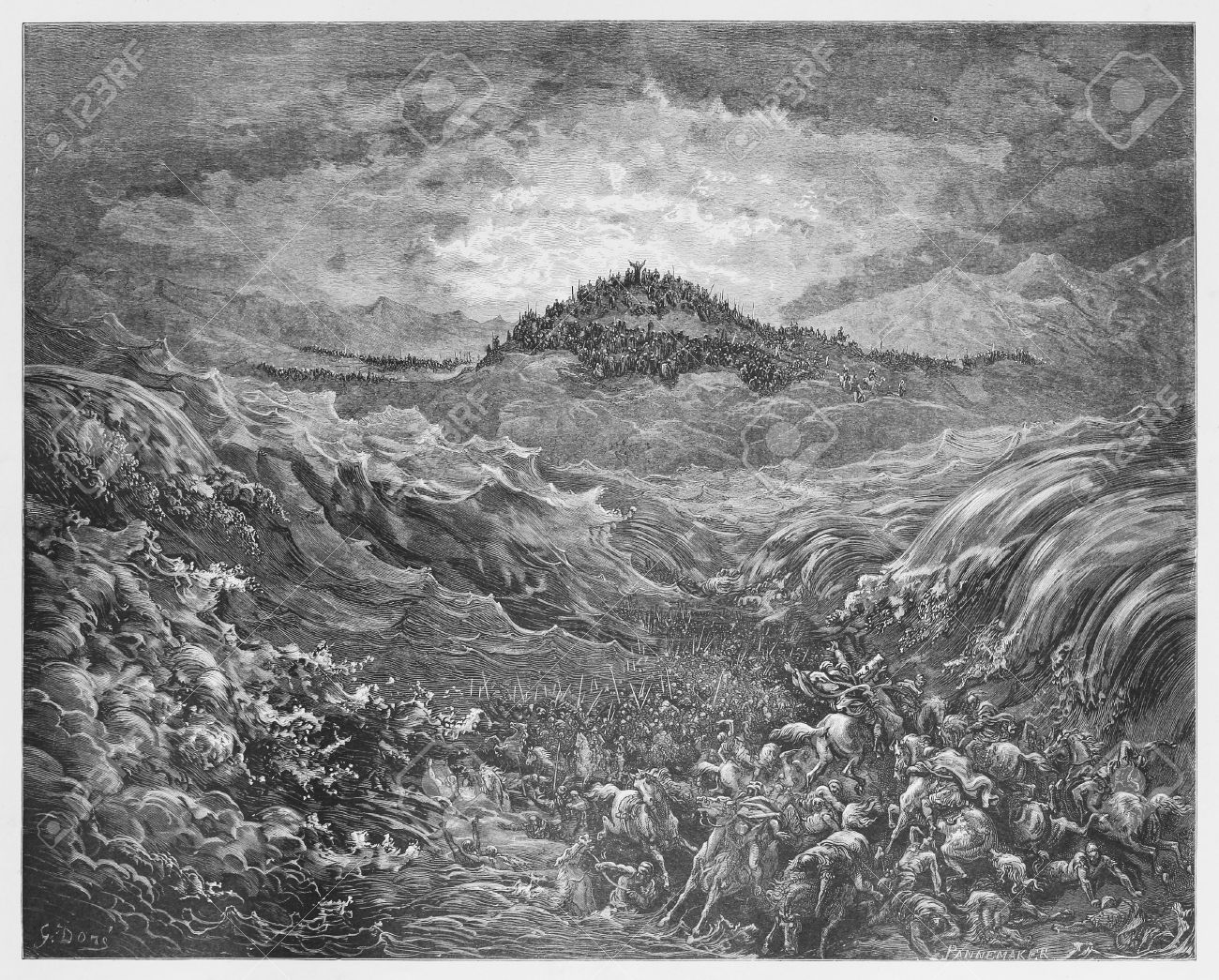
There is a great encouragement for us in Exodus 15. Exodus 15:1-21 is the song that Israel sung after the Egyptians had been drowned in the Red Sea.  The song exalts in God’s marvelous power to deliver his people from the strongest of enemies. Verse 9 takes us behind the curtain to see what the Egyptians were planning:

The enemy said, ‘I will pursue, I will overtake, I will divide the spoil, my desire shall have its fill of them. I will draw my sword; my hand shall destroy them.’

The Egyptian army had it all worked out. They were going to overtake that ragtag band of slaves, led by an 80 year old shepherd and destroy them. They were going slaughter them by the seashore spilling their blood all over the sand and then go back to feast. They were cocky and sure of themselves. After all, Israel’s back was to the sea and Egypt had the greatest army in the world. What or who could possibly stop them? 
But just like Psalm 2:4 God laughed. Man can plot and scheme, but God is the one who directs history. God’s plans are the only sure plans.  Egypt does not prevail. Instead they are destroyed. Exodus 14:30 says that Israel saw the bodies of the Egyptians washed up on the shore. Exodus 15:1-10 says God
Threw the horse and rider into the sea
Cast Pharaoh’s army into the sea
Drowned Pharaoh’s choicest of captains so they sank like stones
Dashed the enemy into pieces
Consumed them like stubble
Covered them with the sea
All those plans, all those schemes thwarted in a moment by a God who is not like other gods (Exodus 15:11), but is glorious, fearful, powerful, and a man of war. 

If you are Christian do not fear the plans of the great men of this world. Politicians, professors, movie stars, talking heads, Muslims, and false teachers of all stripes can plot and scheme to tear down God and his people, but in the end they will not prevail. They will come to nothing. They are but a drop in the bucket and dust on the scales (Isaiah 40:18).  Do not listen to the fear mongers in the press or on your Facebook page. Even your Christian friends can get sucked into the vortex that says that God will not deliver and it would have been better to stay in Egypt (Exodus 14:10-12). Tell them to not be afraid. God has already saved us to the uttermost in Christ. We have already seen the salvation of God (Exodus 14:13). Sin, Satan, death, and our enemies have all been put under his feet. Jesus has all authority (Matt. 28:18-20).  He rules over the kings of the earth (Rev. 1:5). Why the fear? Why the anxiety? Why the lack of trust? Christian believe him. He rescued Israel. He will rescue us. 
But if you are not a Christian or if you used to profess faith in Christ, but now you are drifting away, you should fear. You will not come through the sea. You can plot, scheme, push those thoughts about death away, hope it is all a myth, ignore God’s word, but it will not change a thing. One day you will stand face to face with the God who drowned thousands. If Pharaoh was destroyed by Him, what chance do you have? If his chariots were dashed to pieces on the rocks, what hope have you of escaping by your own power? But He is not all wrath. He is also kind to those who trust in His Son Jesus Christ (Psalm 2:7, 12) and turn to Him. Join the glorious band who have been delivered by the blood of Jesus. Join those of us who because of God’s kindness came through on the dry land (Exodus 15:19). You too can see the salvation of God (Exodus 14:13) if you will just trust in Jesus and follow Him.  

Six Barrier Beliefs

This little book contains several short essays outside of the main content on how the pastor theologian should conduct his ministry. Jason Hood, an Anglican pastor in Tanzania, has an essay on why the pastor should be an apologist in the pulpit. Often I view apologetics as what I do outside the pulpit. Hood reminded ministers that many sitting in the pew, even solid Christians, have questions about the faith or they have friends who ask questions about the faith. Therefore Sunday mornings should be used for defending the faith. He then gives six beliefs which dominate the post-Christian West that make Christianity difficult to believe. These beliefs are barriers to people coming to Christ. He encourages ministers to find ways to address these barriers in their preaching.

1. There cannot be on one true religion that falsifies all other views.

2. Evil and suffering make the powerful God of the Bible impossible.

3. Personal choice is sacred and cannot be violated by any religion or ideology that requires my submission to lordship.

4. The church’s track record is dismal.

5. God’s anger or wrath is unpalatable, perhaps even criminal.

6. The Bible is untrustworthy and socially regressive.

Hood says, “These barriers to Christian belief are not just found in New York: they are found everywhere, part of the cultural air.”

If we are going to effectively minister to our congregations and our culture then we should be aware of these underlying beliefs that are obstacles for people coming to Christ. #1 and 3 are the most common I run in to. #3 is the most dominant worldview in America. Individual choice is god.