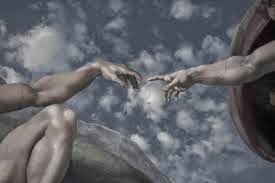
No Adam, No Sin, No Guilt, No Redemption, No Christ

Here are some quotes from J.P. Versteeg’s book Adam in the New Testament. If you would like to read my review of the book, click on the Goodreads link on the right. 

In this first quote the author is addressing the argument that Paul thought Adam was historical, but now we know he was not.  He shows that despite claims to the contrary this idea unravels Christ’s work as a historical event. 

“Therefore, if in the case of Adam the intention of Paul in his own time is divorced from its significance for us today, that must also have consequences with respect to Christ. For the redemptive-historical correlation between Adam and Christ entails that if what Paul says about Adam no longer holds for us [i.e. that Adam was a historical figure standing at the beginning of the human race], it is impossible to see why what he says about Christ in the same context must still hold for us. What is the sense of an antitype, if there is no type? What is the sense of fulfillment, if there is nothing to fulfill? The redemptive-historical correlation that Paul sees between Adam and Christ means that no longer honoring Paul’s intention when he speaks about Adam must entail no longer honoring Paul’s intention when he speaks about Christ…To no longer honor Paul’s intention when he speaks about Adam entails that the framework in which Paul places Christ and his work, collapses. 

And again, here he is quoting another author:

And suppose that Paul… did indeed believe in the historicity of the first Adam but that is this is no longer relevant for us…, because we are only interested in the function of Adam as a ‘teaching model’ why should we…not take the same view regarding the last Adam?

Versteeg brings up an interesting point regarding the guilt of man if we deny a historical Adam. Christians have held that sin entered the world because our representative head, Adam, chose to eat of the fruit in the garden. In Adam, we all sinned. There has been debate about how this works itself out, but the basic structure is essential to Christian orthodoxy. What happens when there is no historical Adam (and Eve) to sin? Here is what Versteeg says:

If Adam only lets us see what is characteristic of everyone because Adam is man in general so that the sin of Adam is also the sin of man in general, and if on the the other hand Adam may no longer be regarded as the one man through whom sin has come into the world, it is apparent that in a certain sense sin belongs to man as such. Sin thus has become a given “next to” creation…In Romans 5 Paul intends to say how how sin has invaded the good creation of God. The concept “teaching model” cannot do justice to [Romans 5]. If Adam were only a teaching model, he would only be an illustration of man in whom sin is inherent. The concept “teaching model” eliminates the “one after the other” of creation and fall, and leaves only room for the “next to each other” of creation and sin. In essence, then, one may no longer speak of the guilt of sin…Where evil thus becomes a “practically unavoidable” matter, sin loses its character of guilt. (All emphasis and punctuation is Versteeg’s).

I had not thought of the historicity of Adam from this angle before. Normally I think of Adam in reference to Christ and salvation, not man and sin. But of course, these cannot be separated. If we mess with Adam, we mess with Christ, sin, redemption, man, and as Richard Gaffin argues in his foreword, the resurrection, in the process. Where does sin and guilt come from if there was no Adam? Has it always been? Is sin inherent in man? Did God create man sinful? How can man be guilty if sin has always been? If sin has not always been, when did it enter? Who/what brought it in? 

I am convinced that a denial of a historical Adam leads naturally and logically to heresy.    As Versteeg says, 

To be occupied with the question of how Scripture speaks about Adam is thus anything but an insignificant problem of detail. As the first historical man and head of humanity, Adam is not mentioned merely in passing in the New Testament. The redemptive historical correlation between Adam and Christ determines the framework in which-particularly for Paul- the redemptive work of Christ has its place. That work of redemption can no longer be confessed according to the meaning of Scripture, if it is divorced form the framework in which it stands there.

Not all men who deny the historical Adam become heretics, but given their framework they should. Like human sexuality, the historicity of Adam is a truth worth fighting for.  To capitulate here is to begin unraveling the basics of Christian orthodoxy and most importantly to strip away the glory of Christ’s work in redeeming fallen man. 

Book Review: Adam in the New Testament

Adam in the New Testament: Mere Teaching Model or First Historical Man?Adam in the New Testament: Mere Teaching Model or First Historical Man? by Richard B. Gaffin
My rating: 5 of 5 stars

Versteeg (the author, Gaffin is the translator) shows clearly that the New Testament writers thought Adam was a historical man standing at the beginning of the human race. He looks at Romans 5, I Corinthians 15, Luke 3, I Timothy 2, and Jude. These are the only places Adam is mentioned in the NT. In all these passages Adam is treated as a historical figure, not an idea. He does a good job showing why a rejection of the historical Adam leads to a twisting of the Biblical view of sin, Christ, and Christ’s work. Gaffin’s forward is excellent. The book is only 67 pages, but well worth the buy if you are interested in this subject.

View all my reviews

Day in Genesis

Recently, Kevin DeYoung said that the most important thing for Christians in debate is to actually open up the Bible and work through the text. Don’t settle for vague impressions or general ideas. What does the Bible actually say? I put this idea to work by looking at the use of the word “day” in the Pentateuch (Genesis-Deuteronomy). 

The impression is often given by Old Earth Creationists that the Hebrew word for “day” (yom) is a flexible word that has a broad range of meaning. This idea has been used over and over again by men to create enough elasticity in Genesis 1 so that one can put billions of years in the creation account. But is it true that this word is as flexible as OEC would like it to be? I decided to open up the text and see for myself. . I went through and looked at all the uses of the word day in Genesis, Exodus, Leviticus, Numbers and Deuteronomy to determine if what the OEC men claim to be true is actually true. This was tedious and it makes for tedious reading. But the point I want to make is that when one reads the word “day” in the Bible it almost always means a typical 24 hour day. 

This study is based on the ESV translation. I do not have the ability to search in Hebrew, but I can read Hebrew and I have several Hebrew word study helps as well as a Hebrew Old Testament. I checked the words to see if they were really “yom.” They almost always were. Occasionally you will find the word “day” supplied where it is not in the Hebrew (i.e. Leviticus 23:5, 27). It is clear in those places that “day” is implied though not specifically written. Also sometimes instead of the word being “yom” it is the word “yomam,” which means “daily/daytime” (i.e. Numbers 14:14). Often the ESV translates “yomam” as “day.” The words are clearly connected. I have not purposely included the plural use of “yom” though if it showed up in my search I kept it.


I have divided these up into three categories: All the uses of day with a number, all the uses of day which in context mean a typical 24 hour day, and any uses of day which could mean a long period of time. 

All uses of Day with a Number (1st, 2nd, 3rd, etc.)
(Gen 7:11)  In the six hundredth year of Noah’s life, in the second month, on the seventeenth day of the month, on that day all the fountains of the great deep burst forth, and the windows of the heavens were opened.
(Gen 8:4)  and in the seventh month, on the seventeenth day of the month, the ark came to rest on the mountains of Ararat.
(Gen 8:5)  And the waters continued to abate until the tenth month; in the tenth month, on the first day of the month, the tops of the mountains were seen.
(Gen 8:13)  In the six hundred and first year, in the first month, the first day of the month, the waters were dried from off the earth. And Noah removed the covering of the ark and looked, and behold, the face of the ground was dry.
(Gen 8:14)  In the second month, on the twenty-seventh day of the month, the earth had dried out.
(Gen 22:4)  On the third day Abraham lifted up his eyes and saw the place from afar.
(Gen 27:45)  until your brother’s anger turns away from you, and he forgets what you have done to him. Then I will send and bring you from there. Why should I be bereft of you both in one day?
(Gen 31:22)  When it was told Laban on the third day that Jacob had fled,
(Gen 33:13)  But Jacob said to him, “My lord knows that the children are frail, and that the nursing flocks and herds are a care to me. If they are driven hard for one day, all the flocks will die.
(Gen 34:25)  On the third day, when they were sore, two of the sons of Jacob, Simeon and Levi, Dinah’s brothers, took their swords and came against the city while it felt secure and killed all the males.
(Gen 39:11)  But one day, when he went into the house to do his work and none of the men of the house was there in the house,
 (Gen 40:20)  On the third day, which was Pharaoh’s birthday, he made a feast for all his servants and lifted up the head of the chief cupbearer and the head of the chief baker among his servants.
(Gen 42:18)  On the third day Joseph said to them, “Do this and you will live, for I fear God:
Uses of Day Which Are in Context, Typical 24 Hour Days

(Gen 3:8)  And they heard the sound of the LORD God walking in the garden in the cool of the day, and the man and his wife hid themselves from the presence of the LORD God among the trees of the garden.
(Gen 7:13)  On the very same day Noah and his sons, Shem and Ham and Japheth, and Noah’s wife and the three wives of his sons with them entered the ark,
(Gen 8:22)  While the earth remains, seedtime and harvest, cold and heat, summer and winter, day and night, shall not cease.”
(Gen 15:18)  On that day the LORD made a covenant with Abram, saying, “To your offspring I give this land, from the river of Egypt to the great river, the river Euphrates,
(Gen 17:23)  Then Abraham took Ishmael his son and all those born in his house or bought with his money, every male among the men of Abraham’s house, and he circumcised the flesh of their foreskins that very day, as God had said to him.
(Gen 17:26)  That very day Abraham and his son Ishmael were circumcised.
(Gen 18:1)  And the LORD appeared to him by the oaks of Mamre, as he sat at the door of his tent in the heat of the day.
(Gen 19:34)  The next day, the firstborn said to the younger, “Behold, I lay last night with my father. Let us make him drink wine tonight also. Then you go in and lie with him, that we may preserve offspring from our father.”
(Gen 19:37)  The firstborn bore a son and called his name Moab. He is the father of the Moabites to this day.
(Gen 19:38)  The younger also bore a son and called his name Ben-ammi. He is the father of the Ammonites to this day.
 (Gen 21:8)  And the child grew and was weaned. And Abraham made a great feast on the day that Isaac was weaned.
(Gen 22:14)  So Abraham called the name of that place, “The LORD will provide”; as it is said to this day, “On the mount of the LORD it shall be provided.”
(Gen 26:32)  That same day Isaac’s servants came and told him about the well that they had dug and said to him, “We have found water.”
(Gen 26:33)  He called it Shibah; therefore the name of the city is Beersheba to this day.
(Gen 27:2)  He said, “Behold, I am old; I do not know the day of my death.
 (Gen 29:7)  He said, “Behold, it is still high day; it is not time for the livestock to be gathered together. Water the sheep and go, pasture them.”
(Gen 30:35)  But that day Laban removed the male goats that were striped and spotted, and all the female goats that were speckled and spotted, every one that had white on it, and every lamb that was black, and put them in the charge of his sons.
(Gen 31:39)  What was torn by wild beasts I did not bring to you. I bore the loss of it myself. From my hand you required it, whether stolen by day or stolen by night.
(Gen 31:40)  There I was: by day the heat consumed me, and the cold by night, and my sleep fled from my eyes.
(Gen 31:43)  Then Laban answered and said to Jacob, “The daughters are my daughters, the children are my children, the flocks are my flocks, and all that you see is mine. But what can I do this day for these my daughters or for their children whom they have borne?
(Gen 32:24)  And Jacob was left alone. And a man wrestled with him until the breaking of the day.
(Gen 32:26)  Then he said, “Let me go, for the day has broken.” But Jacob said, “I will not let you go unless you bless me.”
(Gen 32:32)  Therefore to this day the people of Israel do not eat the sinew of the thigh that is on the hip socket, because he touched the socket of Jacob’s hip on the sinew of the thigh.
  
(Gen 33:16)  So Esau returned that day on his way to Seir.
(Gen 35:3)  Then let us arise and go up to Bethel, so that I may make there an altar to the God who answers me in the day of my distress and has been with me wherever I have gone.”
(Gen 35:20)  and Jacob set up a pillar over her tomb. It is the pillar of Rachel’s tomb, which is there to this day.
(Gen 39:10)  And as she spoke to Joseph day after day, he would not listen to her, to lie beside her or to be with her.
(Gen 42:13)  And they said, “We, your servants, are twelve brothers, the sons of one man in the land of Canaan, and behold, the youngest is this day with our father, and one is no more.”
 (Gen 42:32)  We are twelve brothers, sons of our father. One is no more, and the youngest is this day with our father in the land of Canaan.’
(Gen 47:23)  Then Joseph said to the people, “Behold, I have this day bought you and your land for Pharaoh. Now here is seed for you, and you shall sow the land.
(Gen 47:26)  So Joseph made it a statute concerning the land of Egypt, and it stands to this day, that Pharaoh should have the fifth; the land of the priests alone did not become Pharaoh’s.
 (Gen 48:15)  And he blessed Joseph and said, “The God before whom my fathers Abraham and Isaac walked, the God who has been my shepherd all my life long to this day,
(Gen 48:20)  So he blessed them that day, saying, “By you Israel will pronounce blessings, saying, ‘God make you as Ephraim and as Manasseh.'” Thus he put Ephraim before Manasseh.

Places Where Day Can Mean a Long Period of Time
There are no texts in Genesis 3-50 where day can mean a long period of time.

The research shows the following:
Every time in Genesis 3-50 the word day is used with a number it means a 24 hour day.
When it is not used with the number it still points to a specific day in the past, present, or future. 
Nowhere in Genesis 3-50 is the word day ever used to mean a long period of time. 

In the future I will look more closely at the word day in Genesis 1-2.

Book Review: Creation and Change

Creation and Change: Genesis 1:1-2.4 in the Light of Changing Scientific ParadigmsCreation and Change: Genesis 1:1-2.4 in the Light of Changing Scientific Paradigms by Douglas Kelly
My rating: 4 of 5 stars

It has been a while since I have studied the age of the earth/evolution debate. But I feel like I need to stay on top of it. Compromise in this area is common. I really enjoyed Kelly’s book. He is a theologian, not scientist. Therefore what he asks is, “What does the Bible say and how can I get science to fit into what the Bible says.” Thus he begins with the text and works his way outwards. This is how it should be.

He does a good job of showing that the debate is usually between theistic and naturalistic assumptions. Faith and presuppositions govern both groups. This does not rule out the study of the material world. But it does rule out us studying it without certain presuppositions. He differentiates between empirical science and naturalistic science. He also works through the seven days of creation. He is clear where he disagrees, but he is not normally derisive of his opponents. The book is a bit dated, having come out in 1997. He is well read, quoting numerous pro-evolution and anti-evolution men, secular and Christian scientists, as well as numerous scientific studies in foreign languages.

When he approaches science he is humble and tentative, but still comes to some solid conclusions on things like radiometric dating. Throughout the scientific chapters he notes how assumptions about the past govern our research in the present.

The value of this book lies in his solid exegesis, his humility, and his ability to expose the assumptions that govern how we operate.

View all my reviews

What is an Old-Earth Creationist?

Wikipedia defines a young earth creationist as someone who believes the earth is between 5,700 and 10,000 years old. They believe that the Lord created the world from nothing in six, 24 hour days. They do not believe in evolution. This is all very clear.

But when it comes to the old earth creationist, clarity is lacking.Wikipedia gives no time frame for the old earth creationists. Some believe in evolution and some do not. What is an old-earth creationist? I am not being snarky here. I really want to know. I feel like this term is thrown around with only a very fuzzy definition. So here are some questions for Christians who would describe themselves as old-earthers or those who who have interacted with them.

Do you believe the world is millions of years old or tens of thousands? (Are there even Christians arguing that the earth is 25,000 years old? 50,000 years old? 100,000 years old? I have not heard this. This is not what secular old earthers argue for. My understanding is that old-earth creationists believe the earth is millions/billions of years old, not tens of thousands.)

If you believe the earth is only thousands of years old, why? (Again I have not heard this theory said or implied in any of the study I have done of old earth creationists.)

For those who believe the earth is millions of years old:

Do you believe that only land +water has been around for millions of years (Creation days 1-2)? Or do you also believe that plants, fish, birds, and animals have been around for millions of years (Creation days 3-6)? (I have not heard anyone argue that only the first two days are millions of years, but I guess this is possible.)

Do you believe man has been around for millions of years? If you believe men lived prior to Adam, when did Adam come into existence and did those men who lived prior to Adam die ? If you don’t believe men lived prior to Adam and you do believe there are millions of years between us and Adam where do you find the millions of years in the Biblical chronology?

Do you believe evolution is part of the process by which God populated the globe? Do you believe man evolved from a lower species?

There are two reasons I would like to see these questions answered. First, old earth creationists need to be clear about what they are and are not saying. Saying, “I believe in the Framework Theory” or “Yom can mean great ages of time” is insufficient. It allows one to slide out the back door without really stating his opinion on what is really the point: the age of the earth and evolution. Old-earth Christians need to clearly explain their position on these two things. If they say they do not know how old the earth is, then I will ask, “Could it be less than 10,000 years?” If they answer, “No” then I will know they are not age of the earth agnostics. They do know how old they think the earth is, they just won’t say.

The other point is that in secular science the age of the earth and evolution are two sides of the same coin. The reason the earth needs to be millions/billions of years old is to support the theory of evolution. Without evolution, why posit an earth that is millions of years old? I think old earthers want to say the earth is old without saying they believe in evolution. It is possible to say this. I know many evangelical men do. But can one logically separate an old earth from evolution?

I know there is variety among the old-earthers, but clarity on the age of the earth, evolution, and the link or non-link they see between the two would be very helpful.