Forgiveness and Holiness: Heidelberg Catechism~Lord’s Day 26

In the Christian life there is constant tension between the forgiveness of our sins and holiness or to put it in theological terms between justification and sanctification. This is not a Biblical tension, but it is an experiential one. If all of my sins are forgiven in Christ then why do I need to be more holy? If I must be holy to see God then how am I not earning my salvation?  Many books have been written on the subject. The answer is that Jesus does not come to us in pieces. We do not get his work on the cross, the forgiveness of our sins, without also getting the work of His Spirit, sanctification. The Heidelberg Catechism says this well in question 70, which is part of the section for worship tomorrow. Here is question and answer:

Q: 70. What is it to be washed with the blood and Spirit of Christ?

A: It is to receive of God the remission of sins, freely, for the sake of Christ’s blood, which he shed for us by his sacrifice upon the cross;  and also to be renewed by the Holy Spirit, and sanctified to be members of Christ, that so we may more and more die unto sin, and lead holy and blameless lives.

When we come to Christ we also receive His Spirit, who begins the work of sanctification. Forgiveness of sins and growth in holiness are connected because they both flow from the work of Christ upon the cross. The Christ who took our place on the cross so that we might not be condemned (I Peter 2:24) is the same Christ who gave his Spirit so that we might be holy (Acts 2:33). This same paradigm is seen in Romans where Paul talks about the forgiveness of our sins in Romans 5 and then tells us that we must put sin to death in Romans 6. Here are a few take away points from this. 

We cannot separate forgiveness of sins and holiness. Some like the holiness side and diminish the forgiveness of sins. Some like forgiveness, but do not see growth in holiness as important. The first group fears that if we preach forgiveness of sins folks will run off and live wicked lives. The second group fears works righteousness. But they are making enemies out of friends. Forgiveness and holiness both come from Christ and are part of his work for and in the Christian. 

Forgiveness of sins is freely given because of Christ’s work. We cannot earn any of God’s grace, It is all free. One a the great dangers in the Christian life is that as we grow we can forget that everything we have has been given to us. Slowly we begin to think we have earned God’s favor. 

The Spirit is given so we might become holy. Too often the Holy Spirit is connected to outward, dramatic displays of emotion or to feelings we might have at certain points in our Christian life. We equate the Holy Spirit with emotion. But He is there to make us holy. In the trenches of everyday life the Spirit is working to make us more like Jesus (Romans 8:29).
We must strive to kill sin and lead holy lives. Many Christians are afraid of legalism, which is a legitimate fear, therefore they do not strive for holiness. But this is a failure to understand what the Scriptures teach. Holiness is not legalism. Holiness is walking in the Spirit (Galatians 5:16-26). We must pursue holiness by obeying God’s Word. But this too is a work of grace. Just as forgiveness of sins is free so is holiness. Sanctification is a gift of grace just like justification. 
Holiness involves putting aside certain sins and putting on righteous actions. Too often holiness is primarily about what we don’t do. We don’t commit adultery. We don’t cuss. We don’t watch dirty movies. But in Scripture holiness is about doing the right things. Don’t view your walk with God primarily by what you don’t do. Are you becoming more patient, joyful, peaceful, etc.? 
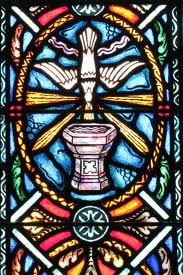
Finally, all of this is pictured in baptism. Lord’s Day 26 (and 27) in the Heidelberg Catechism is about baptism.  Here are questions 69 and 70 together. Baptism pictures the forgiveness of our sins and the pouring out of the Spirit so we might be holy. 

69. How are you admonished and assured by holy baptism, that the one sacrifice of Christ upon the cross is of real advantage to you?

A: Thus: That Christ appointed this external washing with water, adding thereto this promise, that I am as certainly washed by his blood and Spirit from all the pollution of my soul, that is, from all my sins, as I am washed externally with water, by which the filthiness of the body is commonly washed away.

 Q: 70. What is it to be washed with the blood and Spirit of Christ?

A: It is to receive of God the remission of sins, freely, for the sake of Christ’s blood, which he shed for us by his sacrifice upon the cross;  and also to be renewed by the Holy Spirit, and sanctified to be members of Christ, that so we may more and more die unto sin, and lead holy and blameless lives.

Happiness Begins with Knowing That You are a Great Sinner

The 2nd question in the  Heidelberg Catechism is this:

Q: 2. How many things are necessary for you to know, that you, enjoying this comfort, may live and die happily?


What a great question! What do I need to know that I might live and die happily?  Isn’t this what everyone wants? What man, woman, or child does not want to live a happy life? Who doesn’t want to die happy? But what is the answer? How much do I need to know that my life might be a happy one? Do I need to know how to get rich? Do I need to know how to be a good person? Do I need to know how to get married? Do I need to know the joys of freedom from law? What do I need to know to live and die happily? Here is the answer given by the Heidelberg:
A: Three; the first, how great my sins and miseries are;  the second, how I may be delivered from all my sins and miseries;  the third, how I shall express my gratitude to God for such deliverance. 

Not what you expected? We don’t usually put the fact that our sins are great at the top of things that will help us live and die happily. In fact, sin is usually considered the beginning of all our problems. But here is where happiness begins. Your best life now begins with the fact that your sins are so great that if they were drops of water the oceans would be too small to hold them all. The life of joy and happiness begins with your heart being black and your hands being covered in blood. 

Why does happiness begin at such an odd place?

First, the fact that we are great sinners is reality. Human beings, even Christians, often think we are not really that bad. We justify our sins. We minimize our sins. We pretend we don’t sin. We blame our sins on other people. We cover up our sins. We do anything we can to make sure our sins don’t look great.  But reality is never defined by us. It is always defined by God’s Word. Psalm 130:3 states that our sins are great. Romans says the same thing. In fact, it is assumed from Genesis 3 on that our sins are so great that we cannot save ourselves. Understanding that we are great sinners helps us see the world (and ourselves) the way it is and not the way we want it to be.  
Second, only when we understand that our sins are great will we understand Jesus and His substitutionary work on the cross for us. When we minimize sin we minimize the cross and Jesus. When we minimize Jesus happiness, joy, comfort, delight, and peace are all lost.  Without sin there is no need for Christ. Without Christ all good things disappear. Until our sins are seen for what they are we cannot see Jesus rightly. And only by seeing Jesus rightly can we have pleasures forevermore. 
As odd as it sounds, happiness begins with seeing yourself as a great sinner.  
Are you a happy person? Do you enjoy life? Do you enjoy the comfort of the great salvation given to us in Jesus Christ? Would your spouse, your children, your co-workers, your neighbors describe you as a joyful person? If you died tomorrow would you “die happily?” If the answer is no, then perhaps you think too much of yourself. Perhaps you do not realize how great your sins are. Perhaps you spend a lot of time hiding your sins, pretending they are “mistakes” or “flaws.” Perhaps you are more concerned about how you look to others than about the reality of who you are. Step into the light. Your sins are great. That is a fact. But Jesus is greater. And only in a great Jesus can true happiness be found. 

Heidelberg Catechism on the Lord’s Supper

Of The Holy Supper Of Our Lord Jesus Christ
28. Lord’s Day
Q: 75. How are you admonished and assured in the Lord’s Supper, that you are a partaker of that one sacrifice of Christ, accomplished on the cross, and of all his benefits?
A: Thus: That Christ has commanded me and all believers, to eat of this broken bread, and to drink of this cup, in remembrance of him, adding these promises:  first, that his body was offered and broken on the cross for me, and his blood shed for me, as certainly as I see with my eyes, the bread of the Lord broken for me, and the cup communicated to me; and further, that he feeds and nourishes my soul to everlasting life, with his crucified body and shed blood, as assuredly as I receive from the hands of the minister, and taste with my mouth the bread and cup of the Lord, as certain signs of the body and blood of Christ.
Q: 76. What is it then to eat the crucified body, and drink the shed blood of Christ?
A: It is not only to embrace with believing heart all the sufferings and death of Christ and thereby to obtain the pardon of sin, and life eternal;  but also, besides that, to become more and more united to his sacred body,  by the Holy Spirit, who dwells both in Christ and in us; so that we, though Christ is in heaven  and we on earth, are notwithstanding “flesh of his flesh and bone of his bone”  and that we live, and are governed forever by one spirit,  as members of the same body are by one soul.
Q: 77. Where has Christ promised that he will as certainly feed and nourish believers with his body and bleed, as they eat of this broken bread, and drink of this cup?
A: In the institution of the supper, which is thus expressed:  “The Lord Jesus, the same night in which he was betrayed, took bread, and when he had given thanks, he brake it, and: said: eat, this is my body, which is broken for you; this do in remembrance of me. After the same manner also he took the cup, when he had supped, saying: this cup is the new testament in my blood; this do ye, as often as ye drink it, in remembrance of me. For, as often as ye eat this bread, and drink this cup, ye do show the Lord’s death till he come.”. This promise is repeated by the holy apostle Paul, where he says “The cup of blessing which we bless, is it not the communion of the blood of Christ? The bread which we break, is it not the communion of the body of Christ? For we being many are one bread, and one body: for we are all partakers of that one bread.”


29. Lord’s Day
Q: 78. Do then the bread and wine become the very body and blood of Christ?
A: Not at all: but as the water in baptism is not changed into the blood of Christ, neither is the washing away of sin itself, being only the sign and confirmation thereof appointed of God; so the bread in the Lord’s supper is not changed into the very body of Christ; though agreeably to the nature and properties of sacraments, it is called the body of Christ Jesus.
Q: 79. Why then does Christ call the bread “his body”, and the cup “his blood”, or “the new covenant in his blood”; and Paul the “communion of body and blood of Christ”?
A: Christ speaks thus, not without great reason, namely, not only thereby to teach us, that as bread and wine support this temporal life, so his crucified body and shed blood are the true meat and drink, whereby our souls are fed to eternal life;  but more especially by these visible signs and pledges to assure us, that we are as really partakers of his true body and blood by the operation of the Holy Spirit as we receive by the mouths of our bodies these holy signs in remembrance of him;  and that all his sufferings and obedience are as certainly ours, as if we had in our own persons suffered and made satisfaction for our sins to God.
30. Lord’s Day
Q: 80. What difference is there between the Lord’s supper and the popish mass?
A: The Lord’s supper testifies to us, that we have a full pardon of all sin by the only sacrifice of Jesus Christ, which he himself has once accomplished on the cross; and, that we by the Holy Spirit are grafted into Christ,  who, according to his human nature is now not on earth, but in heaven, at the right hand of God his Father,  and will there be worshipped by us.  But the mass teaches, that the living and dead have not the pardon of sins through the sufferings of Christ, unless Christ is also daily offered for them by the priests; and further, that Christ is bodily under the form of bread and wine, and therefore is to be worshipped in them; so that the mass, at bottom, is nothing else than a denial of the one sacrifice and sufferings of Jesus Christ, and an accursed idolatry.
Q: 81. For whom is the Lord’s supper instituted?
A: For those who are truly sorrowful for their sins, and yet trust that these are forgiven them for the sake of Christ; and that their remaining infirmities are covered by his passion and death; and who also earnestly desire to have their faith more and more strengthened, and their lives more holy; but hypocrites, and such as turn not to God with sincere hearts, eat and drink judgment to themselves.
Q: 82. Are they also to be admitted to this supper, who, by confession and life, declare themselves unbelieving and ungodly?
A: No; for by this, the covenant of God would be profaned, and his wrath kindled against the whole congregation;  therefore it is the duty of the Christian church, according to the appointment of Christ and his apostles, to exclude such persons, by the keys of the kingdom of heaven, till they show amendment of life.

Heidelberg Catechism on the Lord’s Prayer

Recently I have been preaching through the Lord’s Prayer. I have found the catechisms from the reformation to be a great help throughout the sermon series. Here is the section on the Lord’s Prayer from the Heidelberg Catechism.

Q: 116. Why is prayer necessary for Christians?
A: Because it is the chief part of thankfulness which God requires of us and also, because God will give his grace and Holy Spirit to those only, who with sincere desires continually ask them of him, and are thankful for them.

Q: 117. What are the requisites of that prayer, which is acceptable to God, and which he will hear?
A: First, that we from the heart pray to the one true God only, who has manifested himself in his word, for all things, he has commanded us to ask of him; secondly, that we rightly and thoroughly know our need and misery, that so we may deeply humble ourselves in the presence of his divine majesty; thirdly, that we be fully persuaded that he, notwithstanding that we are unworthy of it, will, for the sake of Christ our Lord, certainly hear our prayer, as he has promised us in his word.

Q: 118. What has God commanded us to ask of him?
A: All things necessary for soul and body; which Christ our Lord has comprised in that prayer he himself has taught us. Every good gift and every perfect gift is from above, and cometh down from the Father of lights, with whom is no variableness, neither shadow of turning. But seek ye first the kingdom of God, and his righteousness; and all these things shall be added unto you.

Q: 119. What are the words of that prayer?
A: Our Father which are in heaven, 1 Hallowed be thy name. 2 Thy kingdom come. 3 Thy will be done on earth, as it is in heaven. 4 Give us this day our daily bread. 5 And forgive us our debts, as we forgive our debtors. 6 And lead us not into temptation, but deliver us from evil. For thine is the kingdom, and the power, and the glory, forever. Amen.

Q: 120. Why has Christ commanded us to address God thus: “Our Father”?
A: That immediately, in the very beginning of our prayer, he might excite in us a childlike reverence for, and confidence in God, which are the foundation of our prayer: namely, that God is become our Father in Christ, and will much less deny us what we ask of him in true faith, than our parents will refuse us earthly things.

Q: 121. Why is it here added, “Which are in heaven”?
A: Lest we should form any earthly conceptions of God’s heavenly majesty, and that we may expect from his almighty power all things necessary for soul and body.

Q: 122. Which is the first petition?
A: “Hallowed be thy name”; that is, grant us, first, rightly to know you, and to sanctify, glorify and praise you, in all thy works, in which thy power, wisdom, goodness, justice, mercy and truth, are clearly displayed; and further also, that we may so order and direct our whole lives, our thoughts, words and actions, that thy name may never be blasphemed, but rather honored and praised on our account.

Q: 123. Which is the second petition?
A: “Thy kingdom come”; that is, rule us so by thy word and Spirit, that we may submit ourselves more and more to you; preserve and increase thy church; destroy the works of the devil, and all violence which would exalt itself against you; and also all wicked counsels devised against thy holy word; till the full perfection of thy kingdom take place, wherein you shall be all in all.

Q: 124. Which is the third petition?
A: “Thy will be done on earth as it is in heaven”; that is, grant that we and all men may renounce our own will, and without murmuring obey thy will, which is only good; that every one may attend to, and perform the duties of his station and calling, as willingly and faithfully as the angels do in heaven.

Q: 125. Which is the fourth petition?
A: “Give us this day our daily bread”; that is, be pleased to provide us with all things necessary for the body, that we may thereby acknowledge you to be the only fountain of all good, and that neither our care nor industry, nor even thy gifts, can profit us without thy blessing; and therefore that we may withdraw our trust from all creatures, and place it alone in you.

Q: 126. Which is the fifth petition?
A: “And forgive us our debts as we forgive our debtors”; that is, be pleased for the sake of Christ’s blood, not to impute to us poor sinners, our transgressions, nor that depravity, which always cleaves to us; even as we feel this evidence of thy grace in us, that it is our firm resolution from the heart to forgive our neighbor.

Q: 127. Which is the sixth petition?
A: “And lead us not into temptation, but deliver us from evil”; that is, since we are so weak in ourselves, that we cannot stand a moment; and besides this, since our mortal enemies, the devil, the world, and our own flesh, cease not to assault us, do you therefore preserve and strengthen us by the power of thy Holy Spirit, that we may not be overcome in this spiritual warfare, but constantly and strenuously may resist our foes, till at last we obtain a complete victory.

Q: 128. How do you conclude your prayer?
A: “For thine is the kingdom, and the power, and the glory, forever”; that is, all these we ask of you, because you, being our King and almighty, are willing and able to give us all good; and all this we pray for, that thereby not we, but thy holy name, may be glorified forever.

Q: 129. What does the word “Amen” signify?
A: “Amen” signifies, it shall truly and certainly be: for my prayer is more assuredly heard of God, than I feel in my heart that I desire these things of him. For all the promises of God in him are yea, and in him Amen, unto the glory of God by us. If we believe not, yet he is faithful: he cannot deny himself.

HC: Lord’s Day 30-Excommunication

Q: 80. What difference is there between the Lord’s supper and the popish mass?
A: The Lord’s supper testifies to us, that we have a full pardon of all sin by the only sacrifice of Jesus Christ, which he himself has once accomplished on the cross; and, that we by the Holy Spirit are grafted into Christ, who, according to his human nature is now not on earth, but in heaven, at the right hand of God his Father, and will there be worshipped by us. But the mass teaches, that the living and dead have not the pardon of sins through the sufferings of Christ, unless Christ is also daily offered for them by the priests; and further, that Christ is bodily under the form of bread and wine, and therefore is to be worshipped in them; so that the mass, at bottom, is nothing else than a denial of the one sacrifice and sufferings of Jesus Christ, and an accursed idolatry.

Q: 81. For whom is the Lord’s supper instituted?
A: For those who are truly sorrowful for their sins, and yet trust that these are forgiven them for the sake of Christ; and that their remaining infirmities are covered by his passion and death; and who also earnestly desire to have their faith more and more strengthened, and their lives more holy; but hypocrites, and such as turn not to God with sincere hearts, eat and drink judgment to themselves.

Q: 82. Are they also to be admitted to this supper, who, by confession and life, declare themselves unbelieving and ungodly?
A: No; for by this, the covenant of God would be profaned, and his wrath kindled against the whole congregation; therefore it is the duty of the Christian church, according to the appointment of Christ and his apostles, to exclude such persons, by the keys of the kingdom of heaven, till they show amendment of life.

Applications
1. Here we come to the warnings concerning the Lord’s Supper. First, hypocrites are not to be admitted to the table. Those who claim Christ, but do not walk worthy are to be excluded. This does not mean sinners cannot come to the table. It means unrepentant sinners cannot come to the table. Sinners must come, but they must come ready to turn from their sins. Those who are excluded from Supper are those who want the privilege of being counted among Christians, but do not want their life to conform to Christ. These hypocrites are to be cast out the church until they repent and turn. Second, if someone chooses to eat and drink while not turning they will be judged by Almighty God. Even if the elders do not know, God does. He will bring the person who profanes the table to account.