Bavinck on Sola Scriptura

The following paragraphs from Herman Bavinck’s Reformed Dogmatics: Volume I come after a discussion of how the theologian must function within his local church and use his confession. Here is a sentence explaining Bavinck’s point. “Dogmatics [theology] is possible only for one who lives in the fellowship of the faith with one Christian church or another.” He goes on to say that theologians/dogmaticians must stand on the shoulders of previous generations and not just those in their particular line of theology, but other lines as well. Lutherans begin within their own confession, but then move on to study and learn from other branches of the church, such as Presbyterian and Baptist. He also argues that none of us begin without presuppositions. We all have been taught something and from that deposit we then do theology. But there is a logical question that follows: Doesn’t this build our theology on the foundation of our confessions and our church instead of God’s Word? If we cannot do theology outside of a church and must have human teachers does that make our church and those teachers the source of our theology? If theology must be done in the church does that make the authority of our theology the church and her teaching? Here is Bavinck’s answer to that question. Whenever you see dogmatics, etc. just substitute theology or theologian. I have removed a few Latin phrases.

This is not to elevate the history of dogma and the confession of the church to a position of infallible authority. There is a difference between the way in which a dogmatician is shaped and the primary principle from which dogmatics receives its material. In every branch of learning, the practitioner begins by living from the tradition. He always gains his first acquaintance with the field from an authority. He must first absorb the history of his discipline and attain a knowledge of the present state of the field; then he can go to work independently and acquire his own insights into the object of his research. But no one in his right mind will, for that reason, view the tradition, which was pedagogically [it taught him] so important to him, as the source of his discipline. It is no different for the dogmatician. Pedagogically the church is prior to Scripture. But in the logical order Scripture is the sole foundation of church and theology. In case of conflict between them, the possibility of which can never be denied on a Reformational view, church and confession must yield to Scripture.

Not the church but the Scripture is self-authenticating, the judge of controversies, and its own interpreter. Nothing may be put on a level with Scripture. Church, confession, tradition-all must be ordered and adjusted by it and submit themselves to it…The Reformed, though deeming a confession a necessity in this dispensation of the church in order to explain the Word of God, to turn aside heresies, and to maintain the unity of the faith, denied with the utmost emphasis that the confession had any authority apart from Scripture. Scripture alone is the norm and rule of faith and life. 

The Supreme and Infallible Judge

Francis Turretin’s section on Scripture, his 2nd topic, is marvelous, wonderful, invigorating, and Biblical. I recommend it for all who are interested in the Protestant view of Scripture. The 20th question in the Topic is:

Whether the Scriptures (or God speaking in them) are the supreme and infallible judge of controversies and the interpreter of the Scriptures. Or whether the church or the Roman Pontiff is. We affirm the former and deny the latter against the papists. 

He then says:

This is a primary question and almost the only one on account of which all the other controversies about the Scriptures started. From no other cause is either that authority of Scriptures called in question by the papists or their integrity and purity attacked or their perspicuity and perfection argued against, than to prove the Scriptures cannot be the judge of controversies and the necessity of having recourse to the tribunal of the church. 

He then gives seven reasons why Scripture is the supreme and infallible judge.

First, “God in the Old and New Testaments absolutely and unconditionally sends us to this judge.”

Second, “The practice of Christ and his apostles confirms this for in controversies of faith they appeal to the Scriptures.”

Third:

A supreme and infallible judge is one who never errs in judgment, nor is he able to err; is uninfluenced by prejudice and from whom is no appeal. Now these requisites can be found neither in the church, nor councils, nor pope, for they can both err and often have erred most egregiously.

Fourth:

Man cannot be the infallible interpreter of the Scriptures and judge of controversies because he liable to error. Our faith cannot be placed in him, but upon God alone from whom depends the sense and meaning of the Scriptures and who is the best interpreter of his own words. 

Fifth:

If there was such a judge as the papists maintain: (a)  it is a wonder that the Lord never mentions this interpreter who is so essential; (b) that Paul in his epistles…does not inform them even by a single word of so great a privilege; (c) that Peter in his catholic epistles did not arrogate this as about to be transmitted to his successors, much less exercise it; (d) that the popes were neither able nor willing by that infallible authority to settle the various most important controversies which the Romish church cherished in her own bosom (i.e., between the Thomists and the Scotists, the Dominicans and the Jesuits, the Jesuits and Jansenists, etc.). 

Sixth:

The church cannot be regarded as the judge of controversies because she would be a judge in her own cause and the rule of herself.  For the chief controversy is about the power and infallibility of the church, when the very question is whether the church is the judge, or whether the church can err. 

Seventh, “the ancients here agree with us.” Turretin then goes on to quote church fathers who agree that the Scriptures are the final judge.

Here are a couple of other quotes from this section and the next, which is on what authority the church fathers should have in the church. All parentheses are his.

When we say that the Scriptures are the judge of controversies, we mean it in no other sense than that they are the source of divine right, and the most absolute rule of faith by which all controversies of faith can and should be certainly and perspicuously settled. 

The orthodox (although they hold the fathers in great estimation and think them very useful to a knowledge of the history of the ancient church, and our opinion on cardinal doctrines may agree with them) yet deny that their authority, whether as individuals or taken together, can be called authoritative in matter of faith and the interpretation of the Scriptures, so that by their judgment we must stand or fall. Their authority is only ecclesiastical and subordinate to the Scriptures and of no weight except so far as they with them. 

Therefore we gather that the fathers neither can nor ought to be regarded as judges in our controversies, but as witnesses who (by their wonderful consent) give testimony to the truth of Christianity and prove (by their silence or even by weighty reasons) the falsity of the doctrines introduced by the papists beyond and contrary to the Scriptures. Their writings must be respectfully received and read with profit. Yet at the same time they cannot have any other than our ecclesiastical and human authority (i.e., subordinate and dependent on the Scriptures. 

Images & the 2nd Commandment: Heidelberg Catechism~ Lord’s Day 35

Our church started reciting the Heidelberg Catechism in worship this year. It has been a great way to introduce reformed theology to our congregation. Doing this year after year will give our folks good foundation of basic Biblical teaching. This Sunday in our worship we will recite Lord’s Day 35 from the Heidelberg Catechism, which addresses the 2nd Commandment. Here is the 2nd Commandment:

You shall not make for yourself a carved image, or any likeness of anything that is in heaven above, or that is in the earth beneath, or that is in the water under the earth.You shall not bow down to them or serve them, for I the LORD your God am a jealous God, visiting the iniquity of the fathers on the children to the third and the fourth generation of those who hate me, but showing steadfast love to thousands of those who love me and keep my commandments (Exodus 20:4-6).

Here are the three questions from the Heidelberg Catechism on the 2nd Commandment:

Q 96. What is God’s will for us in the second commandment.

A. That we in no way make any image of God nor worship him in any other way than has been commanded in God’s Word.

Q 97. May we then not make any image at all?

A. God cannot and may not be visibly portrayed in any way. Although creatures may be portrayed, yet God forbids making or having such images if one’s intention is to worship them or to serve God through them.

Q 98. But may not images be permitted in churches in place of books for the unlearned?

A. No, we should not try to be wiser than God. God wants the Christian community instructed by the living preaching of his Word—not by idols that cannot even talk. 

There several things to note from these questions and answers.

First, this is not just about images though images of God are forbidden. It is also about worshiping according to God’s Word. There is a lot of debate about what the Word teaches concerning the particulars of worship especially how to apply the Regulative Principle of Worship. However, at the very least, Question 96 says our worship practices must be rooted in Scripture and not the tradition or imaginations of men.

Second, images of creatures are not forbidden. Some extreme Christian traditions have rejected all art. The Heidelberg Catechism leaves room for art of all kinds, as long as it does not become worship of any kind.

Third, the Heidelberg Catechism rightly says that images set up to worship are dumb idols. God’s people cannot be taught by dead images. They are to be taught by the lively preaching of the word. One of the  key recoveries of the Reformation was the priority of the preached word in worship.

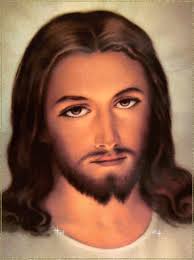
Are pictures of Jesus forbidden? This is often debated. G.I. Williamson says that pictures of Christ are forbidden because Jesus is God. I believe this was the majority report in the Reformed tradition, but is currently in the minority. Kevin DeYoung says pictures of Jesus are fine, but he urges caution, which would probably be my stance. I did not watch The Passion of the Christ because I did not want the movie running through my mind when I read the crucifixion accounts. Also there are so many bad pictures of Jesus it might be worthwhile to ban them just so Christians will stop embarrassing themselves. Pictures like the one below do not help our cause.

What specifically is forbidden by this commandment? Artwork of any kind that depicts the invisible God and yes that means the Sistine Chapel is a violation of the 2nd Commandment. Any images, statues, paintings, pictures, carvings and/or stained glass of any creatures, but especially Jesus, Bible scenes, Mary, the saints, and the cross, that are kissed, prayed to, bowed down to, meditated on, venerated, considered a pathway to God, considered sacred, or thought of as something that brings us into communion with God are forbidden.  This does not mean there can be no statues of Mary. But it does mean when people bow before it, kiss its feet, pray to it, expect to get closer to God because it is there, or surround the statue like a shrine it has become an idol. Also any other practices that are contrary to the Bible’s teaching on how to worship God are forbidden.

Roman Catholic Teaching on the 2nd Commandment
Compare the Heidelberg with the statements made in the Roman Catholic Catechism sections 2129-2132. (By the way the Roman Catholics consider this part of the 1st Commandment.)

The divine injunction included the prohibition of every representation of God by the hand of man. Deuteronomy explains: “Since you saw no form on the day that the Lord spoke to you at Horeb out of the midst of the fire, beware lest you act corruptly by making a graven image for yourselves, in the form of any figure….”It is the absolutely transcendent God who revealed himself to Israel. “He is the all,” but at the same time “he is greater than all his works.” He is “the author of beauty.”

So far so good.

Nevertheless, already in the Old Testament, God ordained or permitted the making of images that pointed symbolically toward salvation by the incarnate Word: so it was with the bronze serpent, the ark of the covenant, and the cherubim.

Ah, but then comes that pesky “nevertheless.”  Three points why this does not prove that we can make images in the New Covenant. First, God commanded these Old Testament images to be made. Where in the NT are we commanded to make images of any kind? If there is no command from God to make images of Mary, Jesus, or the cross as part of our worship then we should refrain. Second, the bronze serpent shows the danger of even God ordained images. It became an idol that was worshiped (II Kings 18:4) and had to be destroyed. If an image commanded by God can become an idol how much more is that the case with images that are not commanded by Him. Third, there is no indication that any of these images were objects of worship, veneration, prayer, etc. They were symbols of God’s activity and presence. But even the ark of the covenant where God actually dwelt is not the object of worship. Were the cherubim woven into the Tabernacle curtains ever prayed to? Did they bow before the lamp stand?  Did God command them to kiss the show bread? Again if images and types commanded by God were not worshiped how much more should we avoid doing so with images that are not ordained by God.

Basing itself on the mystery of the incarnate Word, the seventh ecumenical council at Nicaea (787) justified against the iconoclasts the veneration of icons – of Christ, but also of the Mother of God, the angels, and all the saints. By becoming incarnate, the Son of God introduced a new “economy” of images.

Not sure what a “new ‘economy’ of images is? Here is the text from the 2nd Council of Nicaea in 787. It would be nice to see a NT text that proves this idea is Biblical. But hey, when you have tradition, who needs the Bible. Obviously the invisible God became visible through Jesus Christ. I am not sure how that gives us the freedom to make images of angels, Mary, saints, or even Jesus and use them in our worship or to try to get to God through them.  

The Christian veneration of images is not contrary to the first commandment which proscribes idols. Indeed, “the honor rendered to an image passes to its prototype,” and “whoever venerates an image venerates the person portrayed in it.” The honor paid to sacred images is a “respectful veneration,” not the adoration due to God alone: Religious worship is not directed to images in themselves, considered as mere things, but under their distinctive aspect as images leading us on to God incarnate. the movement toward the image does not terminate in it as image, but tends toward that whose image it is.

Here is where the Reformers understood the human heart better than Roman Catholics. Is there really that much difference between adoration, worship, veneration, etc.? But even if you try to create different levels of worship in print, in real life men like to worship things even God ordained things like the bronze serpent. They want to walk by sight not by faith. Therefore this attempt is doomed from the start. People pray to/through these images, meditate on these images, find a spiritual connection in these images, kiss these images, ascend to heaven through these images, get to “God incarnate” through these images, and yet somehow they do not worship them? Somehow this looks like idol worship in every way and yet isn’t? This distinction between the image and the thing the image represents and the various types of worship is splitting hairs and pastorally dangerous.

Summary 
Images of God are forbidden. Images of other creatures can be made,  perhaps even Christ, but they must not be worshiped in any way. Human hearts are prone to idol worship therefore worship should be carefully guarded to prevent even the appearance of worshiping an image. There are no Biblical commands or inferences that allow us to set up images in worship or to use them to aid our worship. The key way we get to know God and His Son Christ is when the Spirit works through the preached Word while in fellowship with other living saints.
No Recompense Outside of Christ

Here is a section from John Calvin’s sermon on Ephesians 1:6-10. 

St. Paul [in Ephesians 1:7] uses two words to express how we are reconciled to God. First he sets down the ransom or redemption, which amounts to the same thing, and afterwards he sets down the forgiveness of sins. How then does it come about that God’s wrath is pacified, that we are made at one with him, and that he even accepts and acknowledges us as his children? It is by the pardoning of our sins, says St. Paul.  And furthermore, because pardon necessitates redemption he yokes the two together. The truth is that, in respect of us, God blotted out our sins of his own free goodness and shows himself altogether bountiful, and does not look for any payment for it at our hands. And, in fact what man is able to make satisfaction for the least fault that he has committed? If every one of us, therefore, should employ his whole life in making satisfaction for any one fault alone, and by that means seek to win favor at God’s hand, it is certain that such a thing far surpasses all our abilities. And therefore God must necessarily receive us to mercy without looking  for any recompense or satisfaction at our hands. 

But, for all this, the atonement, which is freely bestowed in respect of us, cost the Son of God very dear (I Peter 1:19).  For he found not other payment than the shedding of his own blood, so that he made himself our surety in both body and soul, and answered for us before God’s judgment to win absolution for us. Our Lord Jesus Christ entered into the work, both body and soul. For it would not have been enough for him to have suffered so cruel and ignominious a death in the sight of men, but it was necessary for him also to bear such horrible anguish in himself, as if God had become his judge, for he gave himself up in the behalf of sinners to make full satisfaction.  

Turretin on the Clarity of the Scriptures

One of the big issues plaguing the church is the failure to believe the Scriptures are sufficient and clear. Almost any debate today from evolution, to women’s roles, to sodomy, to Protestants jumping to Eastern Orthodoxy or Roman Catholicism are at least in part arguments about Scripture’s sufficiency (evolution) and/or Scripture’s clarity (Roman Catholicism).  So in the spirit of keeping the debate going here are some of Francis Turretin’s questions and answers under his Second Topic: The Holy Scriptures. The way Turretin has set up his Elentic Theology is that he asks a question then gives a quick answer to the question. That is then followed by several paragraphs defending and proving his answer.  Obviously, I have not included his defense of his answer in this blog post. There are 21 total questions on this topic. I have only included the ones that I thought were most pertinent to the clarity of the Scriptures.

Turretin’s Questions

Are the Holy Scriptures truly authentic and divine? We affirm.

Do real contradictions occur in Scripture? Or are there any inexplicable passages which cannot be explained and made to harmonize? We deny. [Turretin spends several pages addressing various apparent contradictions.]

From what source does the divine authority of the Scriptures become known to us? Does it depend upon the testimony of the church as to itself or as to us? We deny against the papists.

Have the original texts of the Old and New Testaments come down to us pure and uncorrupted? We affirm against the papists. [How many Christians would deny this today?]

Are the Hebrew version of the Old Testament and the Greek of the New the only authentic versions? We affirm against the papists.

Do the Scriptures so perfectly contain all things necessary to salvation that there is no need of unwritten traditions after it? We affirm against the papists. 

Are the Scriptures so perspicuous in things necessary to salvation that they can be understood by believers without the external help of oral tradition or ecclesiastical authority? We affirm against the papists. 

Can the Scriptures be profitably read by any believer, and ought he to read them without permission? We affirm against the papists. 

Whether the Scriptures are the supreme and infallible judge of controversies and the interpreter of the Scriptures. Or whether the church of the Roman Pontiff is. We affirm the former and deny the latter against the papists. 

Are the writings of the fathers the rule of truth in doctrines of faith and in the interpretation of the Scriptures? We deny against the papists. 

Observations
First, there is a lot of similarity between Roman Catholics (papists) and Pentecostals when it comes to the Bible. Both believe that you need something besides the Scriptures, tradition or special revelation, to help you know and obey God. For that matter, many Evangelicals do as well. Therefore the sufficiency of Scripture must be fought for on two fronts.

Second,  clarity on matters related to salvation is both implicitly and explicitly taught in Scriptures. Without this we are left with only a human authority to guide into truth and no way to check that human authority.

Third, reading this section in Turretin I realized that most questions have been asked and answered before. For example, Turretin address textual criticism, why we need various versions of the Bible, why pastors need to appeal to the original languages, the role the Septuagint, etc. Turretin is not the last word on these things. He is wrong in some areas. But too often we assume when we hear a question for the first that it is the first time it has been asked and answered

Finally, what I love here is that Turretin believes the Word is powerful, sufficient, and clear. It is all we need. He is not opposed to preachers, the ministry, reading the church fathers, or the creeds, but none of these are God’s Word. God’s Word must be held out above all in both theory and practice.