
Where is the Real Abuse of Power?


Earlier this week the State of Kentucky, acting on an anonymous tip, removed ten children from a family that is living “off the grid.”  As usual in such cases emotions run high and there is little doubt more information will come out.  Here are several thoughts about the case.

First, I am not inclined to trust our local, state or federal governments. Call me jaded, cynical, or perhaps just a good learner. But a country that routinely lies, kills babies, starts wars it has no business in, takes more and more of our money, spies on its own citizens, wants to legalize gay marriage, allows its leaders to be bribed by corporations and lobbyists, and thinks smoking marijuana is a crime worthy of years of incarceration does not engender trust.

Second, child abusers should be arrested and punished. If the father was abusing his children then he should be punished. This is the government’s job. But a government that thinks refusing to vaccinate or send your kids to public school is similar to child abuse and abortion isn’t has some twisted moral values.  Along with that, child abuse is not the same as a refusal to do what the government or society thinks you should. While I am glad for indoor plumbing, an outhouse does not constitute child abuse. Here are the two main complaints of the Kentucky Cabinet for Health and Family Services:

According to a CHFS affidavit, there are two main concerns that the state found with the family’s lifestyle. The first was that the family’s homestead only has one “shed” and two “tents” that don’t have a running water supply. The affidavit also asserts that the children are not registered with the local school board.

No mention of child abuse, malnutrition, bruises, beatings, etc.  An older son from a previous marriage came forward and said that the father was an abuser. If he is then he should be punished. But at this point there is no evidence of that. If fact, social services had come out on May 8th, three days before the children were taken, and inspected the home and suggested one minor change, but did not indicate there were major problems. Here is quote from  another news article:

Although Brow’s [the older son] allegations definitely raise concerns, the reasons why the Naugler children were removed from the home have nothing to do with allegations of physical or sexual abuse.

Third, there should be no anonymous tips. If a person wants to accuse someone of something they need to own their accusation. I know anonymous tips are woven into our justice system, but how can a person be held accountable for bearing false witness (Exodus 20:16) if there is no record of the person who actually made the accusation?

Fourth, note these paragraphs. I added the bold.

“The allegations were that the family was residing in a tent, mother had given birth in a tent, there is no running water or septic, none of the children were enrolled in school and the father threatened the neighbor with a weapon,” the police report states. “Sheriff Pate made contact with the family via telephone who spoke with the father who said a search warrant was the only way the children could be spoken with and Mrs. Naugler contacted SSC at this date, at the request of Sheriff Pate, and she too said no one could speak with the children about the report or come back to the property without a search warrant.”

Because the Nauglers wouldn’t let the police officers or a representative from CHFS speak with their children without a warrant, the parents were deemed to be not cooperative, according to the report. The report added that the parents’ lack of cooperation helped lead to the assumption that the homestead’s living conditions are not safe for the children

The parents by asking the police for a search warrant to talk to their children were deemed “not cooperative” that is, assumed guilty. Too often this is how our justice system works, as many African Americans know. Guilt is presumed because you are not bending over for the government. We live in a country where the government assumes your guilt before they ever knock on your door.

Fifth, just because a family is doing things differently does not mean they should have their children taken from them. I think a vigorous education rooted in reading the great books is essential for a child. I also think living off the grid leaves you with some social issues. But neither unschooling nor living off the grid constitutes a good reason for the government to remove children. In other words, I do not think it is wise to live the way the family does, but I do think they have the right to live that way. That does not mean every situation falls in this category. If a father is sexually molesting his children, beating his wife, or not feeding his children then something should be done. But as the state continues the unending march towards controlling our lives more and more spurious accusations are being used to separate children from parents.

Sixth, the government is not a good substitute parent. These children are now spread out over four counties in four different homes. In certain cases children should be removed from their parents.  But that is usually a lateral move from one tragic situation to another. In many situations siblings are split up and the rights of parents to visit the children is severely reduced. While there are many loving homes that these children get put in, there are also many ugly situations. And no matter what the situation is being cut off from family and siblings leaves a scar. Removing children from parents should be a last ditch response to an awful situation, not a knee jerk reaction to anonymous tip from a disgruntled neighbor.

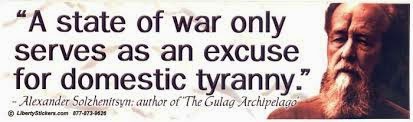
In summary, the government taking these children from their parents, based on the current evidence and the statements of the authorities, is a bigger abuse of power than the way the parents were living. We shouldn’t be surprised. If the government thinks it has the moral authority to spy on it citizens, run Iraq, tell other countries to accept sodomy, and kill babies then why wouldn’t it have the moral authority to remove children from a backwoods family in Kentucky for a failure to register in school?

One Flesh Points to Reproduction

Stephen B. Clark commenting on Genesis 2:14.

“While it would be a mistake to regard one flesh solely in terms of sexual intercourse, it would be an even greater mistake to miss the reference to family and reproduction and concentrate instead on the modern idea of companionship. One reason that animals will not do as a partner for man is their inadequacy for reproductive purposes. The man needs someone with whom he can live and establish a household. Implicit in this, especially for the first man, is the need for sexual relations and reproduction.”

Once we make reproduction an option in marriage instead of a normal requirement and expectation we remove one of the impediments to gay marriage. If siring and birthing children is a central part of the marriage relationship then gay marriage makes no sense. Sodomites and lesbians cannot do this. But if the marriage relationship is based primarily or solely on companionship, love, mutual affection for and interest in one another then why can two men or two women or three men with five women or a man and dog not get married? Once again we are reminded that how we interpret Genesis 1-3 will often set  a trajectory for how we view the rest of the Scriptures, the world, man, and fundamental institutions, such as marriage.

There are many reasons gay marriage has become normal in our society. But the failure of Christians to see bearing children as an essential part of marriage has been a contributing factor.

By the way, I am not saying a couple who cannot bear children has a deficient marriage. Note my phrase “normal requirement and expectation.” There are exceptions, but the norm for a married couple should be reproduction.

Motherhood, Aristotle, and the Trinity

If you are a mom (or anyone else for that matter), please bear with me in this initial section. It is tough sledding, but there is fruit at the end. Fred Sanders’ book on the Trinity has been an excellent read so far. Throughout the book he pulls in quotes and illustrations from many diverse sources. In the early chapters Sanders mentions Nicky Cruz, who was converted by David Wilkerson the author of the The Cross and the SwitchbladeJohn Bunyan, Friedrich Schleiermacher, Thomas F. Torrance, and Gerald Bray among others. In one section Sanders is talking about the difference between who God is and what He does. He notes that God did not have to create. He was glorious, good, and loving before the world ever came into being and would have remained so had he never created. One person he quoted struck me. Here are the quotes from that individual:

He is the great God, “the God of the spirits of all flesh,” the high and lofty one that inhabiteth eternity,” and created not angels and men because he wanted them for his being in itself , and as such must necessarily be infinitely happy in the glorious perfections of his nature from everlasting to everlasting; and as he did not create, so neither did he redeem because he needed us; but he loved us because he loved us, he would have mercy because he would have mercy, he would show compassion because he would show compassion.

In other words, the creation of this world was a gift of grace. God was not constrained to create in any way. This person goes on to explain why Aristotle was mistaken in his belief that world had eternally existed alongside God.  Aristotle said this because he felt that a good God demanded an outlet for that goodness and therefore matter had to eternally exist as a way for God to show his goodness. This person refutes Aristotle using the Trinity:

For had he [Aristotle] ever heard of the great article of our Christian faith concerning the Holy Trinity, he had then perceived the almighty Goodness eternally communicating being and all the fullness of the Godhead to the divine Logos, his uncreated Word, between whose existence and that of the Father there is not one moment assignable. 

The person’s point here is that God’s goodness did not need a created world to be expressed. It had been expressed between Father and Son for all eternity. It is clear that this person has a grasp of ancient philosophy, Trinitarian theology, and the Scriptures. It is also clear that this person understands and delights in who God is. Who do you think said these things?

The answer is Susanna Wesley.  I was fascinated by these quotes from Mrs.Wesley’s journal tucked away in Sanders’ book. I think Sanders was as well. He says, “Susanna Wesley’s skirmish with Aristotle is a pretty tidy speculative engagement with the philosopher, and it is worth remembering that Susanna was not a theology professor but a full-time homeschooling mother when she wrote it.” I read a little more about Susanna Wesley and found out the following facts: she had a hard life, she had nineteen children, of whom only eight were living when she died, and she taught all her children Latin and Greek, as well as many other classics subjects. Several thoughts popped in my head as I learned these things. Here they are in no particular order:

How much of John and Charles Wesley’s theological impact can be traced to their mother? Clearly she understood the deep things of God and passed that on to her children.

Why do we often assume that women only need a great education if they are going to have a career? (And let’s be honest Mrs. Wesley probably had a better education than most career women today.) If they are going to be stay at home moms we assume that Latin, Greek, theology, advanced science, and philosophy are a waste of time. But are they really? I am not saying these things must be taught to our daughters, but if we can teach them, why not? Surely the long term impact of John and Charles can be traced not just to their mother, but to their mother’s education.

Along those same lines, why do we often assume that mothers do not need to worry about or understand theology? I am not saying all women must be theologians. Different women have different leanings and bents. Some women love theology. Some do not. There are dangers with both these leanings. But all Christian women should understand and delight in the basics of the Christian faith including, the Trinity, the atonement, the Scriptures as the inspired Word of God, the Holy Spirit, baptism, the Church, etc. Men, why would we not want our wives to know these things? Why would we not want them to think deeply about God like Mrs. Wesley did?

I might add here that women who do study theology often do not connect it to their task as mothers.
They might study Calvin, Aquinas, the Trinity, Romans, or the atonement, but don’t see how their study connects to motherhood. How can this be? How can the great truths of the Scriptures given through the great men of the Church not have anything to say about the great task of shepherding little ones? If a woman is learned in these areas, it is assumed she must write, blog, or teach. Why? Is using this knowledge to raise children a waste? I am not saying writing and blogging are bad, but just because you study theology does not mean you need or deserve a public outlet for your thoughts. Feed your own soul and your children’s souls with the great truths you are learning.

The knowledge a mother has is never wasted on her children. My wife has a degree in theology. Many stay at home moms I know have degrees. Some have advanced degrees. The world would consider this a waste. Why get a degree and then stay home? Why learn about biology, chemistry, history, literature, sociology, and then just change diapers? Many husbands probably think it is a waste as well. The assumption behind this is that using what you learned to make money is more profitable than using it to bring up children.  But raising children is never a waste of time. A mother’s experiences, education, upbringing, knowledge, etc. should all be brought to bear upon raising up the next generation. This is the great work to which God has called her. What she knows is never wasted when she pours it into her children. By the way, I am not saying a college education is necessary or always good for a woman. But if God in His providence has allowed a woman to get one she should see this as an asset to mothering, not a drawback.

Finally, we must never forget the long term impact mothers have for good. Not all children are destined to be a John or Charles Wesley. But all of our sons and daughters can be a force for Christ in an increasingly ugly world. It is my prayer that there will be many women like Susanna Wesley, who are well educated, theologically informed, hard working, and godly, but will use these gifts to build the Kingdom through raising children.

A Few Words for Children Who Were Home Schooled

This article is meant to be read in conjunction with the one to parents. They balance each other out. I was home schooled and I am currently homeschooling so I have been on both ends of these blog posts. I think there is much here for all children to learn, but I have addressed this specifically to home schooled children.  

The world of home schooling has blown up over the last year, especially with the ugly sins of Doug Philips and Bill Gothard being exposed. These men influenced home schoolers in significant ways. This has led to blog posts, web sites, etc., by adults who were home schooled, where they decry their upbringing. Often these articles have good points, but, at times, there is an underlying attitude that can leave a bad taste in my mouth. Here is what I would say to adults who were home schooled and look back with disappointment on their growing up years.

First, don’t blame your parents and your upbringing for your sins and your problems. Sometimes these articles can be summed up as: Mom and Dad left me with a lot of baggage. All of our parents did that. You will do that to your kids. If you see problems in your life, don’t whisper to yourself, “It was my parents’ fault.”  Don’t allow your heart to echo, “If only my upbringing was different.” Your upbringing was fine. You did not have it any worse than anyone else. This victim mentality fits in well with American culture, but isn’t befitting someone claiming the name of Christ.

Second, stop trying to show your parents all the things they did wrong. Often you should make different decisions than your parents. The problem is not making a different choice than Mom and Dad. It is making a different choice and making a point with that different choice. Make the choices you think are best according to the Scriptures, but don’t poke your parents in the eye while doing it. Treat your parents with respect even when you disagree with them or do things differently.  As an aside, grown children should be cautious about calling out their parents, especially publicly. Your parents did sin against you, as you will sin against your children. But grace covers sin. Cover your parents’ sins.

Third, rules do not equal legalism. Just because your parents made you wear denim jumpers or wouldn’t let you watch R movies does not make them a Pharisee. The word legalism is tossed around too easily today. Different rules from the ones you have for your household does not mean you were raised as a Pharisee. Legalism does exist in homeschooling circles. But it should be carefully defined and then proven. Saying your parents were legalists may score you rhetorical points, but it doesn’t prove your point.

Fourth, in most cases your parents were first or second generation home schoolers. They were pioneers. When my mom home schooled me the choices were limited. Now they are almost unlimited. Blazing a trail is different from settling down and building a city. They had to cut down their own trees. There were no paved roads. That means the path was rougher and maybe they got off track here and there. Be gracious and humble. They did a good work by trying to bring you up in the ways of Christ. Was it perfect? Of course not. Were there things about the home schooling movement that were off track? Of course. As 2nd or 3rd generation home schoolers we need to keep building the city, but not with a pride that looks down on those who got us here.

Finally, give thanks for the parents God gave to you. I do not mean a warm, fuzzy feeling just above your rib cage. Tell them how thankful you are for what they did. Tell your children how thankful you are for your parents. Call them often and tell them of your love. Speak well of them in public and private. All of us could find things wrong with our parents. All of us could snipe and pick and bite them. But as Christians is that what we are supposed to do? Doesn’t love cover a multitude of sins? Would you want your grown children sniping at you that way? Didn’t the same God who sent His Son to deliver you send those parents to raise you? Be grateful for what they gave you, not bitter over what they didn’t.

Book Review: Godly Seed

Godly Seed: American Evangelicals Confront Birth Control, 1873-1973Godly Seed: American Evangelicals Confront Birth Control, 1873-1973 by Allan C Carlson
My rating: 4 of 5 stars

This is my first Carlson book, though I have read many of his articles. Carlson plots the change in the evangelical view of birth control from 1873 and the Comstock laws to 1973 and Roe v. Wade. It is a very dense book, with a lot of end notes. I would love to see an expansion of some of the themes. Also Carlson does not give any real clear answers as to what we should do. Yet it is clear he thinks we have gone astray on this issue. Several things stood out to me.

First, this is a very short amount of time for such a dramatic change in Christian views of sexuality.

Second, Christianity Today played a substantial role in making birth control acceptable among evangelical Christians.

Third, soft eugenics and postmillenialism played a large part in the acceptance of birth control between 1915 and WWII. After that the key factor for evangelicals was the population explosion. Billy Graham, as well as many other Christians, used the coming population explosion as sufficient proof that we need to use birth control.

Fourth, prior to 1973 abortion and birth control were linked by evangelicals. Their acceptance of birth control led to many leaders also considering if not outright supporting abortion. After Roe v. Wade views on abortion were revisited and modified. However, the birth control issue was not.

Fifth, the elevation of companionship as the primary reason for marriage was a key component in getting evangelicals to accept birth control.

Finally, Margaret Sanger and later Christianity Today used the Roman Catholic-Protestant divide to get Protestants to accept birth control.

I found the book very fascinating with a lot of excellent detail. For example, Carlson got access to boxes of notes, etc. at Christianity Today that have not been published. He also does a good job in showing the shifts in mindset that resulted in certain practical outcomes. I am looking forward to doing more reading on the subject, but this was a good start.

View all my reviews