Matthew 24 is a one of the more hotly debated passages in the Scriptures. It’s bearing on eschatology is immense. In fact, one could say that the interpretation of this passage will influence how someone interprets almost every other eschatological section in the Scriptures. There are generally two options set before us; This passage is referring to the end of the world. It is referring to the destruction of the Temple in A.D. 70. There are two parts of this passage I want to dissect in order to get a clearer picture of what Christ is talking about. First, I want to look at the section most people think could only refer to the end of the world, verses 29-31. Here is what it says:
“Immediately after the tribulation of those days the sun will be darkened, and the moon will not give its light, and the stars will fall from heaven, and the powers of the heavens will be shaken. Then will appear in heaven the sign of the Son of Man, and then all the tribes of the earth will mourn, and they will see the Son of Man coming on the clouds of heaven with power and great glory. And he will send out his angels with a loud trumpet call, and they will gather his elect from the four winds, from one end of heaven to the other. “
Surely this is talking about the end of the world! It is only at the end of the world that stars fall from heaven and the sun is darkened. However, the Old Testament tells a different story. Here are some OT passages with similiar language. I have bolded what nation the passage is referring to.
Isaiah 13:1, 9-10: The oracle concerning Babylon which Isaiah the son of Amoz saw…Behold, the day of the LORD comes, cruel, with wrath and fierce anger, to make the land a desolation and to destroy its sinners from it. For the stars of the heavens and their constellations will not give their light; the sun will be dark at its rising, and the moon will not shed its light.
Isaiah 34:4-5 All the host of heaven shall rot away, and the skies roll up like a scroll. All their host shall fall, as leaves fall from the vine, like leaves falling from the fig tree. For my sword has drunk its fill in the heavens; behold, it descends for judgment upon Edom, upon the people I have devoted to destruction.
Ezekiel 32:2, 7-8 “Son of man, raise a lamentation over Pharaoh king of Egypt and say to him… When I blot you out, I will cover the heavens and make their stars dark; I will cover the sun with a cloud, and the moon shall not give its light. All the bright lights of heaven will I make dark over you, and put darkness on your land, declares the Lord GOD.
Amos 8:2, 9-10 And he said, “Amos, what do you see?” And I said, “A basket of summer fruit.” Then the LORD said to me, “The end has come upon my people Israel; I will never again pass by them…And on that day,” declares the Lord GOD, “I will make the sun go down at noon and darken the earth in broad daylight. I will turn your feasts into mourning and all your songs into lamentation; I will bring sackcloth on every waist and baldness on every head; I will make it like the mourning for an only son and the end of it like a bitter day.
Joel 2:27-32 You shall know that I am in the midst of Israel, and that I am the LORD your God and there is none else. And my people shall never again be put to shame. “And it shall come to pass afterward, that I will pour out my Spirit on all flesh; your sons and your daughters shall prophesy, your old men shall dream dreams, and your young men shall see visions. Even on the male and female servants in those days I will pour out my Spirit. “And I will show wonders in the heavens and on the earth, blood and fire and columns of smoke. The sun shall be turned to darkness, and the moon to blood, before the great and awesome day of the LORD comes. And it shall come to pass that everyone who calls on the name of the LORD shall be saved. For in Mount Zion and in Jerusalem there shall be those who escape, as the LORD has said, and among the survivors shall be those whom the LORD calls.
Several things should immediately strike us. First, the language Jesus uses in Matthew 24 is never used anywhere else in the Bible to refer to the end of the world. It is always a reference to a coming judgment upon some nation. Second, Peter explicitly says that the Joel passage was fulfilled in Pentecost. (Acts 2:16-21) He even quotes the language about the moon turning to blood, etc. Did this happen literally on Pentecost? The answer is no. So what in Matthew 24 demands a literal interpretation of 24:29-31? Nothing. So here is how Matthew 24 would line up with the above passages.
Matthew 24:1-3, 29-31 Then Jesus went out and departed from the temple, and His disciples came up to show Him the buildings of the temple. And Jesus said to them, “Do you not see all these things? Assuredly, I say to you, not one stone shall be left here upon another, that shall not be thrown down.” Now as He sat on the Mount of Olives, the disciples came to Him privately, saying, “Tell us, when will these things be? And what will be the sign of Your coming, and of the end of the age?…Immediately after the tribulation of those days the sun will be darkened, and the moon will not give its light; the stars will fall from heaven, and the powers of the heavens will be shaken. Then the sign of the Son of Man will appear in heaven, and then all the tribes of the earth will mourn, and they will see the Son of Man coming on the clouds of heaven with power and great glory. And He will send His angels with a great sound of a trumpet, and they will gather together His elect from the four winds, from one end of heaven to the other.
The most natural reading of the passage is that Jesus is talking about the destruction of the Temple in A.D. 70. This not referring to the end of the world, but rather to the end of the Old Covenant era.
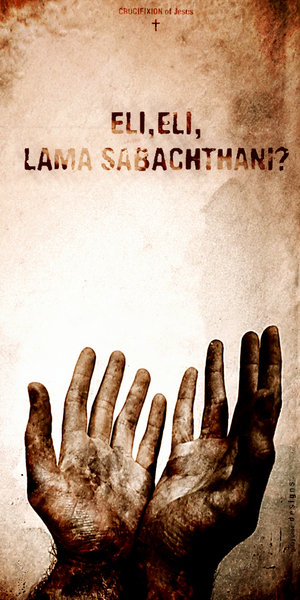 Matthew quotes from Psalm 22 twice in his narration of the crucifixion in Matthew 27. In verse 35 he quotes from Psalm 22:18. Christ quotes Psalm 22:1 in verse 46. Matthew’s point here is a simple. Even in the middle of this great darkness, where the Son of God is being crucified, God is in control. Even here, where we would assume God has lost his handle on things, Scripture is being fulfilled. Even at the cross, where the Kingdom appears to gotten off track, God’s Word predicted it long ago.
 Singing & Slaying