
Are Some Sins Worse Than Others? Part II

WLC 1

Yesterday I posted the first two ways some sins are worse than others from the Westminster Larger Catechism. Here are the last two with some concluding remarks. The question being answered is what makes some sins worse than others.

3. From the nature and quality of the offense: if it be against the express letter of the law, break many commandments, contain in it many sins: if not only conceived in the heart, but breaks forth in words and actions, scandalize others, and admit of no reparation; if against means, mercies, judgments, light of nature, conviction of conscience, public or private admonition, censures of the church, civil punishments; and our prayers, purposes, promises, vows, covenants, and engagements to God or men: if done deliberately, willfully, presumptuously, impudently, boastingly, maliciously, frequently, obstinately, with delight, continuance, or relapsing after repentance.

A sin can be aggravated if the quality of the sin is greater. The list here is long. Let’s focus on a couple of things. First, breaking the clear teaching of Scripture is a greater sin than a less clear teaching of Scripture. Adultery is worse than masturbation, though masturbation is a sin. One is clearly taught in Scripture the other is not as clear. Cursing God is worse that a regular profanity such as “s**t.”

Second, if there are numerous agencies, such as parents, church, government, our own conscience, or friends that have shown us how an action is against Scripture and yet we sin anyway, this makes the sin worse. This isn’t complicated. If a new Christian is in a mostly pagan situation with just a few Christian friends who are young in the faith and sins that is different from a man who was raised a Christian, is surrounded by mature Christians, has pastors and elders encouraging him to do right and sins.

Finally whenever sin is boasted in or committed with delight that makes it worse. Here is one of the reasons why sodomy today is worse than sodomy in the past. Homosexuality has always existed. But today it is celebrated and rejoiced in even by those who claim Christ. This is done despite the fact that it is against conscience, Scripture, nature, and the consensus of the church through the ages. That means many homosexuals today do not just commit the sin, but make it worse by boasting in it.

But sodomy is low hanging fruit. How many Christians delight in “getting other Christians?” How many Christians delight in their pride, that they are not like other people or even other Christians? How many Christians delight in the fact that they submit to no man, when Scripture calls them to submit to elders? How many Christians gossip behind the backs of others with a secret delight? If you think this doesn’t apply to you and only applies to sodomites and frat boys who love sleeping with a different woman each weekend you are wrong. We all have our pet sins that we let go. What are the sins you secretly delight in?

4. From circumstances of time and place: if on the Lord’s day, or other times of divine worship; or immediately before  or after these, or other helps to prevent or remedy such miscarriages: if in public, or in the presence of others, who are thereby likely to be provoked or defiled.

Fourth, sins can be made worse when we commit them at particular times or places. The first thing mentioned by the WLC is when a sin is committed before or after worship. Why is yelling at your children driving home from church worse than yelling at them on Thursday after shopping? At first, this seemed odd to me. But it makes sense.  One of the themes running throughout these questions is that the closer contact one has with the gospel, the church, and the teachings of the Bible the more heinous it makes the sin. Therefore if you walk into church, sing praises to God, fellowship with his people, hear his word, and then walk out and sin it aggravates the sin because it is against an immediate grace.

The second thing mentioned is when a person sins in public or in front of those likely to be led astray. Again a father leads his children. Therefore when a father complains in front of his children is more heinous than if he  complained in private. A minister preaching heresy from the pulpit is worse than thinking about heresy in his office.  A wife who disrespects her husband in to her friends is worse than one who just has disrespectful thoughts.

To summarize  the teaching. Sins can be made worse:

  • If the person sinning is in a position of authority, power, or has particular gifts.
  • If the person sinned against is God himself, a human in authority, a weak brother, or someone who is a close relationship.
  • If the sin is clear violation of Scripture, has been condemned by many Christians, or is rejoiced in.
  • If the sin is preceded or followed closely by an act of worship or is done in public.

Concluding Thoughts

First, just because one sin is worse, does not make the lesser sin not a sin. A political leader committing adultery is worse than an auto mechanic committing adultery. But it is still adultery in both cases. Both men are guilty. In other words, this list should not be taken as justifying lesser sins. No sin is good, but some are worse than others.

Second, this list is helpful in challenging situations of sin in the church or even among children. How hard you come down on someone will often be dictated not just by the sin, but also the context of the sin. How long has the person been a Christian? Have they been taught the ways of God? Were they warned? Is this a besetting sin that the person is fighting against or is it something they indulge without much concern?

Third, all of us ministers, elders, and deacons need to read these two WLC questions carefully. There is a reason our falls are the source of great scandal in the church. There is a reason our failure to study theology leads our people astray. There is a reason our family life is so important to our ministry. Feel the weight brothers. Our sins hurt more people and cause more damage than the sins of others. Do not take the task on lightly.

Finally, as you read the list apply it to yourself and not to your neighbor. One of the greatest problems I have as a pastor is people who think sermons and posts like these are for everyone else, but not for them. This post is for you. What do you do to aggravate or make your sins worse?

Are Some Sins Worse Than Others? Part I

(c) Palace of Westminster; Supplied by The Public Catalogue Foundation

Westminster Assembly

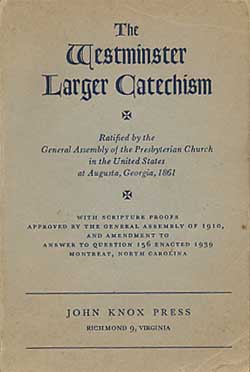
As you read history you realize that theologians of the past tended to be more careful and thoughtful with their distinctions. They would often dig into every nook and cranny of a subject, pulling out every implication of a particular doctrine, passage, or law. At times, this led to excess. But in our age, when thinking is typically shallow, it is worth going back and looking at how these men thought and how they worked out implications of specific doctrines. The Westminster Larger Catechism (WLC) is a great example of this. The questions below come after the WLC exposition of the Ten Commandments (Questions 91-149). There is a lot of wisdom in these two questions.

Q150: Are all transgressions of the law of God equally heinous in themselves, and in the sight of God? A150: All transgressions of the law of God are not equally heinous; but some sins in themselves, and by reason of several aggravations, are more heinous in the sight of God than others.

The first question is are all sins equal. One of the common ideas floated around today is that all sin equally, we are all in the same boat, all of us are terrible, wicked men. There is, of course, some truth to this. That is why it sticks. But that is not the whole truth. All men in the sight of God are damned for Hell without Christ. But that does not make all sins equally heinous. We can see this when Jesus says it will be more tolerable for Sodom than for Capernaum in the day of judgment (Matthew 11:24). Is being rude at the dinner table a sin? Yes. But being rude at the Lord’s Supper is worse. The first point the WLC makes is that not all sins are equally heinous. What makes some sins worse than others? The WLC lists four things. Here are the first two. I will post the last two tomorrow.

Q151: What are those aggravations that make some sins more heinous than others?
A151: Sins receive their aggravations,
1. From the persons offending: if they be of riper age, greater experience or grace, eminent for profession, gifts, place, office, guides to others, and whose example is likely to be followed by others.

First, a sin can be made worse by the person doing the sinning.  If a person is older, has been a Christian longer, has greater gifts or a greater position, leads others, or others follow them then the sins are worse. We all know this in life. A minister who commits adultery is worse than a layman who commits adultery. A bitter old woman is a worse sinner than a bitter young woman. Fathers’ sins are worse than the sins of children. A man in leadership when he sins will lead many astray while a normal Joe will not.  If a man has been a Christian for thirty years and starts teaching heresy it is worse than a young believer who goes astray. A sin is not committed in a vacuum. A particular man or woman, in a particular situation commits sin. Who that person is and who they relate to matters.

2. From the parties offended: if immediately against God, his attributes, and worship; against Christ, and his grace; the Holy Spirit, his witness,  and workings; against superiors, men of eminency, and such as we stand especially related and engaged unto; against any of the saints, particularly weak brethren, the souls of them, or any other, and the common good of all or many.

Second, a sin can be made worse by the one sinned against. Obviously, direct sins against God are worse than sins against man. The WLC references Hebrews 2:2 here. Sin against the grace of the gospel is worse than stealing from your neighbor. Cursing God is worse than watching porn.

But then beyond direct sins against God a sin can be worse when it is committed against particular people. A son cursing his father is worse than the same son cursing his friend at the park. The closer the relationship the worse the sin. That means sins within the family are worse than sins outside of it. It also means, and I think this is worth carefully considering, sinning against a brother or sister in Christ is a deep offense against God. Too many Christians treat the world better than the person on sits in the pew next to them. We bend over backwards to accommodate the world, but make excuses for not helping our brothers or sisters in Christ. This is not an encouragement to treat the world worse, but rather to treat your fellow Christians better.

Tomorrow I will post the other two ways we make sins worse as well some concluding thoughts.

Crawling Back to the Cross

Thorns

This is a re-post from last summer with a few slight edits. 

There are dark nights in the lives of all Christians. These can come because we have lost something or someone. They can come from burdens upon us. They can come from physical sickness or emotional distress. They can come from the darkness of the world, crisis in our church, or from our own sins. But perhaps no darkness compares to the silence of God in the midst of these dark nights. What do we do when he is absent? when we cry out and he does not answer? What do we do when it looks like he has cast us off? Not surprisingly, the Psalms give us the answer.

I cry aloud to God, aloud to God, and he will hear me. In the day of my trouble I seek the Lord; in the night my hand is stretched out without wearying; my soul refuses to be comforted. When I remember God, I moan; when I meditate, my spirit faints. Selah.

You hold my eyelids open; I am so troubled that I cannot speak. I consider the days of old, the years long ago. I said, “Let me remember my song in the night; let me meditate in my heart.” Then my spirit made a diligent search: “Will the Lord spurn forever, and never again be favorable? Has his steadfast love forever ceased? Are his promises at an end for all time? Has God forgotten to be gracious? Has he in anger shut up his compassion?” Selah. (Psalm 77:1-9)

There are few words in the Psalter as despairing as these nine verses. The author cries out to God repeatedly. He refuses to be comforted. He cannot close his eyes. He asks questions modern, sentimental Christians refuse to ask. Has God forgotten us? Has his love come to end? Have his covenant mercies, his steadfast love been forgotten? Has his anger overcome his compassion? Am I stuck in darkness, despair, and death? Is there any hope at all? But note the second line of the first paragraph, “In the day of trouble I seek the Lord.” And the middle of the second paragraph, “My spirit made diligent search.”  He is not going to passively slip into despair and darkness. He is going to pursue God despite the darkness.  Like a man clawing out of a grave he will keep digging until his breath runs out or he reaches the light.

And what is the answer to his distress?

Then I said, “I will appeal to this, to the years of the right hand of the Most High.” I will remember the deeds of the LORD; yes, I will remember your wonders of old. I will ponder all your work, and meditate on your mighty deeds. Your way, O God, is holy. What god is great like our God? You are the God who works wonders; you have made known your might among the peoples. You with your arm redeemed your people, the children of Jacob and Joseph. Selah.

When the waters saw you, O God, when the waters saw you, they were afraid; indeed, the deep trembled. The clouds poured out water; the skies gave forth thunder; your arrows flashed on every side. The crash of your thunder was in the whirlwind; your lightnings lighted up the world; the earth trembled and shook. Your way was through the sea, your path through the great waters; yet your footprints were unseen. You led your people like a flock by the hand of Moses and Aaron. (Psalm 77:10-20)

The writer’s hope is kindled by looking to God’s deeds in the past. “I will remember…I will remember..I will ponder…I will meditate.”  He looks backward to see a way out of the darkness. He focuses on the parting of the Red Sea. Israel, like this man, could see no way out. In front of them lay the sea. Behind them lay the Egyptian army. Listen to the words of the Israelites as they stood on the shore:

When Pharaoh drew near, the people of Israel lifted up their eyes, and behold, the Egyptians were marching after them, and they feared greatly. And the people of Israel cried out to the LORD. They said to Moses, “Is it because there are no graves in Egypt that you have taken us away to die in the wilderness? What have you done to us in bringing us out of Egypt? Is not this what we said to you in Egypt: ‘Leave us alone that we may serve the Egyptians’? For it would have been better for us to serve the Egyptians than to die in the wilderness.” (Exodus 14:10-12)

Moses we are going to die here. God has forgotten us. Where is God’s  mercy now? We told you to let us be. Despair. Darkness. Death. Now hear the words of Moses:

And Moses said to the people, “Fear not, stand firm, and see the salvation of the LORD, which he will work for you today. For the Egyptians whom you see today, you shall never see again. The LORD will fight for you, and you have only to be silent.” (Exodus 14:13-14)

And that is exactly what happened. God saved Israel. The writer of Psalm 77 looked back to that great event and found courage, peace, and hope. He remembered the power of God, how even the great waters could not withstand Him. He remembered that the Lord made a path through the sea. He remembered that the armies of Pharaoh were drowned and their bodies washed up on the shore (Exodus 14:30-31).

Why could the author of the Psalm do this? Why could he look back to an event hundreds of years earlier and find hope? Because God does not change. He is in the business of delivering his people. He always has been. We do not know what was wrong when the Psalmist wrote this. Nor do we know how or when God delivered the Psalmist from his “day of trouble.” But we know that God did deliver him because he always does.

In our times of darkness, whether they are personal or corporate, we look back to a greater exodus, a greater deliverance. We look back to the cross and there we are reminded, “He who did not spare his own Son but gave him up for us all, how will he not also with him graciously give us all things?” (Romans 8:32).  We are reminded that God so loved us that he gave his only begotten Son to die on our behalf. We are reminded that Jesus endured the cross, despising the shame so we might be sons of glory (Hebrews 2:10). As the Psalmist crawled back to the Red Sea and the God who saved Israel there, we need to crawl back to the cross. When darkness comes we need to meditate upon God’s “mighty deeds” and ponder His strength and works. We need to remember His “wonders of old.” For He does not change. He redeemed Israel. He will redeem us. He cast down Pharaoh. He will cast down our enemies. He led Israel to the promise land. He will guide us to green pastures and still waters. This does not mean that your life will be perfect, you will be rich and healthy. It just means that in then end all will be well.

For I consider that the sufferings of this present time are not worth comparing with the glory that is to be revealed to us (Rom 8:18).

Westminster Assembly on Matthew 5:16-20

The following is a quote from The Sum of Saving Knowledge, Section II by the Westminster Assembly

That the righteousness of every true Christian must be more than the righteousness of the scribes and Pharisees; for the scribes and Pharisees, albeit they took great pains to discharge sundry duties of the law, yet they cut short the exposition thereof, that it might the less condemn their practice; they studied the outward part of the duty, but neglected the inward and spiritual part; they discharged some of the meaner [lesser] duties carefully, but neglected judgment, mercy, and the love of God: in a word they went about to establish their own righteousness, and rejected the righteousness of God by faith in Jesus

But a true Christian must have more than all of this; he must acknowledge the full extent of the spiritual meaning of the law, and have a respect to all the commandments, and labor to cleanse himself from all filthiness of flesh and spirit, and “not lay weight upon what service he has done, or shall do,” but cloth himself with the imputed righteousness of Christ, which only can hide his nakedness or else he cannot be saved; so says the text [Matthew 5:16-20].

The Christian and His Possessions

Wad-of-100s

Here are some basic principles for handling possessions and money. These are not comprehensive, but give a biblical framework for how we should think about our money and possessions. Many of the principles come from Matthew 6:19-34 and I Timothy 6:6-10, 17-19.

  1. God is our Father. He loves us and will care for us. Therefore we should not worry. If he chooses to remove some of our possessions, it is for our good. Because he is our Father we should pray to him when we are needy and thank Him when He provides for us.
  2. We will die. Therefore we need to store up treasure in heaven not on earth.
  3. We should earn our money through honest, hard work that does not take advantage of the poor and weak.
  4. Laziness is a sin that can lead to poverty. Not all the poor are there because they are lazy, but some are.
  5. One key reason we labor is so we can have money to help those in need (Ephesians 4:28).  We earn to serve, not to horde.
  6. We should not expect others (government, church, family) to provide for us except in extreme circumstances where God’s hand of Providence forces us to go to others for help. Expecting others to bail us out is a sign of immaturity.
  7.  A Christian should give a minimum of 10% to their local church with the goal of increasing the percentage to give to ministries outside the local body.
  8. Our possessions are gifts from God, even those possessions we have worked hard for. Work and the fruit of our labor, money, are part of God’s grace to us.
  9. We are stewards of our possessions. A steward was someone left in charge of a house while the master was away. Jesus uses this model in Matthew 25:14-30. Paul also uses a similar idea in passages like Colossians 3:23-25. We will answer to our Master with how we use our time, money and possessions.  Our approach to money should be principled and biblical, not haphazard.
  10. Neither wealth nor poverty are necessarily a vice or a virtue.  A man can be poor and godly or poor and ungodly. A man can be rich and godly or rich and ungodly. We should be careful in making sweeping generalizations about a person’s righteousness based on their wealth.The questions are: 1.) How did they get there? Are they rich because of theft or cheating or hard work? Are they poor because of laziness or because they got cheated by one of the rich guys in the previous question? 2.) What is the attitude towards their situation? Are the wealthy full of good works or proud and arrogant? Are the poor patient and working hard to earn so they can serve others or are they whining, blaming others, grumbling, and looking for a handout?
  11. Debt is not an automatic sin. Not all debt is equal either. $10,000 on a credit card for a vacation is different from a mortgage which is different from a business loan that could turn a profit. But debt does put a man in bondage and could be a sign of laziness and greed. A man should be careful about who he goes in debt to,what he goes in debt for, examine his heart when he does, and should seek to get out of debt quickly.
  12. The wealthy should not take advantage of the poor by using money to manipulate them or by giving the poor high interest loans. The rich can manipulate the poor by keeping them in bondage through favors. The rich give, but use the “gift” to bind the poor to them. Wealthy in this situation does not have to be a multi-millionaire. It could just be someone who has more free income than someone else.
  13. Both wealth and poverty come with temptations. The rich tend to forget God, become proud, and oppress the poor. The poor tend to doubt Him, grumble, and become jealous (See Proverbs 30:7-9). God is to be honored with our possessions, whether we are rich or poor. The rich assume the problem is with the “lazy poor.” The poor assume the problem is with the “greedy rich.” Let each man look to his own temptations.
  14. Those with more often look down on those with less and vice versa. Envy, bitterness, and pride often characterize our relationships with those on a different economic level whether they are above us or below us. Christians should not treat people differently based on their wealth or poverty (James 2:1-4).
  15. Frugality can be greed in pious disguise.
  16. Those who are wise with their money and those who are wasteful can both be dominated by money. Saving a lot and being wise with your finances does not mean you are free from the love of money. Being generous does not guarantee you are free from the love of money either. “Love” is internal. It does express itself in concrete ways, but humans have an amazing ability to cover their sins with pious deeds.
  17. God wants us to enjoy our possessions. We should not feel guilty enjoying what we own. This does not mean we are selfish gluttons or live in luxury (See points #5 and 9 above). But we should eat our food, drink our beer, sleep in our beds, read our books, play in our yards, and drive our cars with thankfulness and joy. If you live under a haze of guilt for what you have you do not understand God’s grace.
  18. Those who are rich in this world are to be rich in good works. Most American Christians fit this category. To whom much is given, much is required. The wealthiest Christians should be the ones doing the most good deeds. But these good deeds should be hidden, not paraded before men (See Matthew 6:1-4). And of course, it is not a good deed to irresponsibly throw money at a problem (See When Helping Hurts). 
  19. We should be known for our contentment. We should not be proud when we have a lot. Nor should we disturbed when God removes some of our possessions from us. Contentment in all circumstances is the goal (Philippians 4:11-13). In a world that always wants more, contentment is great witness to our trust in Christ and our Heavenly Father.
  20. The desire to be wealthy is usually a sin. We should work hard, plan wisely, and let God build our bank account as he sees fit. Proverbs 27:20 says, “The eyes are never satisfied.” We will not be satisfied when we get what we want, so let’s be content with what we have.
  21. Love of money can destroy someone’s faith and plunge them to ruin (I Timothy 6:9-10). We joke about greed, but in the Scriptures it is a terrible sin. Greed can choke the spiritual life out of a man and send him to Hell.
  22. Finally, in our current situation the greatest thief is government.