Suicide: The Basic Principle


Gravestones 2

A couple of weeks ago I followed a conversation about suicide on Facebook. This got me thinking about suicide. The first thing I did was look at the major catechisms and what they said. You can find the fruit of that in this blog post.   In this short post, I give the basic principle concerning suicide. There is a lot of emotion associated with suicide. My intent is not to open wounds for those who have lost loved ones to suicide. My heart breaks for the darkness that act can bring. Still our emotions do not dictate truth. The key question is not how do we feel, but what does the Bible teach?

The Basic Principle
God is the one who has the right to give and take life. Therefore the killing of someone, including self, without God’s consent is unjust and is murder.  What are legitimate reasons for the taking of life? I will not defend these or get into all the possible exceptions. But the Bible teaches that we can take a life (1) to defend ourselves or another against an attack and  (2) that duly appointed governmental authorities, following a fair and just trial, can take a life where the law allows. I realize these are necessarily brief. But the point is that suicide does not  fit either of these God appointed exceptions even if we give them the broadest definition.

Therefore the intentional killing of one’s self is murder and is a sin. There are no Biblical principles to contradict this and numerous ones to support it. It has been the almost universal teaching of the church from the beginning. Murder is the unjust taking of a life. Suicide, including euthanasia, fits in that category. Helping someone kill themselves is helping someone commit murder and should be treated as such.

This does not make every suicide equal in its gravity. For example, a man being tortured in a prison camp who takes his own life is in a different category than a man who lost his money in the stock market or a young girl who kills herself because her boyfriend left her.  The Roman Catholic Catechism says, “Grave psychological disturbances, anguish, or grave fear of hardship, suffering, or torture can diminish the responsibility of the one committing suicide.”  This is helpful, but in our age where someone commenting on  your hair could be construed as a “grave psychological disturbance” it can create too big a loophole. Still it is good to remember that not all suicides are equal in gravity just as not all murders are equal in sinfulness. Nonetheless, suicide is murder.

In my next post I will look at some difficult questions about suicide.


The Catechisms on Suicide

Gravestones 1

A couple of weeks ago I followed a brief discussion about suicide on Facebook. This got me thinking about suicide, especially in light of the ability to prolong life in our medically advanced culture. Is a refusal to take medicine the same as suicide? This and some other thorny questions arise as we consider the issue of suicide. A wise place to begin exploring these questions is the teaching of our fathers in the faith. Here are the teachings of various catechisms and commentaries on catechisms on the commandment, “You shall not murder.” I have put in bold certain lines that pertain to the issue of suicide.

Luther’s Small Catechism 

What does God forbid in the 5th Commandment? God forbids us to take the life of a fellow man and our own life? God forbids us to hurt or harm our neighbor in his body, that is, to do or say anything which may destroy, shorten, or embitter his life. Continue reading

Types of Suffering

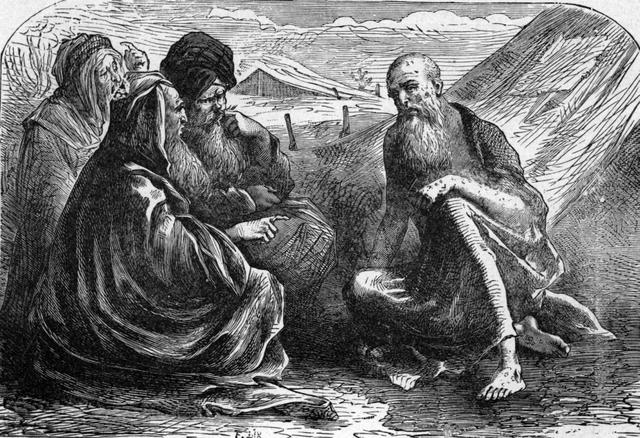
Job

This past Sunday I preached on the role of suffering in the Christian life. I looked at the part suffering played in the life of Christ, particularly in light of Hebrews 5:7-9 and then asked how can we follow in the footsteps of our Lord and learn obedience during our suffering. In a couple of conversations afterward I could see the need to distinguish between different types of suffering. Not all suffering and pain is the same or comes from the same source. Here are the different types of suffering. Of course, these are not distinct boxes. Sometimes they do overlap, except for the first, which is entirely unique.

Suffering that Atones for Sin

This refers to the once for all sacrifice of Christ upon the cross where he bore in his body the sins of His people and the wrath of God. This cannot be duplicated or supplemented by anyone else.

Common Suffering

This refers to the suffering all humans go through simply by being part of a fallen world. Sickness, emotional pain, discouragement, sadness, flat tires, stubbed toes, pain in pregnancy, hard days at work, and such are things all humans experience. Of course, not all go through the same types of suffering or suffer to the same degree, but these are common. You will suffer these types of things on a regular basis. Usually, this has nothing to do with the sin of the individual. Continue reading

Your Eye Shall Not Pity Them

Moses Angry

Can you imagine killing one of your family members, maybe your brother or sister? I know we all fight with our siblings and parents from time to time. But can you imagine actually raising your hand to kill someone close to you? For Christians this is a horrible thought. We know all the commands to love our family members. We know that he who does not care for his own household is worse than an unbeliever (I Timothy 5:8).  We know that the Bible tells us that part of the gospel is to turn fathers to children and children to fathers (Malachi 4:6).  And yet despite all of this Biblical teaching we have these verses in Deuteronomy 13:

If your brother, the son of your mother, or your son or your daughter or the wife you embrace or your friend who is as your own soul entices you secretly, saying, ‘Let us go and serve other gods,’ which neither you nor your fathers have known, some of the gods of the peoples who are around you, whether near you or far off from you, from the one end of the earth to the other, you shall not yield to him or listen to him, nor shall your eye pity him, nor shall you spare him, nor shall you conceal him. But you shall kill him. Your hand shall be first against him to put him to death, and afterward the hand of all the people. You shall stone him to death with stones, because he sought to draw you away from the LORD your God, who brought you out of the land of Egypt, out of the house of slavery. And all Israel shall hear and fear and never again do any such wickedness as this among you (Deu 13:6-11).

An Israelite who led another Israelite away from God was not to be spared. It did not matter how close the relationship was.  They could be your closest friend. They could be a sibling or a spouse. They could be a parent or grandparent. Notice the phrase, “You shall kill him.” Not only was that false teacher and apostate to be killed, the family member was to initiate the stoning. There are several things worth noting in this passage.

Our loyalty to God trumps all other loyalties. It does not matter how close they to you. It does not matter how thick your bloodlines are. Love for God is supreme. This is part of the reason the family member had to cast the first stone. Jesus said the same thing.

For I have come to set a man against his father, and a daughter against her mother, and a daughter-in-law against her mother-in-law. And a person’s enemies will be those of his own household. Whoever loves father or mother more than me is not worthy of me, and whoever loves son or daughter more than me is not worthy of me (Mat 10:35-37).

In addition to loyalty to God, the passage also indicates that the purity of God’s people trumps our feelings about someone. No matter how much we love someone, we should not allow them to draw people away from God and hurt his covenant people.

It shows the seriousness of idolatry. The family member in our passage is not just encouraging sin. He is encouraging a particular type of sin: idol worship. Idol worship is rarely the rejection of God. It is usually the idea that we can worship God alongside someone or something else. The most obvious offender today is a professing Christian who believes that all religions led to heaven. Also a professing Christian who believes that sexual sins are not really sins at all. But there are more subtle forms of idolatry where Jesus is mixed with money or power or America or family. Idol worship was a capital offense in Israel.

When idol worship is dealt with God’s people learn to fear Him. Our temptation is to treat false teaching with kid gloves. We do not want to come off as unloving. We do not want to overreact. Yet God is clear. When sin of this magnitude is dealt with swiftly by God’s people, it draws his people nearer to him.

But How Does this Work Today? Continue reading

And the Fog Descends

Fog 2

The Gospel Coalition recently published an article where a young man described how he came to grow as a Christian through a small group of men who discipled him. But you would never know that is what the article was actually about. The basic message about growth into Christian maturity is obscured by the attempt to be relevant to the SSA crowd or someone else out there.  Carl Trueman and I often disagree on women’s roles and masculinity in particular outside the church and home. But his short post nails the problems. Let me briefly explain why the article is not helpful.

First, it tries too hard to sound hip by using SSA as a paradigm instead of talking in terms of plain old discipleship. Read my opening sentence. There is nothing amazing about what happened to the author. It happens in thousands of churches in this land every week including ones where men shoot guns and play football. A man or woman struggles with sin other Christians come along and help him or her grow in Christ. But of course, an article like that would not get traffic or tweet as easily.

Second, it tries very hard to be profound when it isn’t. Of course, obedience is better than disobedience.  Refusing to act on sinful desire is always better than acting on sinful ones. Can you imagine someone saying, a man who is prone to greed, but doesn’t steal is far more of a man than a murderer who gives in to his lust to kill? Of course not. It is so patently true that it is not worth saying. Yet if you put celibate gay Christian in there it sounds profound.

Third, as Trueman points out the article represents a category confusion. Wanting to have sex with men is a desire that has no righteous outlet. It is a sinful desire. You cannot act on it. Wanting to have sex with a woman, is a legitimate desire that must be properly channeled. Same-sex attraction is sinful all the way down, as in it can never be acted on in any way. Heterosexual desire is not.

Fourth, the article takes what has traditionally been one of the ways men separated from women, dress, manners, certain enjoyments and made them not masculine. On the flip side it has taken what is not distinctly masculine, resisting your lusts, and made it masculine.  I am not saying to be truly manly you must watch football. But men and women have traditionally had different interests. That is because they are different. It is ironic that in an article which rejects dressing like a man as being manly, the picture in the post is of someone who is clearly a man. Dress does matter. So do manners and hobbies and all that other stuff that we toss on the pile as not meaning a whole lot.

Fifth, while I am not sure it was intended this way, but the opening paragraph appears to mock a certain culture that is filled with good Christians who love Jesus, like my dad. Are they perfect? No. But apparently you can struggle with SSA and be accepted, but killing innocent animals or loving Duck Dynasty means you are a patriarchal tyrant who doesn’t understand what it means to be a man in Christ. Here is the opening paragraph.

My adolescence was a social nightmare. I grew up in the rural South but didn’t fit the mold of Southern masculinity in the slightest. Sports piqued no interest in me; roughhousing made me nervous; slaying innocent animals seemed cruel and gross. Of course I never expressed such blasphemies—I wasn’t stupid! But I was everything opposite of what my Duck Dynasty-like culture insisted I should be. I was sensitive. I liked to read. I liked to draw. I liked to journal. I wasn’t your mud ridin’, hog huntin’ kind of boy.

Again, not sure if it was meant this way, but it comes across condescending.

Finally, because the article is so unclear, I am not sure who he is addressing with the following section:

As I observed their lives they led, the image I had in my mind of what it meant to be a man started to crumble. A man could be gentle and compassionate. A man could be thoughtful and sensitive. A man could be a better conversationalist than he is a sportsman. A man could talk about women with respect and integrity. A man could struggle with various weaknesses.

If he is saying “I had the wrong view of manhood” and these Christian men helped me correct it that is fine.  But often implicit in statements like this, especially when read beside his opening paragraph and the rest of the article, is that those who hold to traditional male-female roles have taught him the wrong view of manhood.  Even if he doesn’t mean this it will certainly be read that way by many. But no one I have ever read on traditional male-female roles would disagree with anything in this paragraph.  In fact replace all his “could be” with “must be” and that is what I read from men who hold a hard line on SSA and believe in traditional male-female roles. Men must be gentle and compassionate. Men must be thoughtful and sensitive. Men are weak. Men must talk about women with respect and integrity. And I think most would say if they had a choice between being a great conversationalist and killing a deer they would pick the former. Yes we like to hunt, but we also like to talk.

Trueman called this the most confusing statement of the day and maybe the week. He is right. It is not helpful and throws fog on a topic that is already filled with confusion.