Nothing but the Blood: Heidelberg Catechism, Lord’s Day 5


Blood 4

There is a hymn that says, “What can wash away my sin, nothing but the blood of Jesus.” Why is that? Why can only Jesus’ blood satisfy the demands of God’s justice and and at the same time show us mercy. There are three options for the removal of our sins. First, we could satisfy for our own sins. Second, another creature could satisfy for our sins. Finally, Jesus could satisfy.  Why can I not atone for my own sins? Why could the bulls and goats in the Old Testament not take away my sins? Why is Jesus the only option?

The Heidelberg Catechism gives an answer to this in questions 12-15.

Q: 12. Since then, by the righteous judgment of God, we deserve temporal and eternal punishment, is there no way by which we may escape that punishment, and be again received into favor? A: God will have his justice satisfied and therefore we must make this full satisfaction, either by ourselves, or by another.

Q: 13. Can we ourselves then make this satisfaction?A: By no means; but on the contrary we daily increase our debt.

Q: 14. Can there be found anywhere, one, who is a mere creature, able to satisfy for us?A: None; for, first, God will not punish any other creature for the sin which man has committed;  and further, no mere creature can sustain the burden of God’s eternal wrath against sin, so as to deliver others from it.

Q: 15. What sort of a mediator and deliverer then must we seek for?A: For one who is very man, and perfectly  righteous;  and yet more powerful than all creatures; that is, one who is also very God.

Question 12 follows up on question 11, which says that God’s mercy does not trump his justice. His justice will be satisfied. Since God’s justice must be satisfied, how can we escape punishment?

Question 13 asks can we atone for ourselves. Is it possible that we can take away our own sin? The answer is no. G.I. Williamson gives a good illustration of why this is the case.

Suppose, for example, that you owed an infinite sum of money-so much money that even the fastest computer could never add it all up. Suppose, too, that you repaid that money at the rate of one thousand dollars a day for one million years. Do you realize that you would still be at the beginning of repayment? The reason is that an infinite sum of money cannot be repaid by any number of finite payments…We have sinned against an infinite God, and there is no way that we can fully repay him by suffering as finite creatures.

Our sins pile up day by day, week by week, month by month, and year by year. But not only do they pile up, but we have sinned against God, not against a creature. The amount of sins and the one we have sinned against mean we cannot now or ever atone for our own sins. This is also why Hell is eternal. We cannot ever atone for our own sins.Having more time does not help when the sins are infinite.

But what about another creature, such as an animal. That is addressed in question 14. There are two reasons why an animal cannot atone. First, a human must atone for the sins of the human race. Second, an animal cannot bear the weight of God’s wrath. Hebrews says, “It is impossible for the blood of bulls and goats to take away sins” (Hebrews 10:4). Animals kept dying day after day, which meant their blood did not atone.

What do we need in order for atonement to happen? We need a true man. Someone who takes on our flesh and blood, a human who will atone for the sins of the human race. But he also must be God because no creature can bear God’s wrath.  That leads directly to question 15. If true atonement is going to happen we need Jesus.

A couple of thoughts follow from this. First, in order for Jesus to atone for our sins, he must be fully God, to bear God’s wrath, and fully man, to take the sins of man upon himself. Without Jesus being fully God and fully man we are still in our sins.

Second, because God’s justice must be satisfied the only options are trusting in Christ or an eternal Hell. There is no third option of our sins be slowly atoned by ourselves in Hell or of God’s justice overlooking sins and annihilating people. Sin must be dealt with. God’s holiness demands justice. Since our sins are against an infinite God only the infinite can bear his wrath. That means Jesus or an infinite time in Hell.

Finally, the glory of Jesus is on full display here. Jesus became the true man (Hebrews 2:14, 17) in order that he might bear the full wrath of God so that those of us who have sinned against God might be delivered from eternal damnation. What a Savior!

Mercy Shown-Justice Satisfied: Heidelberg Catechism, Lord’s Day 4

Q: 9. Does not God then do injustice to man, by requiring from him in his law, that which he cannot perform?

A: Not at all, for God made man capable of performing it; but man, by the instigation of the devil,  and his own willful disobedience, deprived himself and all his posterity of those divine gifts.

Q: 10. Will God suffer such disobedience and rebellion to go unpunished?

A: By no means, but is terribly displeased  with our original as well as actual sins; and will punish them in his just judgment temporally and eternally,  as he has declared, “Cursed is every one that continues not in all things, which are written in the book of the law, to do them.”

Q: 11. Is not God then also merciful?

A: God is indeed merciful,  but also just;  therefore his justice requires, that sin which is committed against the most high majesty of God, be also punished with extreme, that is, with everlasting punishment of body and soul.

It is tempting to believe that at the cross mercy triumphed over justice. We all stood condemned. God because he was such a nice God and did not want men to go to Hell, pulled a fast one and sent Jesus to earth so men could be let off the hook. And poof, mercy trumps judgment. Like a magic eraser, God takes away ours sins. But if that occurred, if God allowed the debt of sin to pass unpaid for, then God is not just. He is a trickster, who says sin is really, really bad, but I can just wipe it away without payment being made.

The Heidelberg Catechism Lord’s Day 4 gets at a problem that most of us do not consider. What about the justice of God? We often think on God’s grace shown to us at the cross. We know we are miserable, wretched sinners separated from God. We also know at the cross that Jesus dealt with our sins.  We focus on the mercy of God. You can see that assumption woven into Question 11. Questions 9 and 10 focus on judgement and wrath and the loss of divine gifts. But we say, “Is not God then also merciful?” In other words, “Doesn’t God’s mercy do away with all that punishment and wrath?”  Or we could say, “Doesn’t mercy triumph over justice?”

The Heidelberg’s answer is no. Mercy does not triumph over justice. God does not say, “Well mercy wins. Therefore now your sins are gone.” He does not magically remove our sins. As the next question states:

Q: 12. Since then, by the righteous judgment of God, we deserve temporal and eternal punishment, is there no way by which we may escape that punishment, and be again received into favor?

A: God will have his justice satisfied and therefore we must make this full satisfaction, either by ourselves, or by another.

God’s justice must be satisfied. At the cross, Jesus fully satisfied the demands of God’s justice. Why is it mercy? Because the Innocent stood in for the guilty. It is not mercy because God decided to make our sins magically disappear or decided to overlook how bad we were. They were really and truly paid for.

Why does this matter?

First, it matters for the character of God. This is part of Paul’s argument in Romans 3. How can a righteous God allow unrighteous men into his presence and not compromise his righteous? Here is Paul’s answer:

But now the righteousness of God has been manifested apart from the law, although the Law and the Prophets bear witness to it—the righteousness of God through faith in Jesus Christ for all who believe. For there is no distinction: for all have sinned and fall short of the glory of God, and are justified by his grace as a gift, through the redemption that is in Christ Jesus, whom God put forward as a propitiation by his blood, to be received by faith. This was to show God’s righteousness, because in his divine forbearance he had passed over former sins. It was to show his righteousness at the present time, so that he might be just and the justifier of the one who has faith in Jesus (Romans 3:21-26).

Paul says that God sent Jesus as a propitiation so God might be just (righteous) and the justifier, that is the one who makes men righteous. If God let sin slide with a wink, wink then he is unrighteous and wicked. His holiness demands that sin be paid for. Jesus did that. Therefore God is righteous and can make us righteous.

Second, it clarifies what happened to Christ at the cross. He did not die just as an example to us or to be a pipeline for God’s mercy. He did not just die to overcome death. He hung on the cross so our sins might be laid upon him. He took our sins. Behold, the Lamb of God who takes away the sins of the world. This is why we love Jesus. He did what we could not. He took God’s justice so we might be ushered back into God’s presence.

Finally, it matters for our understanding of our salvation. We can be confident that we are saved because our sins are actually paid for by Christ. They are not sitting out there, hidden away somewhere.  They have been actually taken away, actually paid for. Imagine you owed a huge debt, millions of dollars. Someone comes to you and says, “I took care of that.” Oh you mean you paid it off. No. I just took care of it. Would that make you comfortable? Would you sleep easier knowing it was “taken care of” but not paid off? My guess is no. What you need to know is that the debt is gone never to be heard from again. That is what Christ did. Jesus our substitute took our sins upon himself and fully satisfied the justice of God. All of our sins are taken away in Christ.

We think often about the mercy of God and the kindness shown to us at the cross.  But the justice of God is just as important. If God is not just then our salvation unravels. How can we trust a God who does not righteously deal with sin? How can we trust that we are truly saved if our sins have not been paid for? The cross is not a place where mercy and justice fought and mercy won. At the cross God showed us mercy by sending his Son to fully to satisfy his justice. Mercy shown. Justice satisfied. Salvation accomplished.

Prayer from the Heart: Heidelberg Catechism, Lord’s Day 45

All Christian catechisms work through three key parts of the Christian faith: the Apostles’ Creed, the Ten Commandments, and the Lord’s Prayer. These three teaching tools were used for generations to ground Christians in the basics of what it means to be a Christian. The Heidelberg Catechism is no different. The Apostles’ Creed it taught from questions 20-58. The Ten Commandments are taught from questions 92-115. The Lord’s Prayer is taught from questions 116-129. Lord’s Day 45 begins the teaching on the Lord’s Prayer:

Q 116. Why do Christians need to pray? 

A. Because prayer is the most important part of the thankfulness God requires of us. And also because God gives his grace and Holy Spirit only to those who pray continually and groan inwardly, asking God for these gifts and thanking God for them.

Q 117. What is the kind of prayer that pleases God and that he listens to? 

A. First, we must pray from the heart to no other than the one true God, revealed to us in his Word, asking for everything God has commanded us to ask for. Second, we must fully recognize our need and misery, so that we humble ourselves in God’s majestic presence. Third, we must rest on this unshakable foundation: even though we do not deserve it, God will surely listen to our prayer because of Christ our Lord. That is what God promised us in his Word.

Q 118. What did God command us to pray for? 

A. Everything we need, spiritually and physically, as embraced in the prayer Christ our Lord himself taught us.

Q. What is this prayer? 

A. Our Father who art in Heaven….

The Heidelberg Catechism is one of the warmest, most pastoral catechisms out there. This section on the Lord’s Prayer is no exception.  Let me draw out a few points for you. 
Prayer is the single most important way we express gratitude to God. Without a healthy, vibrant prayer life you can be sure you are living an ungrateful life. Kevin DeYoung says, “We pray out of gratitude.”  The Heidelberg says that the Christian life is one of “expressing our gratitude to God for our deliverance” (Question 2). A life of prayer is a life of thanksgiving to the Lord for his many big and small gifts. 
Look at question 117.  What a rich theology of prayer in such a short paragraph!  It tells us that prayer must be sincere, from the heart. Remember the Pharisee (Luke 18:9-14).  He prayed, but not from the heart. When we enter God’s presence we should ask him to help us approach him with sincerity of heart. 
Prayer also must be to the true God “revealed to us in his Word.” That means we cannot pray to some vague deity or god. True prayer is directed solely at the God of Scripture. Many men pray. And God will hear those prayers from time to time. But only those who pray to the God of Scripture can be assured of having his ear. 
We pray when we recognize we are miserable sinners deserving nothing and when we see that God is majestic.  Seeing our blindness, nakedness, poverty, and sinfulness leads us to prayer. If believe we are really fine without God then why pray (Revelation 3:17-18). Proud men do not truly pray because they do not bend the knee to God. They do not need God. They may pretend to pray. Their mouths may utter prayers that sound wonderful. But they are not humble in God’s presence and therefore they are not really praying. 
We know we will be heard. But this is not because we deserve to be heard. God is not in debt to us to provide us with something or to listen. However, the work of Jesus Christ and the promises attached to His work in the Scriptures provide us with an “unshakable foundation.” Our Lord Jesus Christ left heaven, was born under the law, suffered at the hands of wicked men, was crucified, died and was buried. He rose again on the third day. All of this was done so we could “come boldly to the throne of grace” (Hebrews 4:16). Christ’s work attached to the promises given in the Scriptures guarantee that our Father will hear our prayers. 
Finally, we are to ask for everything we need for body and soul. My children are rarely afraid to ask me for anything. They will ask for second helping of dessert, a third bowl of cereal, or more money. They do not always get these things, but they ask for them.  But I am glad they feel the freedom to ask for anything.  That should be our attitude toward our Father in heaven. What do you need? Do you need money? Ask him. Do you need a friend? Ask him. Do you need peace? Ask him. Do you need a husband or wife? Ask him. Do you need to overcome a persistent sin? Ask him. He will not always answer us in the way we want. But he will always hear.  And he is always delighted when his children come to him with their needs. 
I close with a few quotes from John Calvin (Institutes III:XX) on prayer. 

It is, therefore, by the benefit of prayer that we reach those riches which are laid up for us with the Heavenly Father.

We dig up by prayer the treasure that were pointed out by the Lord’s gospel, and which our faith gazed upon.

Since no man is worthy to present himself to God an come into his sight, the Heavenly Father himself, to free us at once from free and shame, which might well have thrown our hearts into despair, has given us his Son, Jesus Christ our Lord, to be our advocate and mediator with him, by whose guidance we may confidently come to him, and with such an intercessor, trusting nothing we ask in his name will be denied us, as nothing can be denied him by the Father.

Love of Money and the Eighth Commandment:Heidelberg Catechism, Lord’s Day 42

Is there any of the Ten Commandments that gets less publicity than the eighth?  We know about breaking the Sabbath, taking God’s name in vain, not honoring authorities, murder, adultery, coveting, and even bearing false witness has gotten some press lately. But theft? Who worries about stealing these days? Isn’t it odd that an age preoccupied with money and possessions worries so little about the eighth commandment? 
The Heidelberg Catechism reading for this Sunday is on the eighth commandment. 

Q. What does God forbid in the eighth commandment?

A. God forbids not only outright theft and robbery, punishable by law. But in God’s sight theft also includes all scheming and swindling in order to get our neighbor’s goods for ourselves, whether by force or means that appear legitimate, such as inaccurate measurements of weight, size, or volume; fraudulent merchandising; counterfeit money; excessive interest; or any other means forbidden by God. In addition God forbids all greed and pointless squandering of his gifts.

 Q. What does God require of you in this commandment?

A. That I do whatever I can for my neighbor’s good, that I treat others as I would like them to treat me, and that I work faithfully so that I may share with those in need.

G.I. Williamson begins where we should: What are the lawful ways to get money? He lists three ways. 
1. Inheritance-Money and possessions can be passed down to us from our parents. 
2. Gifts-Someone can freely give us money or possessions. 
3. Earning-We can get money through a lawful vocation. 
Money earned any other way is not lawful according to Williamson. I am not sure he covers everything (what about interest on savings), but it is a good start. Theft is anything that does not fit one of these three categories. 
Stating the Obvious
The eight commandment along with the rest of the teaching in Scripture is clear that we can actually own things. Private property is Biblical. The idea of communal goods is not taught in the Scripture. Nor is the idea that one person should be forced to give to another. Giving and generosity is a Biblical idea. But forced giving, whether by the government or someone else. is just a fancy way of stealing. 
What is Forbidden?
This commandment forbids all injustice or even the desire to do an injustice to another human as regards their possessions. Straight theft is of course forbidden. When I go and steal a car, a candy bar from the store, or my sister’s doll then I am stealing. But many of us are sneakier than this. We swindle and scheme as the catechism says. We cheat our employer by spending our days on Youtube. We fudge on expense reports. We leave an hour early, but claim we worked the whole day. We take a small amount of money that isn’t ours and think nothing of it because it was just a little bit. We sell a low quality product for a high quality price. We promise our children money and forget to pay up or make excuses for not doing so.  We charge excessive interest to people who are desperate for a loan. We claim we are giving a “gift” of money but in reality we are giving a loan that we will collect interest on later. We shade our resume a certain direction to get a higher wage.  On and on it goes. The human heart has no boundaries on the ways we can come up with to get more than we have earned or to cheat someone else out of what is rightfully their’s. 
Then you have means of theft that are “legitimate.” Here we find employers who promise employees a certain wage, but through technicalities refuse to pay. We have older employees fired or let go before they reach retirement so the company does not have to pay out as much. We have the government’s constant printing of more money thus reducing the value of the money we currently have. We have changes in laws that make us poorer. Welfare and all government programs like it , despite being legal, are a form of theft. Many times theft is accomplished with the full consent of the law. All the “ts” are crossed and all the “is” are dotted. But it is still theft. 
Why Do We Steal? 
Theft is usually motivated by two things that often interlock; greed and laziness. We want what we do not have and are not willing to lawfully work to get it.  A third leg might be jealousy. This is what drives many of the policies of theft that the government uses. The rich in the government stir up jealousy among the poor (it isn’t fair) in order to take from the rich in the private sector. In the end the rich in the government get richer, while the private sector rich get poorer and the poor stay poor. There is more than that going on.  But that is certainly part of it. The Bible calls this the love of money, the love of our stuff. We steal or want to steal because we love our stuff more than we love God and our neighbor. 
Kevin DeYoung rightly says, “It is impossible to give a one-sentence summary of the Bible’s perspective on money. But it is possible to give a one sentence summary on what God thinks about loving money. The love of money is a very, very bad thing.” 
One sign that we are greedy and lazy is we are always looking for a quick fix financially. 
Squandering God’s Gifts
The catechism tells us that this commandment does not just forbid theft, but also the squandering of God’s good gifts. We are stewards of what God has given to us. He wants us to use our possessions wisely. Good stewardship is not easy in our day, mainly because we have so much. If we were scraping for food we would not be as tempted to throw food away. If I had no easy way of getting a winter coat, I would save and scrap until I knew I would be warm come January. But few, if any of us, are in this scenario. We can waste and still pay the bills, have warm clothes, eat nice meals, etc.
How can we be good stewards? Here are a couple of quick pointers. 
First, tithe to the church. Money given to the Lord is good stewardship. 
Second, pay your bills and provide for your family. There is balance between luxury and being too stingy. Provide well for your family. This does not mean they need a BMW and a 5,000 square foot home. But is also doesn’t mean eating rice five nights a week. 
Third, be generous. Most of us have money left over after we do the two things above. Our temptation is usually to pour that money back into ourselves through things like savings and home improvements. I would encourage generosity before that. Can you give 20%? Does someone at church need a little extra? Is there a missionary you know who could use a nice care package? 
Fourth, save for the future. A wise man saves money because he knows things go wrong. Cars break down. Water heaters burn out. Jobs are lost. Why do I put saving behind generosity? This is the priority the Scriptures set. As long as generosity is not equated with the throwing money away with little thought or wisdom you can be generous and still save. But remember generosity should hurt, at least some to the time. If your giving never hurts then you are probably saving too much,. 
Frugal and Still Loving Money
Frugality has reached epic proportions in our age.  From clipping coupons, points on our credit cards, reward programs, garage sales, and reselling our used items we are all looking for ways to save money.  Does frugality equal holiness though? It can be a good use of our resources.  But there is a danger here as well. Frugality can be a cover for our love of money.  We put our frugality in “righteous” terms. We are being “good stewards.” We are “wisely” using our money. We quote Bible verses about how important it is to be prudent with our money. And all this is true. But our hearts are easily deceived. Too many folks claim to be prudent with their money when the truth is that they are greedy and rarely sacrifice for others. They carefully manage their money not to give more (Eph. 4:28), but to protect themselves from harm. 
Then End of the Matter
Work hard. Be completely honest in all your business dealings whether formal or informal. Keep your financial promises no matter how small. Never excuse theft, lying, cheating, deceit, or swindling of any kind. Tithe. Provide for those in your care. Give generously to those around you. Save. But above all fight the greed in your own heart. Guard your heart against the love of money (Prov. 27:20, I Timothy 6:10). 
Other Blog Posts on the Heidelberg Catechism

Images & the 2nd Commandment: Heidelberg Catechism~ Lord’s Day 35

Our church started reciting the Heidelberg Catechism in worship this year. It has been a great way to introduce reformed theology to our congregation. Doing this year after year will give our folks good foundation of basic Biblical teaching. This Sunday in our worship we will recite Lord’s Day 35 from the Heidelberg Catechism, which addresses the 2nd Commandment. Here is the 2nd Commandment:

You shall not make for yourself a carved image, or any likeness of anything that is in heaven above, or that is in the earth beneath, or that is in the water under the earth.You shall not bow down to them or serve them, for I the LORD your God am a jealous God, visiting the iniquity of the fathers on the children to the third and the fourth generation of those who hate me, but showing steadfast love to thousands of those who love me and keep my commandments (Exodus 20:4-6).

Here are the three questions from the Heidelberg Catechism on the 2nd Commandment:

Q 96. What is God’s will for us in the second commandment.

A. That we in no way make any image of God nor worship him in any other way than has been commanded in God’s Word.

Q 97. May we then not make any image at all?

A. God cannot and may not be visibly portrayed in any way. Although creatures may be portrayed, yet God forbids making or having such images if one’s intention is to worship them or to serve God through them.

Q 98. But may not images be permitted in churches in place of books for the unlearned?

A. No, we should not try to be wiser than God. God wants the Christian community instructed by the living preaching of his Word—not by idols that cannot even talk. 

There several things to note from these questions and answers.

First, this is not just about images though images of God are forbidden. It is also about worshiping according to God’s Word. There is a lot of debate about what the Word teaches concerning the particulars of worship especially how to apply the Regulative Principle of Worship. However, at the very least, Question 96 says our worship practices must be rooted in Scripture and not the tradition or imaginations of men.

Second, images of creatures are not forbidden. Some extreme Christian traditions have rejected all art. The Heidelberg Catechism leaves room for art of all kinds, as long as it does not become worship of any kind.

Third, the Heidelberg Catechism rightly says that images set up to worship are dumb idols. God’s people cannot be taught by dead images. They are to be taught by the lively preaching of the word. One of the  key recoveries of the Reformation was the priority of the preached word in worship.

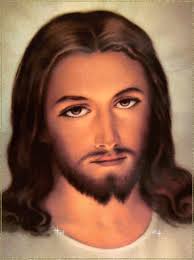
Are pictures of Jesus forbidden? This is often debated. G.I. Williamson says that pictures of Christ are forbidden because Jesus is God. I believe this was the majority report in the Reformed tradition, but is currently in the minority. Kevin DeYoung says pictures of Jesus are fine, but he urges caution, which would probably be my stance. I did not watch The Passion of the Christ because I did not want the movie running through my mind when I read the crucifixion accounts. Also there are so many bad pictures of Jesus it might be worthwhile to ban them just so Christians will stop embarrassing themselves. Pictures like the one below do not help our cause.

What specifically is forbidden by this commandment? Artwork of any kind that depicts the invisible God and yes that means the Sistine Chapel is a violation of the 2nd Commandment. Any images, statues, paintings, pictures, carvings and/or stained glass of any creatures, but especially Jesus, Bible scenes, Mary, the saints, and the cross, that are kissed, prayed to, bowed down to, meditated on, venerated, considered a pathway to God, considered sacred, or thought of as something that brings us into communion with God are forbidden.  This does not mean there can be no statues of Mary. But it does mean when people bow before it, kiss its feet, pray to it, expect to get closer to God because it is there, or surround the statue like a shrine it has become an idol. Also any other practices that are contrary to the Bible’s teaching on how to worship God are forbidden.

Roman Catholic Teaching on the 2nd Commandment
Compare the Heidelberg with the statements made in the Roman Catholic Catechism sections 2129-2132. (By the way the Roman Catholics consider this part of the 1st Commandment.)

The divine injunction included the prohibition of every representation of God by the hand of man. Deuteronomy explains: “Since you saw no form on the day that the Lord spoke to you at Horeb out of the midst of the fire, beware lest you act corruptly by making a graven image for yourselves, in the form of any figure….”It is the absolutely transcendent God who revealed himself to Israel. “He is the all,” but at the same time “he is greater than all his works.” He is “the author of beauty.”

So far so good.

Nevertheless, already in the Old Testament, God ordained or permitted the making of images that pointed symbolically toward salvation by the incarnate Word: so it was with the bronze serpent, the ark of the covenant, and the cherubim.

Ah, but then comes that pesky “nevertheless.”  Three points why this does not prove that we can make images in the New Covenant. First, God commanded these Old Testament images to be made. Where in the NT are we commanded to make images of any kind? If there is no command from God to make images of Mary, Jesus, or the cross as part of our worship then we should refrain. Second, the bronze serpent shows the danger of even God ordained images. It became an idol that was worshiped (II Kings 18:4) and had to be destroyed. If an image commanded by God can become an idol how much more is that the case with images that are not commanded by Him. Third, there is no indication that any of these images were objects of worship, veneration, prayer, etc. They were symbols of God’s activity and presence. But even the ark of the covenant where God actually dwelt is not the object of worship. Were the cherubim woven into the Tabernacle curtains ever prayed to? Did they bow before the lamp stand?  Did God command them to kiss the show bread? Again if images and types commanded by God were not worshiped how much more should we avoid doing so with images that are not ordained by God.

Basing itself on the mystery of the incarnate Word, the seventh ecumenical council at Nicaea (787) justified against the iconoclasts the veneration of icons – of Christ, but also of the Mother of God, the angels, and all the saints. By becoming incarnate, the Son of God introduced a new “economy” of images.

Not sure what a “new ‘economy’ of images is? Here is the text from the 2nd Council of Nicaea in 787. It would be nice to see a NT text that proves this idea is Biblical. But hey, when you have tradition, who needs the Bible. Obviously the invisible God became visible through Jesus Christ. I am not sure how that gives us the freedom to make images of angels, Mary, saints, or even Jesus and use them in our worship or to try to get to God through them.  

The Christian veneration of images is not contrary to the first commandment which proscribes idols. Indeed, “the honor rendered to an image passes to its prototype,” and “whoever venerates an image venerates the person portrayed in it.” The honor paid to sacred images is a “respectful veneration,” not the adoration due to God alone: Religious worship is not directed to images in themselves, considered as mere things, but under their distinctive aspect as images leading us on to God incarnate. the movement toward the image does not terminate in it as image, but tends toward that whose image it is.

Here is where the Reformers understood the human heart better than Roman Catholics. Is there really that much difference between adoration, worship, veneration, etc.? But even if you try to create different levels of worship in print, in real life men like to worship things even God ordained things like the bronze serpent. They want to walk by sight not by faith. Therefore this attempt is doomed from the start. People pray to/through these images, meditate on these images, find a spiritual connection in these images, kiss these images, ascend to heaven through these images, get to “God incarnate” through these images, and yet somehow they do not worship them? Somehow this looks like idol worship in every way and yet isn’t? This distinction between the image and the thing the image represents and the various types of worship is splitting hairs and pastorally dangerous.

Summary 
Images of God are forbidden. Images of other creatures can be made,  perhaps even Christ, but they must not be worshiped in any way. Human hearts are prone to idol worship therefore worship should be carefully guarded to prevent even the appearance of worshiping an image. There are no Biblical commands or inferences that allow us to set up images in worship or to use them to aid our worship. The key way we get to know God and His Son Christ is when the Spirit works through the preached Word while in fellowship with other living saints.