Christ is the Central Content of the Sacraments

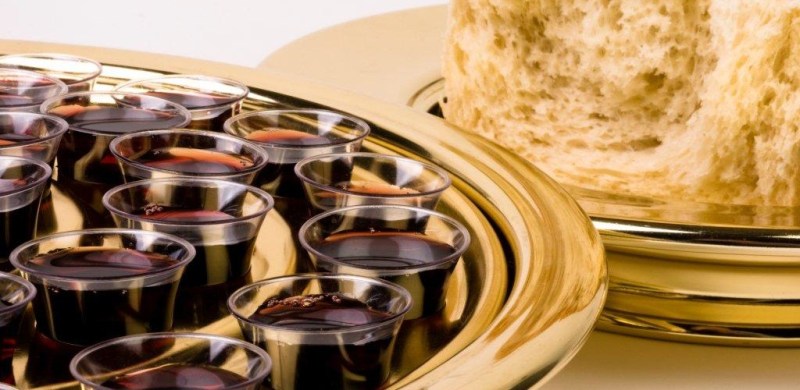
the-lords-supper

I really enjoyed Pierre Marcel’s book The Biblical Doctrine of Infant Baptism.  Even if you are already convinced of the paedo position it is worth your time. He does an excellent job of explaining what sacraments are, the covenant is, and how that impacts us, the church, and our children. One thing that stuck out to me was the emphasis he put on the Word.  He does not minimize the sacraments. It is clear they are powerful signs and seals of God’s covenant. But he is clear that the Word is the priority over the sacraments. I plan on putting up quite a few quotes from the book. Here is the first. The title of this section in the book is the same as the title of the blog post. All punctuation, spelling and italics are his.

To sum up, the internal matter of the sacrament, the inward grace which is signified and sealed, is Jesus Christ and His spiritual riches-the covenant of grace, justification by faith, remission of sins, faith and conversion, communion with Christ, etc. It is Christ, whole and entire, in all His fulness and with all his riches, according to His divine nature and His human nature, with His person and His work, in His state of humiliation and in His glorification. Christ and Christ alone is the “heavenly thing” signified in the sacrament -Christ who, with all his benefits and blessings, is the Mediator of the covenant of grace, the Head of the Church, the Yea and Amen of all God’s promises, the content of His Word and of His Testimony-Christ: Wisdom, Justification, Sanctification, and Redemption of believers, Prophet, Priest, and King, through whom alone God conveys all His grace, who remains the same yesterday and to-day and for ever. Jesus Christ, He who was, and who is, and who is coming, is the truth of the sacraments without whom they are nothing, just as He is the truth of the Word.

There is thus not a single benefit of grace which might be missing from the Word and communicated in a special and particular manner to believers through the sacraments. There is no special baptismal grace, nor a special eucharistic grace. The content of the Word and of the sacraments is exactly the same. Word and sacraments contain, present, and offer the same Mediator, Jesus Christ, the same covenant of grace, the same benefits, the same communion with God, the same redemption.

Marcel did not believe in paedo-communion, but I wanted to take this quote and apply it to that issue. I believe paedo-communion is Biblically defensible for various reasons.  Here is what I mean by paedo-communion: covenant children are welcome at the covenant meal.

I wanted to pull out two thoughts from this quote as it relates to paedo-communion.  First, there is nothing magical about the Lord’s Supper. In other words, the covenant child who is receiving the Word of God in worship and at home is receiving Christ. Taking the Lord’s Supper will strengthen that faith, strengthen his bond to the church, and confirm the Word. But taking the Lord’s Supper will not give him something he is not already getting. Christ comes to us first and foremost through the Word. If the Word is there then Jesus is there in His entirety. 

On the flip side, if we give our children the Word of God why shouldn’t we give them the Lord’s Supper? If I allow my child to participate in worship as one of God’s covenant children,  treat them as belonging to the covenant, quote to them the promises of the covenant, encourage them to believe those covenant promises, trust their heavenly Father and obey Him then why shouldn’t they have the covenant meal which presents to them the same promise the Word does: Jesus in his entirety?

Book Review: Infant Baptism by Pierre Marcel

The Biblical Doctrine of Infant Baptism: Sacrament of the Covenant of GraceThe Biblical Doctrine of Infant Baptism: Sacrament of the Covenant of Grace by Pierre-Charles Marcel

My rating: 5 of 5 stars

I give this book five stars for several reasons. First, it is a very thorough treatment of the covenant, sacraments, and infant baptism. In fact, my copy has 256 pages and the author did not get to infant baptism proper until p. 187. Before that he spent significant time on what the sacraments are, how the OT sacraments worked, and what the covenant is.

Second, he makes you think. I did not always agree with Marcel and there were places he was not as clear as I could wish. But he forces the reader to think carefully about the relationship between the covenant, salvation, our children, the church, faith, and the preaching of the Word.

Third, he is solidly reformed. He carefully explains why we baptize our children, what that means for them, what that does not mean, and how baptism can be a means of grace in the life of our children and the life of the church.

Finally, as the book progresses he emphasizes the corporate nature of baptism both when the child is baptized and throughout the life of the child and other members of the church.

This is not an easy read and while I did not agree with all, it is worth your time. It will help you think more carefully about infant baptism. It made me more confident of my paedo position and that the reason we baptize is because children of at least one believing parent are born in the covenant.

My Rating System
1 Star-Terrible book and dangerous. Burn it in the streets.

2 Stars-Really bad book, would not recommend, probably has some dangerous ideas in it or could just be so poorly written/researched that it is not worth reading. Few books I read are 1 or 2 stars because I am careful about what I read.

3 Stars-Either I disagree with it at too many points to recommend it or it is just not a good book on the subject or for the genre. Would not read it again, reference it, or recommend it. But it is not necessarily dangerous except as a time waster.

4 Stars-Solid book on the subject or for the genre. This does not mean I agree with everything in it. I would recommend this book to others and would probably read it again or reference it. Most books fall in this category because I try not to read books I don’t think will be good. There is a quite a variety here. 3.6 is pretty far from 4.5.

5 Stars-Excellent book. Classic in the genre or top of the line for the subject. I might also put a book in here that impacted me personally at the time I read it. I would highly recommend this book, even if I do not agree with all that it says. Few books fall in this category. Over time I have put less in this category.

View all my reviews

Do All Infants Who Die Go to Heaven?

gravestones-1This is a repost from last summer with a few slight revisions. 
In light of the millions of babies that have been killed by abortion since 1973 Pastor Sam Storms asks the question, “Do All Infants Who Die Go to Heaven?”  He is tentative with his argument, but still believes that “all who die in infancy…are among the elect of God.”

He gives eight arguments to prove his point, which I summarize below. All Scripture references are his.

1. Romans 1:20 says that all who are exposed to general revelation are without excuse. Since infants are not “recipients of general revelation” then they have an excuse and are therefore “not accountable to God or subject to wrath.”

2. There are passages that assert that infants do not know good from evil (Deut. 1:39).

3. The story of David’s son dying after David’s adultery with Bathsheba. David says he will go to his son, which would indicate that his son with God.

4. There is the consistent testimony of Scripture that we will be judged according to our works (II Cor. 5:10, I Cor. 6:9-10, Rev. 20:11-12).

5. An infant sent to Hell would know pain and suffering, but would not know why he was there. He would be conscious of his suffering, but not conscious of his sin.

6. Some infants are clearly regenerate in the womb (Jeremiah 1:5, Luke 1:15).

7.  Honestly, I am not sure what he is arguing with his 7th point. He talks about Matthew 19:13-15. But what he is trying to prove or disprove from the passage is unclear. If someone can explain his point to me, please do.

8. Here is a direct quote from his 8th point, “Given our understanding of God’s character as presented in Scripture, does he appear as the kind of God who would eternally condemn infants on no other ground than that of Adam’s transgression? Again, this is a subjective (and perhaps sentimental) question. But it deserves an answer nonetheless.”

Storms believes “the first, third, fourth, fifth, and eighth points sufficiently convincing” to prove “the salvation of those dying in infancy.”

Let’s walk through his points one by one. Continue reading

The Need for Doctrinal Standards and Church Discipline

reformers-wall-farel-calvin-beza-knox

I am part of group on Facebook that discusses Anglicanism. I am not Anglican, but have an appreciation for old school Anglicanism as in Richard Hooker, Jewell, Ryle, etc. I am not fond of much (not all, of course) of what passes for Anglicanism today, which is really a mash up of Roman Catholicism, contemporary evangelicalism, and personal preference. One person asked the question: “Can Anglicans be Charismatic?” Rev. Richard Lepage, an Anglican pastor in Maine, gave this reply.

No. And the fact that Anglicans have different opinions is irrelevant. Just because an Anglican believes X, Y or Z does not make the belief “Anglican” or consistent with Anglicanism as established in her formularies. The myriad of foolishness & error that we see in Anglicanism is the result of the failure of men, specifically bishops (not all of course) to enforce the third mark of the church which is discipline. The fact that people have escaped being disciplined and have successfully promoted foolishness or error and have persuaded people that the foolishness or error is part of Anglicanism does not make it so. It merely means that there are con-men and dupes in the the church and that it is high time for the church to be cleansed and a few tables overturned.

The Word of God is our authority (Article VI), not the new or old additions or subtractions of men which cannot be proven by it and indeed may incur God’s judgement for such sinful presumption on the part of man… and it is presumption to suggest that truth & spirituality is some sort of a buffet menu “I will pick or follow a little bit of this and a little bit of that, garnished with some of that over there” or that some individuals have the Holy Spirit and others do not because they exercise “special gifts” through the ability to mumble incoherently. In Anglicanism the true perfectly sufficient gift to man that we are to live by (Matthew 4:4) is the gift of God’s Word which is to be taught, prayed and exercised in the common tongue that people understand plainly (Article XXIV – It is a thing plainly repugnant to the Word of God, and the custom of the Primitive Church, to have publick Prayer in the Church, or to minister the Sacraments in a tongue not understanded of the people.). This is what permeates our liturgy, our prayers, confessions, songs and spirituality… the Word of God plainly spoken to be “commonly” understood by all.

Rev. Lepage’s first paragraph is one that all denominations would be wise to listen. He is talking about his own denomination, but I am going to apply it to the Reformed world in general. Too many of us approach our heritage as if it is a buffet menu. I am Reformed, but I reject this and that and that other thing, but hey I am still Reformed. I know a Reformed pastor who advocates speaking in tongues. Therefore speaking in tongues is Reformed. I know a Reformed scholar who prays to Mary therefore praying to Mary must be Reformed. We think like this. But Rev. Lepage’s point is that just because a person, even a pastor or teacher,  in a denomination holds to a particular idea or practice does not make it consistent with that denomination’s tradition or heritage.

Here is why we need creeds, catechisms, and confessions. They explain what it means to be Reformed. And as Rev. Lepage says that is why we need church discipline. Pastors who claim to be Reformed, but teach that which is not Reformed need to be removed from office.

None of this is meant to argue that the standards we hold are equal to the Bible. As the standards themselves say the only final and authoritative standard is Scripture. Nor is it meant to imply that the standards could not be added to or amended with due process and appeal to the final standard, Scripture. Nor does this mean that one cannot disagree with the standards. The point is we cannot deviate from the Reformed standards in significant ways and still claim to be Reformed. We cannot take a doctrine or teaching which is contrary to the standards or not taught in the standards and then teach that doctrine as if it is part of the standards. If you are going to deviate from the Reformed standards at least be honest about it.

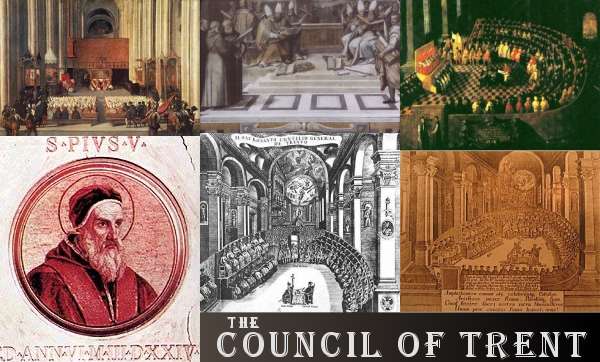
Calvin’s Reason for the Reformation: Worship

council-of-trent-1

The Reformation was one of the great events in Western history. It began long before Luther and Calvin with men like Huss and Wycliffe. But it culminated in a large group of Christians leaving the Roman Catholic church because it had left the teaching of Scripture. It is always good to go back to primary sources and get their reasons for doing what they did. What led these men to break with Roman Catholic church?

Calvin in his excellent book The Necessity of Reforming the Church, lists two main reasons for the why the reformation was necessary:

If it be inquired, then, by what things chiefly the Christian religion has a standing existence among us, and maintains it truth, it will be found that the following two not only occupy the principal place, but comprehend under them all the other parts and consequently the whole substance of Christianity: that is, a knowledge, first, of the mode in which God is duly worshiped; and secondly, of the source from which salvation is to be obtained. When these are kept out of view, though we may glory in the name of Christians, our profession is empty and vain.

At the center of the Christian faith is proper worship of God and proper understanding of justification by faith in Christ alone. Calvin felt reformation was necessary because these two foundations of the faith had been compromised.

Calvin then goes on to briefly explain how these two areas have been corrupted by the church (Roman Catholics). Here are some quotes about worship. Regarding worship he touches on public prayers, which he says are “stained with numberless impurities,” adoration of and praying to the saints, numerous rites and ceremonies not found in Scripture, and people who “devote their whole attention to abstinences, vigils, and other things, which Paul terms ‘beggarly elements’ of the world.”

He ends with this:

Having observed that the word of God is the test which discriminates between true worship and that which is false and vitiated, we thence readily infer that the whole form of divine worship in general use in the present day is nothing but mere corruption. For men pay no regard to what God has commanded or to what he approves, in order that they  may serve him in a becoming manner, but assume to themselves a license of devising modes of worship, and afterwards obtruding [imposing] them upon him as a substitute for obedience.

If in what I say I seem to exaggerate, let an examination be made of all the acts by which the generality suppose that they worship God. I dare scarcely except a tenth part as not the random offspring of their own brain…God rejects, condemns, abominates all fictitious worship, and employs his word as a bridle to keep us in unqualified obedience. When shaking off this yoke, we wander after our own fictions, and offer to him a worship, the work of human rashness, how much soever it may delight ourselves, in his sight it is vain trifling, nay, vileness and pollution. The advocates of human traditions paint them in fair and gaudy colors; and Paul certainly admits that they carry with them a show of wisdom; but God values obedience more than all sacrifices, it ought to be sufficient for the rejection of any mode of worship, that it is not sanctioned by the command of God.

For Calvin the first reason for the Reformation was that God’s people had drifted far from the true worship of God as prescribed in the Scriptures.