2016.Episode 16~Isaiah 1

Isaiah 2

In this podcast I look at Isaiah 1 and why Israel was on the verge of judgment by God and how despite the coming judgment there was a place for mercy and repentance.

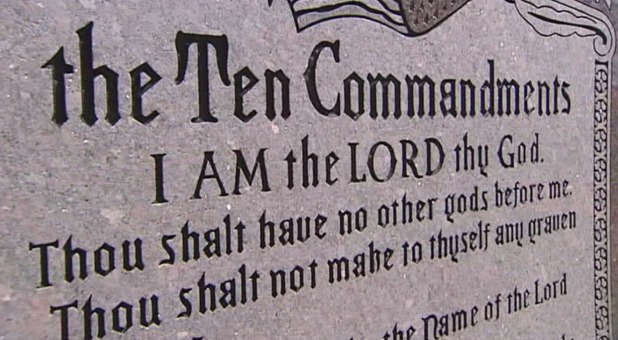
How to Use the Ten Commandments

10_commandments2

I just read through the Westminster Standards; The Confession of Faith, Larger, and Shorter Catechism.  I try to read it through once a year. My conclusion at the end of this reading is that the Westminster Larger Catechism (WLC) is a sorely neglected document and needs to be studied more, especially by ministers.  Like all catechisms the WLC works through the ten commandments in questions 98-149. This section provides an in depth commentary on what each commandment requires and forbids, as well as discussion of the promises and threats. Before diving into the commandments the Larger Catechism lists eight rules for right understanding of the ten commandments. Here they are with my comments below each one.

Q99: What rules are to be observed for the right understanding of the ten commandments?
A99: For the right understanding of the ten commandments, these rules are to be observed:
1. That the law is perfect, and binds everyone to full conformity in the whole man unto the righteousness thereof, and unto entire obedience forever; so as to require the utmost perfection of every duty, and to forbid the least degree of every sin.

The ten commandments are binding upon all men and require complete and total obedience. Here is one reason we need Jesus. The law requires perfection, which we cannot achieve.

2. That it is spiritual, and so reaches the understanding, will, affections, and all other powers of the soul; as well as words, works, and gestures.

The second rule is the commandments govern not just our outward actions, but also our inner life. As Jesus said, you have not obeyed the commandment to not murder if you hate your brother in your heart. Men love to believe that external obedience is all that the law requires. Too many Christians, especially in our fast paced world with little time for reflection, do not examine their will, affections, desires, loves, as they ought to. We obey outwardly, but our hearts are not bent to the law.  Continue reading

Day of Atonement Sequence

I am getting ready to preach Hebrews 9 so I was looking at the structure of the Day of Atonement in Leviticus 16. What I found most interesting is that during the process the tabernacle was empty  (Leviticus 16:17). The tabernacle is completely empty and the high priest must go in and do all of this.

  • High priest washed, put on special garments, which were more humble than normal priestly garb.
  • High priest selects five total animals: Two goats, two rams, one bull.
  • High priest casts lots for the two goats to determine which one was sacrifices and which one is sent into the wilderness.
  • High priest kills the bull.
  • High priest brings  incense into the Most Holy Place and creates a smoke covering in the Most Holy Place.
  • High priest sprinkles the blood of the bull seven times on the mercy seat.
  • High priest kills the goat, brings its blood into the Most Holy Place, and sprinkles it on the mercy seat.
  • High priest leaves the Most Holy Place, takes the blood of the bull and the goat and sprinkles it seven times on the horns of altar in the  main part of the tabernacle.
  • High priest brings out the live goat, lays his hands on the goat, confesses the sins of the people, and sends the goat out into the wilderness by the hand of another Israelite.
  • High priest removes special garments, washes, and replaces them with normal priestly garments.
  • High priest offers two burnt offerings (the rams) one for the people and one for himself/the priesthood.
  • The man who took the goat out into the wilderness must wash before returning to camp
  • The bull and the goat of the sin offerings are taken outside the camp and burned.
  • The man who takes the bull and goat outside the camp to burn must wash before returning to camp.

Repentance Comes First

When Ephraim saw his sickness, and Judah his wound, then Ephraim went to Assyria, and sent to the great king. But he is not able to cure you or heal your wound. For I will be like a lion to Ephraim, and like a young lion to the house of Judah. I, even I, will tear and go away; I will carry off, and no one shall rescue. I will return again to my place, until they acknowledge their guilt and seek my face, and in their distress earnestly seek me (Hos 5:13-15).
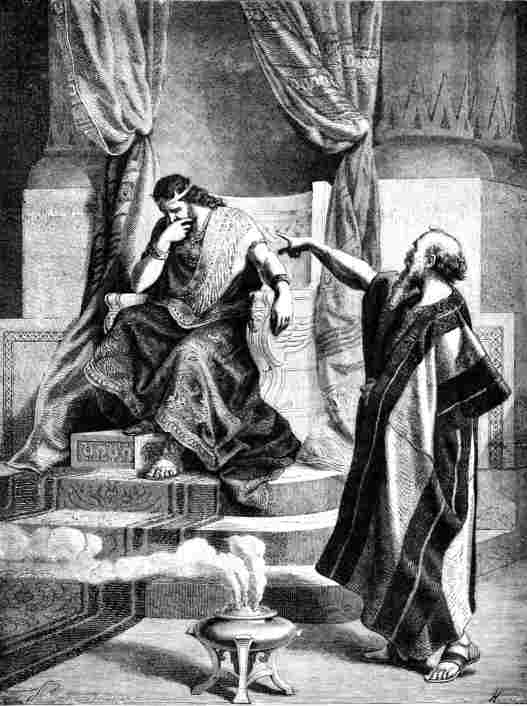
King David 3

When the Lord rebukes Israel through the prophet Hosea, Israel recognizes that she is sick (Hosea 5:13). She can see that something is wrong. But instead of turning to the Lord who can heal her she turns to Assyria. Israel flees to man and the strength of man to cure her disease. Yet the Lord says that Assyria cannot heal her and cannot make her whole again (Hosea 5:13).

Israel was under political oppression. Their enemies were closing in. But their enemies were not the problem. Their sin was. Instead of getting to the root of the problem, their covenant disobedience, they focused on the symptoms of the problem. They thought the disease would be cured if they just had a bigger army. They thought the answer was in an alliance with other nations. The problem however, was their disobedient heart, not their lack of chariots.

The Lord says in Hosea 5:15 that he wants Israel to acknowledge their offense or their guilt.  The answer for Israel is not more chariots or horses. The answer is not getting in bed with Assyria. The answer is repentance. Here is what Israel refuses to do. They are willing to try to fix things. They are not willing to repent and confess that they are wrong.

We are all this way. God in his mercy disciplines us. He gives us consequences for our sins. It might be a broken relationship, the loss of a job, a child that is in rebellion, a rebuke from a parent or friend, a note in book reminding us that our worship is out of line, etc. But like Israel we are not interested in repentance. We are interested in alleviating the consequences of our sins. We want to remove the embarrassment of our sin, but not the sin itself.  So we try to fix things. We try to cover things up.  Instead of repenting of our sin of selfishness, we try to be more generous. Instead confessing that we have harmed our children with our anger, we try to be kinder. Instead of admitting that our worship is not in accord with the Scriptures, we run another outreach program. We do everything but the one thing necessary, admit we are wrong, confess our sins, repent, and turn to Christ. But the gospel does not begin with you getting your life together. It begins with repentance.

The Christian and His Possessions

Wad-of-100s

Here are some basic principles for handling possessions and money. These are not comprehensive, but give a biblical framework for how we should think about our money and possessions. Many of the principles come from Matthew 6:19-34 and I Timothy 6:6-10, 17-19.

  1. God is our Father. He loves us and will care for us. Therefore we should not worry. If he chooses to remove some of our possessions, it is for our good. Because he is our Father we should pray to him when we are needy and thank Him when He provides for us.
  2. We will die. Therefore we need to store up treasure in heaven not on earth.
  3. We should earn our money through honest, hard work that does not take advantage of the poor and weak.
  4. Laziness is a sin that can lead to poverty. Not all the poor are there because they are lazy, but some are.
  5. One key reason we labor is so we can have money to help those in need (Ephesians 4:28).  We earn to serve, not to horde.
  6. We should not expect others (government, church, family) to provide for us except in extreme circumstances where God’s hand of Providence forces us to go to others for help. Expecting others to bail us out is a sign of immaturity.
  7.  A Christian should give a minimum of 10% to their local church with the goal of increasing the percentage to give to ministries outside the local body.
  8. Our possessions are gifts from God, even those possessions we have worked hard for. Work and the fruit of our labor, money, are part of God’s grace to us.
  9. We are stewards of our possessions. A steward was someone left in charge of a house while the master was away. Jesus uses this model in Matthew 25:14-30. Paul also uses a similar idea in passages like Colossians 3:23-25. We will answer to our Master with how we use our time, money and possessions.  Our approach to money should be principled and biblical, not haphazard.
  10. Neither wealth nor poverty are necessarily a vice or a virtue.  A man can be poor and godly or poor and ungodly. A man can be rich and godly or rich and ungodly. We should be careful in making sweeping generalizations about a person’s righteousness based on their wealth.The questions are: 1.) How did they get there? Are they rich because of theft or cheating or hard work? Are they poor because of laziness or because they got cheated by one of the rich guys in the previous question? 2.) What is the attitude towards their situation? Are the wealthy full of good works or proud and arrogant? Are the poor patient and working hard to earn so they can serve others or are they whining, blaming others, grumbling, and looking for a handout?
  11. Debt is not an automatic sin. Not all debt is equal either. $10,000 on a credit card for a vacation is different from a mortgage which is different from a business loan that could turn a profit. But debt does put a man in bondage and could be a sign of laziness and greed. A man should be careful about who he goes in debt to,what he goes in debt for, examine his heart when he does, and should seek to get out of debt quickly.
  12. The wealthy should not take advantage of the poor by using money to manipulate them or by giving the poor high interest loans. The rich can manipulate the poor by keeping them in bondage through favors. The rich give, but use the “gift” to bind the poor to them. Wealthy in this situation does not have to be a multi-millionaire. It could just be someone who has more free income than someone else.
  13. Both wealth and poverty come with temptations. The rich tend to forget God, become proud, and oppress the poor. The poor tend to doubt Him, grumble, and become jealous (See Proverbs 30:7-9). God is to be honored with our possessions, whether we are rich or poor. The rich assume the problem is with the “lazy poor.” The poor assume the problem is with the “greedy rich.” Let each man look to his own temptations.
  14. Those with more often look down on those with less and vice versa. Envy, bitterness, and pride often characterize our relationships with those on a different economic level whether they are above us or below us. Christians should not treat people differently based on their wealth or poverty (James 2:1-4).
  15. Frugality can be greed in pious disguise.
  16. Those who are wise with their money and those who are wasteful can both be dominated by money. Saving a lot and being wise with your finances does not mean you are free from the love of money. Being generous does not guarantee you are free from the love of money either. “Love” is internal. It does express itself in concrete ways, but humans have an amazing ability to cover their sins with pious deeds.
  17. God wants us to enjoy our possessions. We should not feel guilty enjoying what we own. This does not mean we are selfish gluttons or live in luxury (See points #5 and 9 above). But we should eat our food, drink our beer, sleep in our beds, read our books, play in our yards, and drive our cars with thankfulness and joy. If you live under a haze of guilt for what you have you do not understand God’s grace.
  18. Those who are rich in this world are to be rich in good works. Most American Christians fit this category. To whom much is given, much is required. The wealthiest Christians should be the ones doing the most good deeds. But these good deeds should be hidden, not paraded before men (See Matthew 6:1-4). And of course, it is not a good deed to irresponsibly throw money at a problem (See When Helping Hurts). 
  19. We should be known for our contentment. We should not be proud when we have a lot. Nor should we disturbed when God removes some of our possessions from us. Contentment in all circumstances is the goal (Philippians 4:11-13). In a world that always wants more, contentment is great witness to our trust in Christ and our Heavenly Father.
  20. The desire to be wealthy is usually a sin. We should work hard, plan wisely, and let God build our bank account as he sees fit. Proverbs 27:20 says, “The eyes are never satisfied.” We will not be satisfied when we get what we want, so let’s be content with what we have.
  21. Love of money can destroy someone’s faith and plunge them to ruin (I Timothy 6:9-10). We joke about greed, but in the Scriptures it is a terrible sin. Greed can choke the spiritual life out of a man and send him to Hell.
  22. Finally, in our current situation the greatest thief is government.