
Lessons from Geneva: Pastoring is Hard Work

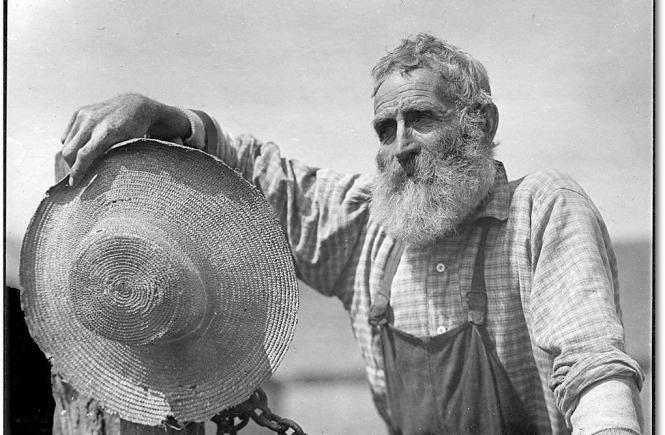
Farmer 1

At the conclusion of Scott Manetsch’s excellent book Calvin’s Company of Pastors he lists four lessons we can learn from his study of the pastors in Geneva from 1536-1609.  Each of these four lessons is worthy of careful meditation by those seeking to enter the ministry or those already there. Here is the first lesson.

First, this study of the Company of Pastors has shown that the vocation of Christian ministry is a difficult one. As we have seen, Geneva’s pastors faced heavy workloads and encountered many hardships in their pastoral careers, including financial deprivation, incessant public criticism, congregational apathy, and sometimes even physical danger. Far more than “agents of the state” Calvin and his colleagues served as biblical interpreters, spiritual counselors, social prophets, and moral watchdogs that regularly challenged popular beliefs and social conventions, and sometimes thundered against Geneva’s political authorities. The ministers occupied a crucial, yet awkward, position in early modern society as they sought to translate gospel truths into a vernacular that provided hope, meaning, and forgiveness to men and women who sometimes struggled to believe- and frequently struggled to behave themselves. Too often the ministers’ moral indignation and spiritual blind spots only increased the difficulties they encountered in applying Scripture to the needs of their parishioners. Pastoral effectiveness in Geneva required courage, a clear sense of vocation, thick skin, a generous dose of humility, and solid Christian faith. Pastoral virtues like these are still required of Christian workers today even if their congregational contexts are centuries removed from Calvin’s.

When I entered ministry this was not my perspective. As a young man I saw many free hours perusing my books with coffee. I saw sermons that soared to heights unknown.  I do read a lot and of course preach, but the ministry is difficult work, filled with anxious moments, mistakes, weariness of body and soul, disappointment, and hardships. Of course, there are joys as well. But I knew that. I expected the mountain tops. But I did not know how deep, dark, and cold the valleys could be. I should have of course.  It was prophesied of Christ that he would be ” rejected by men, a man of sorrows, acquainted with grief” (Isaiah 53:3). Can I follow Christ and preach Christ and expect ease and comfort? Paul told Timothy:

Share in suffering as a good soldier of Christ Jesus. No soldier gets entangled in civilian pursuits, since his aim is to please the one who enlisted him. An athlete is not crowned unless he competes according to the rules. It is the hard-working farmer who ought to have the first share of the crops. 2 Timothy 2:3-6

Can I be a soldier and yet live in luxury? Can I be a hard working farmer without long nights and tired muscles? One of the most important lessons young pastors need to learn and seminary students need to be told is that the ministry when it is done right is bone-wearying work. It always has been and always will be.


Marriage Without Sex?

Recently I got in a conversation on social media about the necessity of sex to consummate marriage. Is it a marriage if the couple never sleeps together? It has been the almost universal opinion of the church for two-thousand years that if a couple does not sleep together, it is not a marriage. Even more recently, my wife had a friend get married, but the husband refused to sleep with her. She went to the state and got the marriage annulled. Note she did not get a divorce. Why? She was never married to begin with. My thoughts on this issue were spurred by this quote from Jim Newheiser’s book, Marriage, Divorce, and Remarriage: 

A marriage is valid when a covenant of companionship is made between a man and a woman who present themselves forward to the community as being married…While sexual union is ordinarily part of marriage, a couple can be truly married without physically consummating the marriage.

Can a couple be married in heart only and not also in body? A blog post is insufficient to answer this question. But here is a basic outline why without sex there is no marriage.

Continue reading

A Thought Experiment: Assurance & Preaching

pulpit 1

Assurance is a tricky thing in the Christian life. There are numerous ways we can gain assurance. With regards to assurance, there are two things I try to prevent: a false believer from thinking he is a real one and a real believer from thinking he is a false one. This is not easy, as false believers are not easily convinced of their true state and true believers often have great doubts. However, preaching in such a way that Christ’s work and his commands are presented is the best way to guard against either error. Below I present two different types of preaching and what I think are the effects these types of preaching will have. It is simplistic and there are other things that could and should be added, but I think the main point will be clear. These thoughts were prompted as I preached through Ephesians 4:25-5:2 several years ago.   Continue reading

"I Now Take Thee" Weddings in Calvin’s Geneva

Wedding 2

Here is another post on Kingdon and Witte’s book on marriage in Geneva. 

Eloping or getting married without a public wedding ceremony has become a trend of late. As the value of our wedding vows have diminished through divorce and fornication so too have wedding themselves become passe. Weddings are still big business, but many couples are choosing to avoid ceremonies all together.  In Geneva there was no eloping.

In Geneva “Marriages without weddings were invalid.”  You could not be married without a public ceremony presided over by the pastor and witnessed by the congregation. “Marriages that had been secretly contracted or improperly celebrated elsewhere had to be announced and celebrated anew in a church wedding in Geneva.” The couple, the church, and the magistrate all had to consent to the marriage before the wedding was performed. Here was the process: Continue reading

Stop Playing the Victim

Cross 1

This is a repost. 

There are few characteristics as central to American culture today as that of being a victim. We automatically assume in most situations we have been victimized. There are real victims, of course. There are people who have hurt, maimed, harmed, reputations destroyed, families broken, children abused, etc. But what I am talking about is that American mindset of being perpetually offended. The students blame the teacher. The teacher blames the students. The parents blame the children. The children blame the parents. The conservatives blame the liberals. The liberals blame the conservatives. We lost the game because of the referees. We lost the election because it was rigged. Our grades our low because our school district doesn’t have enough money. We could pick any race, any economic category, any social status, any topic and we will find the same pattern. We are united in our belief that someone else is to blame.

For Christians, this is a devastating mindset because it causes us to excuse our sin. We look out at all the things that someone else has done to us, real or imagined, and then we say, “It is not our fault.” I was raised by bad parents so the command to honor my parents does not apply to me. My neighbor played loud rock music last night, so the command to love my neighbor does not apply to me. My seminary professor gave me a low grade therefore the command to give honor where honor is due is excised from the Scriptures. My wife was sharp with me last night therefore the command to be kind is cut out of the Bible. My husband does not love me well enough so I do not need to respect him. And on and on it goes. Even if the sin against us is real, it does not excuse our own sin. We can never place the blame for our sins upon someone else. But this is exactly what a victim mentality does. We ought to know better.

Stop shifting the weight of your sins onto the shoulders of your parents, children, teachers, government, spouse, pastor, congregation or whoever else you think is at fault. Stop blaming others for your sins. Stop evading responsibility. Realize that the blood is on your hands because you plunged the knife in. Then flee to Jesus, the sinless victim, who carried the weight of your sins. Only at the Cross can your sins be rolled away. Trying to place them on others will only end in bitterness and pain.