
Over against Rome, the churches of the Reformation indeed have no more powerful weapon than Scripture. It delivers the deadliest of blows to ecclesiastical tradition and hierarchy. The teaching of the perspicuity [clarity] of Scripture is one of the strongest bulwarks of the Reformation. It also most certainly brings with it its own serious perils. Protestantism has been hopelessly divided by it, and individualism has developed at the expense of the people’s sense of community. The freedom to read and examine Scripture has been and is grossly abused by all sorts of groups and schools of thought. On the balance, however, the disadvantages do not outweigh the advantages. For the denial of the clarity of Scripture carries with it the subjection of the layperson to the priest, of a person’s conscience to the church. The freedom of religion and the human conscience, of the church and theology, stands and falls with the perspicuity of Scripture. It alone is able to maintain the freedom of the Christian; it is the origin and guarantee of religious liberty as well as of our political freedom. Even a freedom that cannot be obtained and enjoyed aside from the danger of licentiousness and caprice is still always to be preferred over a tyranny that suppresses liberty. Herman Bavinck, Reformed Dogmatics, Vol. 1, p. 479. Also quoted in K. DeYoung’s Taking God at His Word
Category Archives: Reformation
Calvin’s Reason for the Reformation: Worship
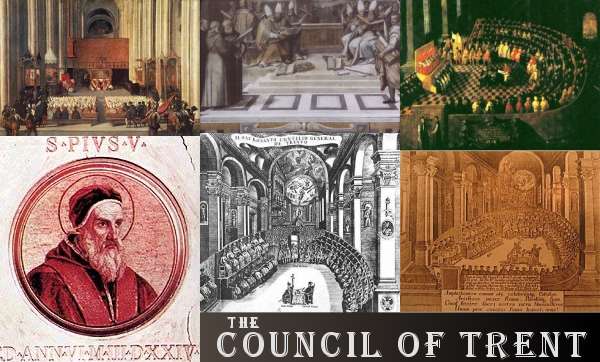
The Reformation was one of the great events in Western history. It began long before Luther and Calvin with men like Huss and Wycliffe. But it culminated in a large group of Christians leaving the Roman Catholic church because it had left the teaching of Scripture. It is always good to go back to primary sources and get their reasons for doing what they did. What led these men to break with Roman Catholic church?
Calvin in his excellent book The Necessity of Reforming the Church, lists two main reasons for the why the reformation was necessary:
If it be inquired, then, by what things chiefly the Christian religion has a standing existence among us, and maintains it truth, it will be found that the following two not only occupy the principal place, but comprehend under them all the other parts and consequently the whole substance of Christianity: that is, a knowledge, first, of the mode in which God is duly worshiped; and secondly, of the source from which salvation is to be obtained. When these are kept out of view, though we may glory in the name of Christians, our profession is empty and vain.
At the center of the Christian faith is proper worship of God and proper understanding of justification by faith in Christ alone. Calvin felt reformation was necessary because these two foundations of the faith had been compromised.
Calvin then goes on to briefly explain how these two areas have been corrupted by the church (Roman Catholics). Here are some quotes about worship. Regarding worship he touches on public prayers, which he says are “stained with numberless impurities,” adoration of and praying to the saints, numerous rites and ceremonies not found in Scripture, and people who “devote their whole attention to abstinences, vigils, and other things, which Paul terms ‘beggarly elements’ of the world.”
He ends with this:
Having observed that the word of God is the test which discriminates between true worship and that which is false and vitiated, we thence readily infer that the whole form of divine worship in general use in the present day is nothing but mere corruption. For men pay no regard to what God has commanded or to what he approves, in order that they may serve him in a becoming manner, but assume to themselves a license of devising modes of worship, and afterwards obtruding [imposing] them upon him as a substitute for obedience.
If in what I say I seem to exaggerate, let an examination be made of all the acts by which the generality suppose that they worship God. I dare scarcely except a tenth part as not the random offspring of their own brain…God rejects, condemns, abominates all fictitious worship, and employs his word as a bridle to keep us in unqualified obedience. When shaking off this yoke, we wander after our own fictions, and offer to him a worship, the work of human rashness, how much soever it may delight ourselves, in his sight it is vain trifling, nay, vileness and pollution. The advocates of human traditions paint them in fair and gaudy colors; and Paul certainly admits that they carry with them a show of wisdom; but God values obedience more than all sacrifices, it ought to be sufficient for the rejection of any mode of worship, that it is not sanctioned by the command of God.
For Calvin the first reason for the Reformation was that God’s people had drifted far from the true worship of God as prescribed in the Scriptures.
Hughes Old & the Reformers on Baptism

Yesterday I posted some of Hughes Old’s quotes from The Shaping of the Reformed Baptismal Rite in the Sixteenth Century. All those quotes focused on the Anabaptist view of baptism. Today I want to post some quotes from the same book about the Reformers’ view of baptism, in particular infant baptism. The titles in bold are mine.
The Primacy of Grace
At the very heart of the Protestant Reformation was the revival of Augustinian theology with its strong emphasis on the primacy of grace. The Reformers believed that God took the initiative for humankind’s salvation. In light of such a strong doctrine of grace the baptism of infants was quite understandable. In fact, the baptism of infants demonstrated very powerfully that our salvation rests not on any knowledge or work or experience or decision of our own, but entirely on the grace of God.
Thoroughly Consistent
Another matter which should be equally clear from this study is that the position of the Reformers in regard to infant baptism was an integral part of their whole theology. It is not as though baptizing very young children was a strange inconsistency which was perpetuated out of habit. It is not as though here was a place where the Reformers strangely neglected to apply their usual principles of reform…The baptism of infants was a logical corollary of sola gratia, for it clearly demonstrated prevenient grace…Far from being a failure to carry through their reforming principles to their logical conclusions, the Reformers’ position on infant baptism was thoroughly consistent with their whole program of reform.
Quotes from Rules for Reformers

Pastor Doug Wilson’s latest book is called Rules for Reformers. It is not for everyone, but anyone in Christian leadership should read the book. It has a hard, but cheerful edge to it. Here are some of my favorite quotes from the book.
A reformer has to be the kind of man who can stand up to the clamor of the mob.
The wise are those who take the initiative whenever they have the opportunity.
Survival should never be the goal, stalemate is not the goal, absence of collision is not the goal.
We are not to fight to the point of predominance, we are to fight to the point of complete victory.
Cultivate a robust sense of humor. [Wilson repeats this idea throughout the book.]
Keep the pressure on, wherever you are on the line…Wake up in the morning thinking about what the fires you can set.
The work of cultural reformation is a contact sport.
A godly satirist [a man who uses sarcasm and ridicule] should know the difference between weakness and arrogance, and, as far as possible, reserve his arrows for the latter.
We need to distinguish between those who demand apologies as a weapon, and those who want to see genuine reconciliation.
Winning an argument, with documents and everything, is not what brings repentance. [Pastor Wilson is not saying that arguments have no value. He is just saying that winning them does not produce repentance.]
The issue is never the issue. Keep your eye on the ball.
The rule is never to apologize for the truth. Never.[Emphasis his.]
Do you want to bring up endangered kids or dangerous kids…Would you like them to be smooth stones in the sling of the Son of David? Or are you just hoping they make enough money to get by, are generally nice people, and always come home for the holidays…Do you want to provide them with Jesus-centered education that will train them for the battle, the way boot camp is supposed to?
If you do not love the present, which you have seen, how can you love the future, which you have not seen?
When forgetfulness begins, love is then in decline.
The key battle in our culture wars is the reestablishment of worship that is pleasing to God.
The reason for singling out sodomy for particular political attention right now is the homo-activists have made it their central political weapon.
All the Christians in the world, thinking sweet thoughts all at the same time, could not make a minimum wage law that didn’t hurt the poor.
All hope is lost? Good. That means the conditions for a black swan revival are improving by the day. The stone cold deader we get, the more God is hastening the day. Nothing is dying but what has needed to die for a long time.
There is no solution to our cultural or political troubles apart from the blood that Jesus shed.
Divorce in Reformation Europe

I just finished reading Robert Kingdon’s book Adultery and Divorce in John Calvin’s Geneva. In this book he examines four specific cases of divorce in Geneva and what those cases can teach us about how views on divorce changed during the Reformation. Prior to the Reformation divorce was impossible. There were various ways to get out of a marriage including annulment and legal separation. But there was no divorce. Calvin and other reformers, including Beza and Vermigli, changed this during the 1500s. However, while divorce was permitted it was still extremely difficult to get one. The only reasons for divorce were adultery and desertion. Here are some thoughts from the concluding chapter of Kingdon’s book.
“Divorce was now possible in Protestant Geneva, however, it remained difficult. A petitioner for a divorce always had to make a compelling case that adultery or desertion had occurred, a case that could withstand the scrutiny of a full trial. It was never enough for a husband and wife simply to declare that they had become incompatible and no longer wished to live together…Furthermore, an attempt, sometimes quite strenuous was almost always made to persuade the couple to resolve their problems without divorce, to forgive each other, and in token of this fresh agreement to participate in a formal reconciliation ceremony.”
Kingdon goes on to note that most divorces took a long time to be approved. In the four cases described in the book, one took two years, one petition for divorce had to be filed twice, nine years apart, and one man was separated from his wife for eight years before divorce was granted. He also notes that in the entire period of Calvin’s ministry in Geneva (1541-1564) only twenty six divorces for adultery were granted and far less for desertion. In other Protestant areas divorce, while allowed, was almost unheard of. Basel had less than three per year. Neuchatel had less than one per year . Zurich was around 5 per year. Kingdon goes on to say that from 1500-1592 there was .57 divorces per 1,000 people per year in Basel. In 1910 the rate was 55.8 divorces per 1,000 people per year. The point here is that despite Protestants opening the door for divorce it was still almost impossible to get one. Kingdon cites one author who notes that widespread divorce rates did not take hold on continental Europe until the early 1800s.
All Protestants felt the innocent party in a divorce was free to remarry. Many, especially Beza who wrote a book on divorce after Calvin’s death, felt that the guilty should remarry as well. It would keep them from sexual immorality.
Kingdon adds that the death penalty was occasionally used on notorious adulterers, which would of course be a de facto divorce. However, this form of punishment was not common in Protestant or Roman Catholic circles.
 Singing & Slaying